


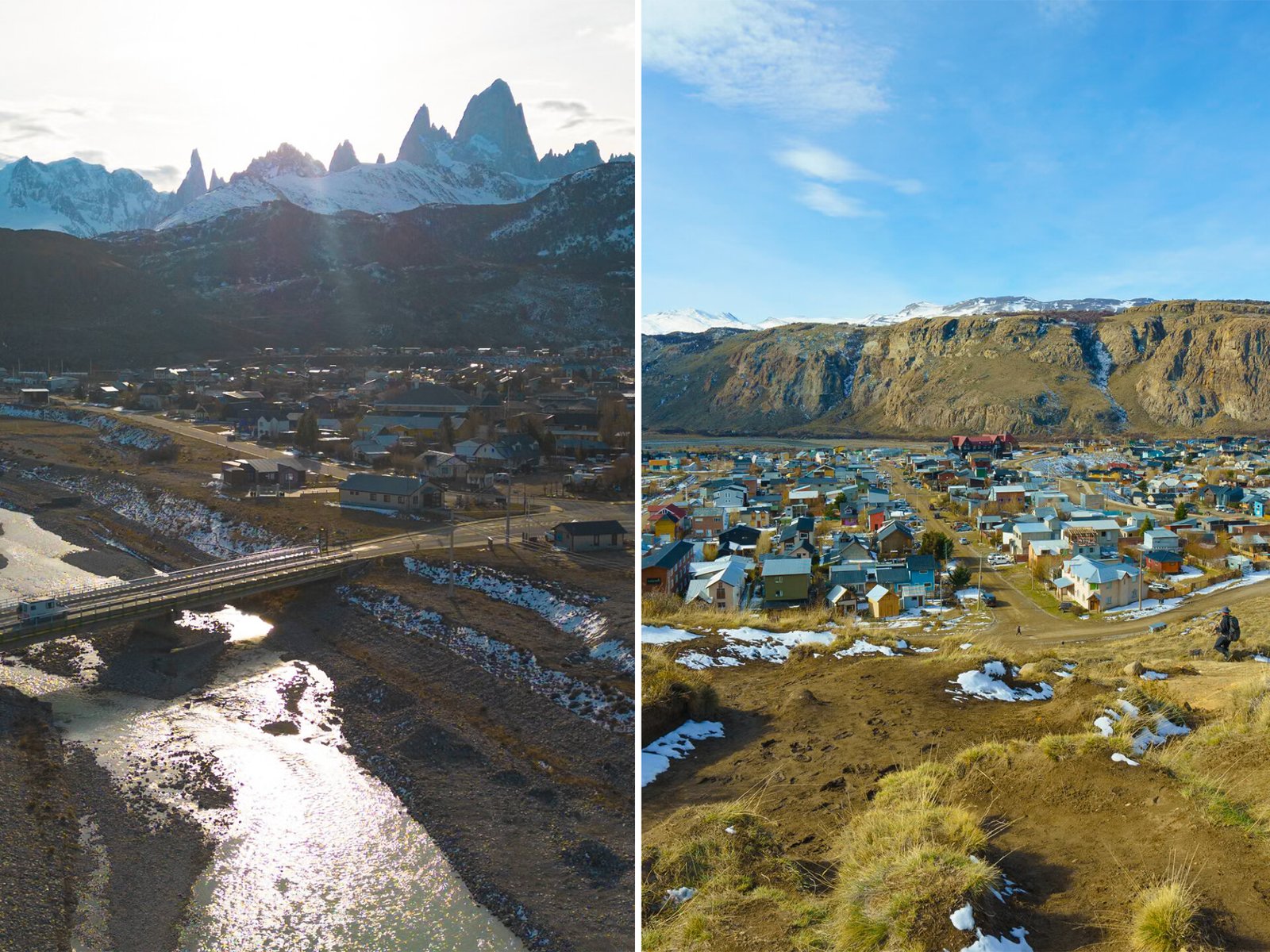
A glacier flood risk in Patagonia has prompted renewed planning in the Argentine town of El Chaltén, where researchers have modelled how a collapse near Laguna Torre could send a powerful surge of water towards the town.
The risk has been known for years, but the deadly glacial flood in Nepal on 26 August has brought greater attention to the potential consequences of a similar event. The mechanisms and scale of the two scenarios are different, but both involve a sudden movement of ice or rock into water that can generate a destructive flood.
A potential flood route to El Chaltén
Geologist Daniela Schmidt, from the University of Buenos Aires, studies the glacial lake outburst flood, or Glof, that could occur at Laguna Torre in Santa Cruz province.
Her modelling examines a scenario in which the northern slope of Cerro Solo collapses into the lake at the base of the Torre glacier. In the worst-case model, a large volume of water could travel about 5 miles (8km) to El Chaltén in roughly 20 minutes, carrying logs, rocks and sediment.
The modelled discharge could reach 1,769 cubic metres a second and flow towards the town along the Fitz Roy River. In a more conservative scenario, the flood could take between 45 minutes and an hour to reach El Chaltén.
Schmidt has stressed that the models cannot identify a specific date or time for such an event. The scenario is a risk assessment rather than a prediction of when a flood will occur.
Melting glacier changes the landscape
The Torre glacier has lost an estimated 4 sq km of surface area, while its ice thinned by between 60 and 70 metres from 1952 to 2023, according to the research described in the Guardian report.
As the glacier retreats, surrounding slopes can become less stable. Researchers have recorded landslides and rockfalls, while the volume of displaced material increased and the speed of movement doubled between 2002 and 2023.
Schmidt’s models consider landslides involving between 8m and 13m cubic metres of material. A collapse of that size could generate a wave up to 5.8 metres high, with the modelled wave reaching the Fitz Roy River in about one minute and 40 seconds.
Another significant finding is that sustained melting has created a second body of water within Laguna Torre. Its depth now exceeds 220 metres, compared with earlier estimates of about 80 metres.
Preparing for a worst-case scenario
Authorities at Los Glaciares national park and the municipality of El Chaltén are working with local organisations and scientific institutions on an early-warning system and evacuation protocols.
The park has already relocated the De Agostini campsite, rerouted some hiking trails, installed warning signs and established an evacuation protocol involving at least 25 personnel during peak visitor periods.
El Chaltén’s city council has also passed a resolution to develop an evacuation plan. A proposed detection network would use six monitoring stations equipped with cameras, sensors and emergency buoys, with alerts potentially delivered through sirens, SMS and email.
Funding constraints have delayed the monitoring system. The estimated cost is $220,000 (£163,000), according to the Guardian report.
The Fitz Roy River bridge is a particular concern because it provides the only land access connecting El Chaltén with provincial route 41. A major flood could also affect gas and power facilities, schools and homes close to the riverbanks.
The municipality has ordered work to dredge the river channel and clear the riverbed beneath the bridge. Officials are also discussing wider contingency planning, including possible relocation of some infrastructure.
Balancing safety and tourism
El Chaltén is heavily dependent on tourism, and residents and businesses are conscious that warnings about a potential disaster could affect the town’s economy.
Local mountain guides have argued that preparedness does not necessarily mean closing the area. Instead, they have called for better information, alternative trails and clearer ways to manage risk.
Australia By Aussie has also reported on the broader climate risks highlighted by scientists and international officials, including concerns about increasingly severe impacts as the climate changes.
The focus in El Chaltén is now on improving warning systems, evacuation planning and public awareness while authorities continue to study how the changing glacier landscape could affect the town.
Source: The Guardian
