


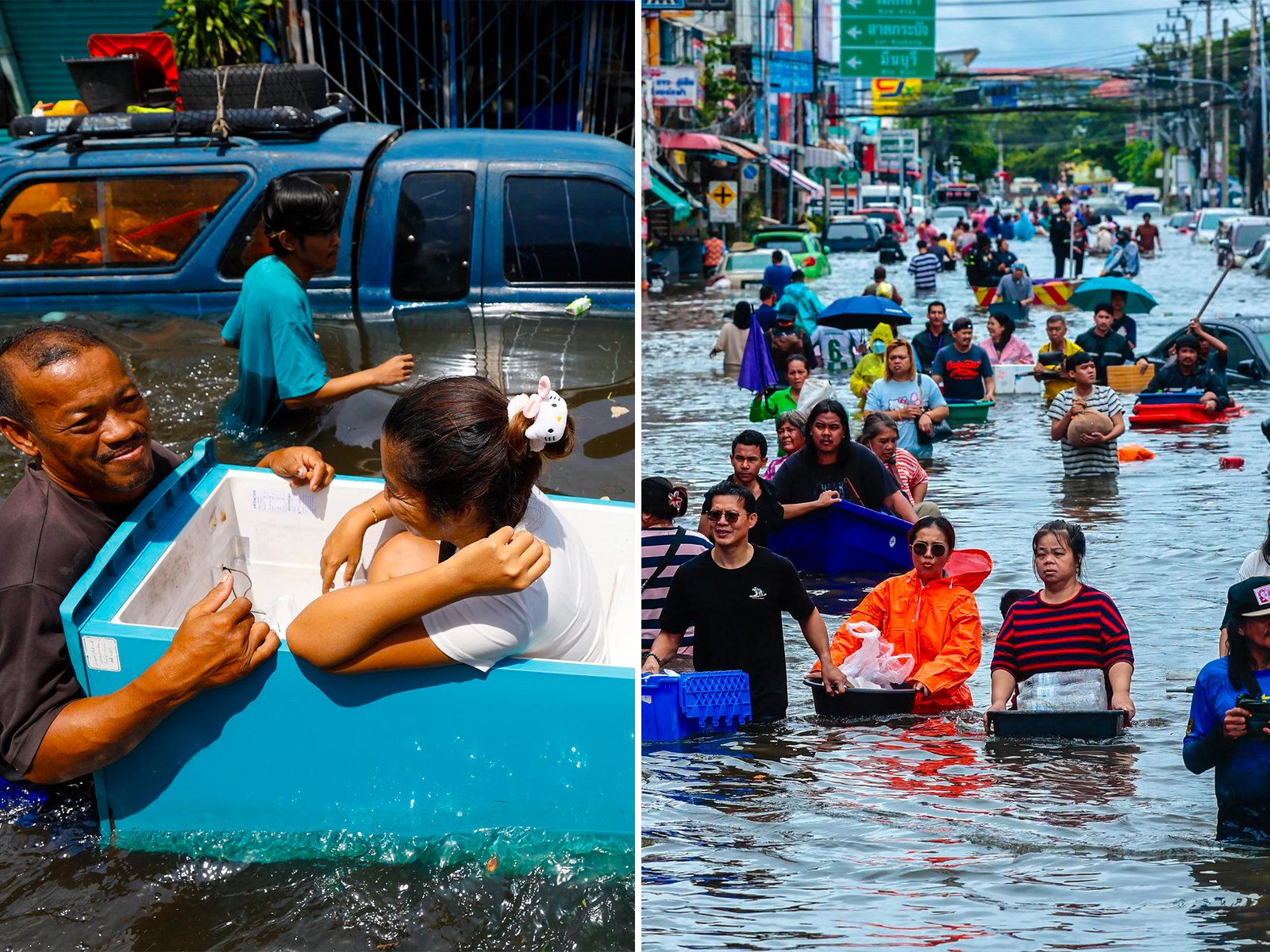
Bangkok is facing severe flooding after intense rainfall overwhelmed parts of Thailand’s capital, with about 40 people reported dead and thousands seeking shelter.
Government authorities have declared a flood disaster across Bangkok’s 50 districts, while pumping stations continue working to remove water from heavily affected neighbourhoods. More than 230 shelters have been used as residents deal with submerged roads, homes and vehicles.
About 300mm of rain fell in parts of Bangkok over roughly two days, according to the reporting. The volume overwhelmed drainage infrastructure in several areas, leaving stagnant floodwater across streets and residential communities.
Flooding disrupts daily life
The flooding has affected transport, schools and aviation operations. Bangkok’s Suvarnabhumi airport experienced major disruption after many Thai Airways workers were unable to reach the airport, contributing to a large backlog of luggage and flight cancellations earlier in the week.
Residents in some neighbourhoods have used improvised flotation devices to move through flooded streets, while traffic congestion has made travel difficult even in areas less severely affected.
Thailand’s prime minister, Anutin Charnvirakul, said the Bangkok metropolitan area remained at risk from water moving south from northern areas. Authorities have also been preparing for further heavy rain forecast for early October.
Why the flooding became so severe
Bangkok sits on the floodplain of the Chao Phraya River and relies on canals, pumps and flood barriers to move water through the city. Experts cited in the reporting said the intensity and persistence of the rainfall exceeded what parts of the drainage system could comfortably handle.
Ocean scientist Nikolaos Skliris of the University of Southampton said central Thailand has already shown a small but significant trend towards more extreme rainfall, while climate models indicate that heavier rainfall could intensify over the longer term.
Scientists have cautioned that it is too early to attribute this particular rainfall event directly to climate change. The immediate weather setup involved a low-pressure system that moved from an unusually warm South China Sea across Cambodia and Vietnam before becoming slow-moving over Bangkok. An unusually strong El Niño is also adding complexity to regional weather patterns.
The wider pattern of increasing extreme heat and weather risks is also being documented elsewhere. Europe’s recent record heat and extreme weather provides another example of how severe weather events are creating pressure on communities and infrastructure.
Myanmar also affected
The same weather system has affected neighbouring Myanmar, where flash floods and blocked roads have complicated rescue operations. Local officials reported deaths from a landslide in the south, while additional people remained missing.
In Bangkok, authorities say drainage and pumping operations are continuing as residents wait for floodwaters to recede. The scale of the flooding has highlighted the challenge of managing intense rainfall in a densely built, low-lying megacity.
Source: The Guardian; Thai Government.
