Author: Australia By Aussie

  • Tehran researcher says Iran war may be uniting people

    Tehran researcher says Iran war may be uniting people

    Hossein Hamdieh, a social researcher based in Tehran, says the ongoing war between Iran and the United States may be strengthening opposition to foreign intervention rather than encouraging Iranians to rise against their government.

    Writing in an opinion article for The Guardian, Hamdieh said there is no reliable nationwide polling showing how Iranians currently view the war. He described his account as an observation based on conversations with people in Tehran and his work with Iranian startups and the country’s digital economy.

    Hamdieh said that before the war, many people in the technology and business communities he worked with were critical of the Iranian state. He argued that some of those same circles are now expressing stronger hostility towards the United States because of the conflict.

    He cited Iranian entrepreneur Majid Hosseini Nejad, founder of online travel company Alibaba, as one example. Hamdieh said Hosseini Nejad posted anti-US and anti-Israel comments on X on 2 September. The comments and other examples in the article are presented by Hamdieh as observations from within Iran, rather than as evidence of nationwide public opinion.

    The researcher linked the change he describes to reports and images of civilian deaths and destruction during the war. The United Nations has separately reported that it found reasonable grounds to believe US strikes on a school and a sports facility in Iran in February involved violations of international humanitarian law, while also documenting serious alleged abuses by Iranian authorities. The UN findings remain subject to the relevant legal processes.

    Hamdieh argues that civilian casualties can strengthen nationalist sentiment and reduce support for foreign military intervention. He said some Iranians may oppose the Islamic Republic while still opposing a US military campaign against their country.

    The article comes as the seven-month conflict continues. Reuters reported on 22 September that Iran had offered to reopen the Strait of Hormuz within a week if the United States reduced military pressure and lifted its blockade, while Iranian officials attending the UN General Assembly said they were prepared to pursue diplomatic negotiations.

    US President Donald Trump has repeatedly questioned whether Iranians will turn against their government. In his UN General Assembly speech on 22 September, he warned that he could “annihilate” Iran if no peace agreement is reached and called for economic isolation of the country.

    Australia By Aussie has previously reported on Trump’s UN speech, including his comments on Iran, Ukraine and US foreign policy. Read the earlier Australia By Aussie report on Trump’s UN address.

    Hamdieh concludes that, from his perspective in Tehran, the war is making an uprising against the Iranian state less likely rather than more likely. His conclusion is an individual assessment based on observations and conversations, not a nationwide measurement of Iranian public opinion.

    Source: The Guardian
  • Trump’s UN speech focuses on Iran, AI and US power

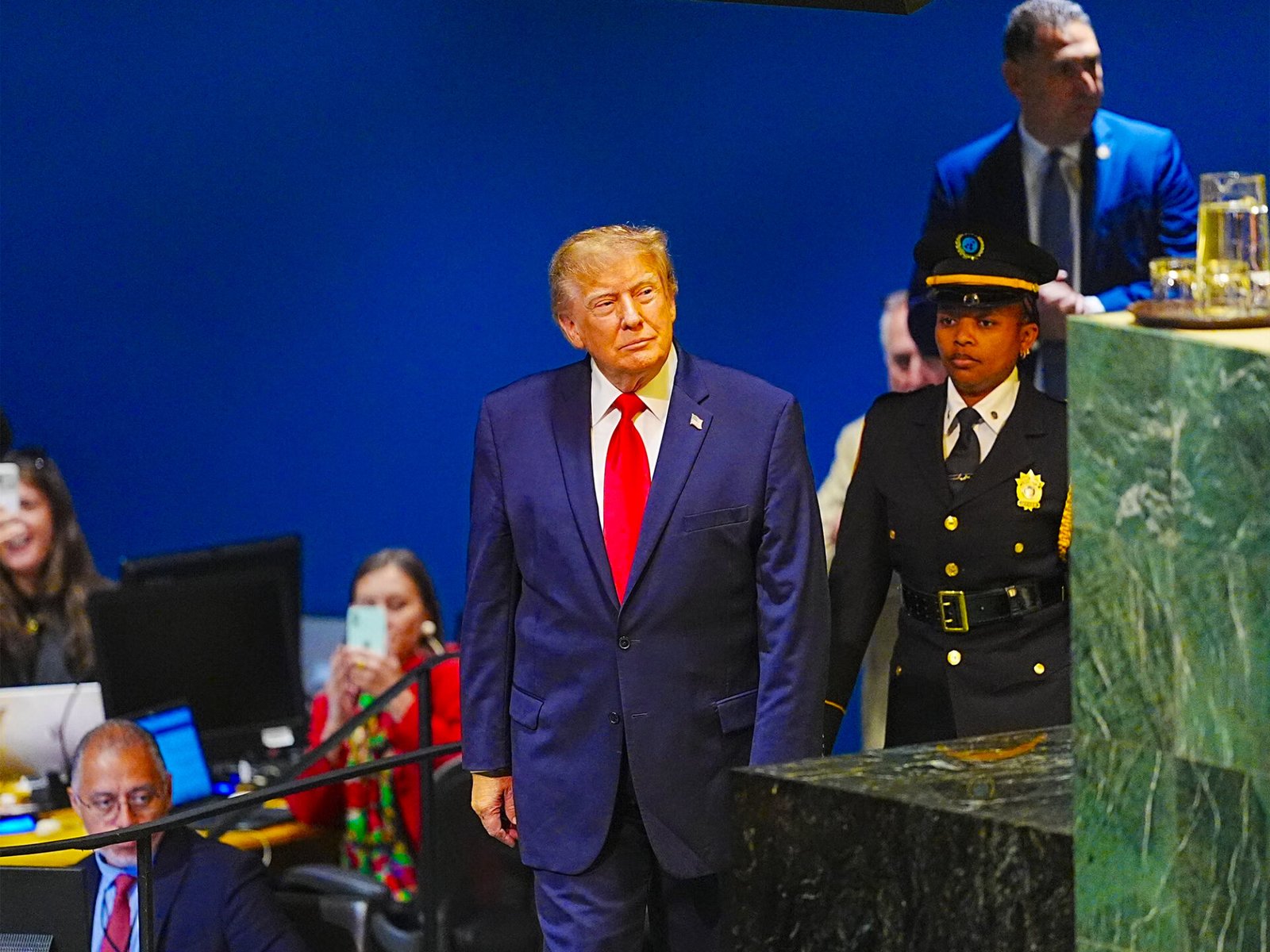
    Trump’s UN speech focuses on Iran, AI and US power

    US President Donald Trump used his address to the United Nations General Assembly in New York to defend his administration’s foreign policy, warn Iran of further military action and outline positions on artificial intelligence, climate change and international institutions.

    Trump’s 37-minute speech on 22 September 2026 covered the war involving Iran, Russia’s war in Ukraine, US relations with other countries, Greenland, artificial intelligence and the role of the United Nations. Reuters reported that Trump warned he could “annihilate” Iran if no peace agreement is reached and said he expected a deal after the US midterm elections.

    The speech also included a proposal to refer to artificial intelligence as “super intelligence”, according to Reuters. Trump said the United States was leading China in the technology and argued against measures that could slow its development.

    Trump’s comments on AI come as governments continue to debate how rapidly developing systems should be governed. Australia By Aussie previously reported on former Australian chief scientist Alan Finkel’s call for greater US-China cooperation on international AI rules in its earlier coverage of AI regulation.

    Climate change was another major subject. Trump rejected warnings about climate risks and argued that the global climate was cooling. The Guardian opinion article that prompted this report disputed that assessment and pointed to recent temperature records and scientific reports. Australia By Aussie has also covered research finding that seven of Earth’s nine planetary boundaries are currently outside the identified safe operating space, including the climate system, in earlier coverage of the planetary boundaries assessment.

    Trump also criticised the United Nations and the International Criminal Court, while discussing US security interests in Greenland and Venezuela. Reuters reported that he called on countries to support economic isolation of Iran and defended the US-Israeli campaign against Tehran.

    On Ukraine, Trump said the United States was working with the Russian and Ukrainian leaderships and expressed confidence that the conflict could be brought to an end. The speech did not produce a new peace agreement.

    The Guardian opinion article by historian and former White House speechwriter Ted Widmer argued that Trump’s address represented a shift away from traditional US appeals to international cooperation and persuasion. Those assessments are Widmer’s interpretation of the speech rather than an official description of US policy.

    The speech comes during the 81st session of the UN General Assembly, where world leaders are discussing conflicts, climate change, artificial intelligence and the future role of international institutions. The United States remains a major participant in those discussions, while Trump’s administration continues to pursue a foreign policy centred on US military and economic power.

    Source: The Guardian

  • Jake and Logan Paul visit Pentagon for troop talk

    Jake and Logan Paul visit Pentagon for troop talk

    YouTube personalities Jake and Logan Paul visited the Pentagon in Washington DC and spoke to US service members during a visit that has drawn attention because of their meeting with senior Trump administration officials.

    The brothers were invited to the Pentagon on 17 September to meet military personnel and deliver motivational remarks. Official US government photographs confirm that they met Secretary of Defense Pete Hegseth and toured the Pentagon.

    Logan Paul described the visit as a “cool experience” and spoke about the commitment and sacrifice of military personnel. The remarks were made during an engagement with service members at the Pentagon.

    Jake Paul also met Treasury Secretary Scott Bessent during the Washington visit. According to the Guardian opinion column, the discussion focused on ways to improve financial empowerment among young Americans.

    The visit has prompted debate over the role of social media personalities in government outreach. Guardian columnist Arwa Mahdawi uses the episode to criticise the Trump administration’s relationship with influencers and what she describes as a broader decline in the influence of expertise and research.

    Jake Paul has previously promoted cryptocurrency-related products. The Guardian column notes that the US Securities and Exchange Commission charged him in 2023 over alleged unlawful promotion of crypto assets without disclosing compensation. Paul settled the matter without admitting or denying the charges, according to the column.

    The Pentagon visit comes as the Trump administration continues its military campaign against Iran, which the Guardian column discusses in strongly critical terms. Those characterisations are part of the columnist’s opinion and are not presented here as independent findings.

    Trump has also previously publicly encouraged Jake Paul to consider running for political office and said he would endorse him, according to the Guardian column. Any future candidacy or election outcome remains uncertain.

    The episode has therefore become a point of discussion about the growing intersection between influencers, government institutions, politics and public communication in the United States.

    Source: The Guardian

  • Ed Davey sets out Lib Dem tax and voting strategy

    Ed Davey sets out Lib Dem tax and voting strategy

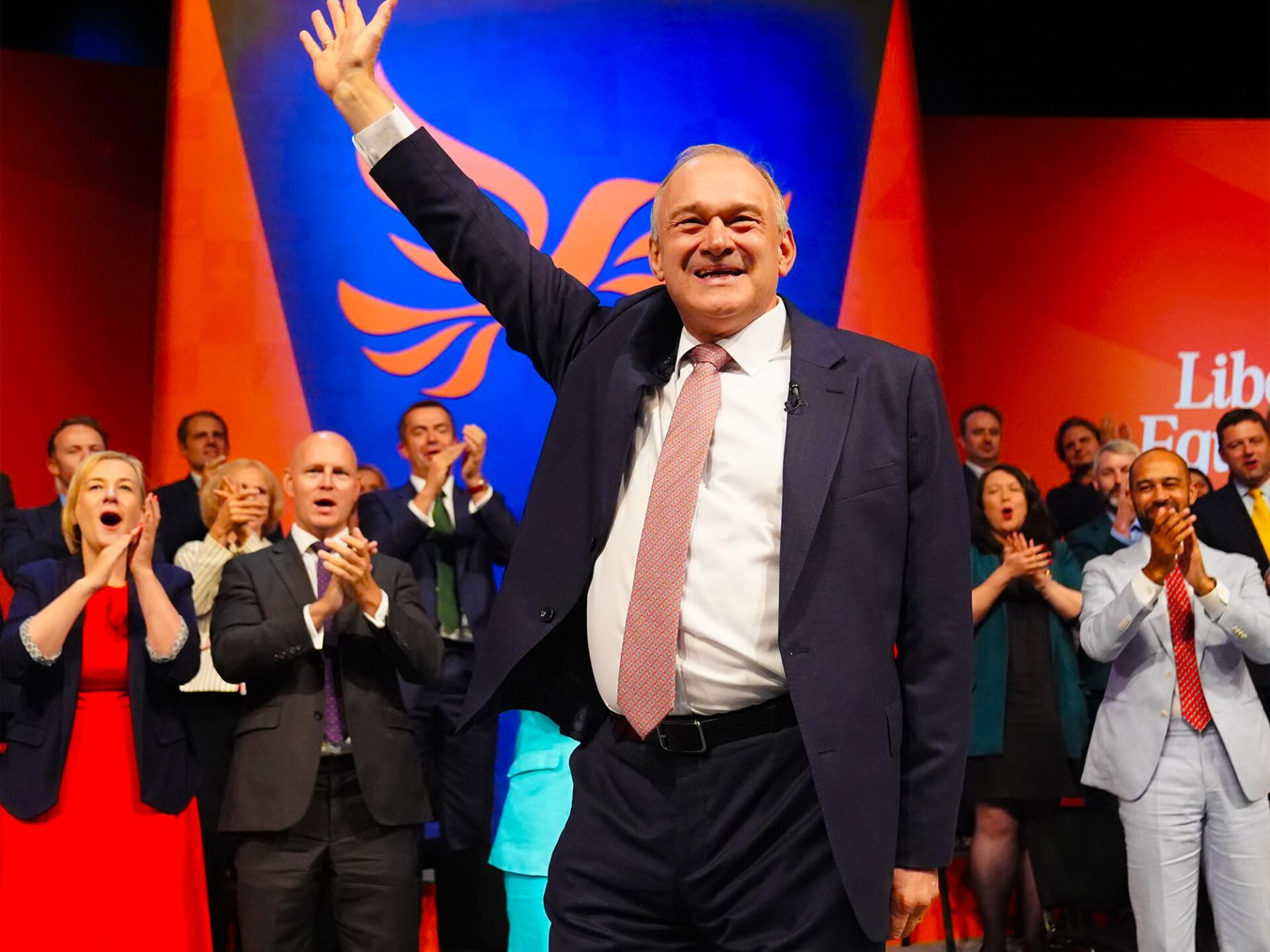
    Liberal Democrat leader Sir Ed Davey has used his party’s conference speech to set out a combination of tax-cutting proposals and an appeal to voters concerned about Reform UK and the Conservatives.

    In an editorial published by The Guardian on 22 September, the newspaper examined Davey’s conference address and the political strategy behind the Liberal Democrats’ latest positioning.

    Davey has proposed raising the personal income tax allowance to £15,000 and increasing the higher-rate threshold to £56,000. The Guardian said the party has presented the measures as part of a £17bn tax-cutting package aimed in part at voters who have previously supported the Conservatives.

    The proposals are being presented alongside a pro-European position and opposition to Reform UK. The Guardian editorial said Davey is seeking to appeal both to moderate Conservative voters and to left-leaning voters who may consider tactical voting in constituencies where the Liberal Democrats are competitive.

    The party’s electoral record provides part of the context. According to The Guardian, the Liberal Democrats won 60 of their 72 seats from the Conservatives at the 2024 general election and finished second in a number of other Conservative-held constituencies.

    Davey has also argued that the Liberal Democrats could win more parliamentary seats than the Conservatives at the next election. That is a political claim about a future election outcome rather than an established result.

    The Guardian editorial also examines the Liberal Democrats’ position on closer ties with Europe. It notes that rejoining the European single market would involve accepting common rules and institutions, while the party has linked closer European ties to economic growth.

    On public services, the editorial contrasts the new tax-cutting emphasis with issues associated with Davey’s 2024 campaign, including carers’ support, NHS funding and concerns over polluted rivers. It also discusses his argument that people feel powerless in relation to problems such as maternity care and disability provision.

    Political scientist Paula Surridge is cited in the editorial in relation to the Liberal Democrats’ electoral coalition and the party’s appeal to liberal-left voters. The Guardian says the party faces a challenge in balancing that appeal with its tax-cutting programme.

    The Guardian article is an editorial and therefore presents the newspaper’s assessment of the Liberal Democrats’ strategy. The party’s tax proposals, European policy and approach to tactical voting remain matters of political debate.

    Source: The Guardian

  • Robert Reich says AI fuels debate over jobs and power

    Robert Reich says AI fuels debate over jobs and power

    US economist and former labour secretary Robert Reich says growing concerns about artificial intelligence are feeding a new debate over jobs, wages and the influence of large technology companies.

    In a Guardian opinion column published on 22 September, Reich points to criticism of AI and its datacentres from figures on opposite sides of US politics, including Bernie Sanders and Steve Bannon. He argues that concern about AI is increasingly connected to wider public frustration with corporate power and economic inequality.

    Reich cites US Bureau of Labor Statistics data showing that the share of the economy going to workers as wages had fallen to 52.9{0931a9b6576c5d87fe846c236d3725957ace4ff7894c2ecd00b9029ccfe6a5f9} by mid-2026, which he describes as a record low in the series that began in 1947. He argues that the expansion of AI could add to concerns about employment and real wages, although those effects remain a subject of wider economic debate.

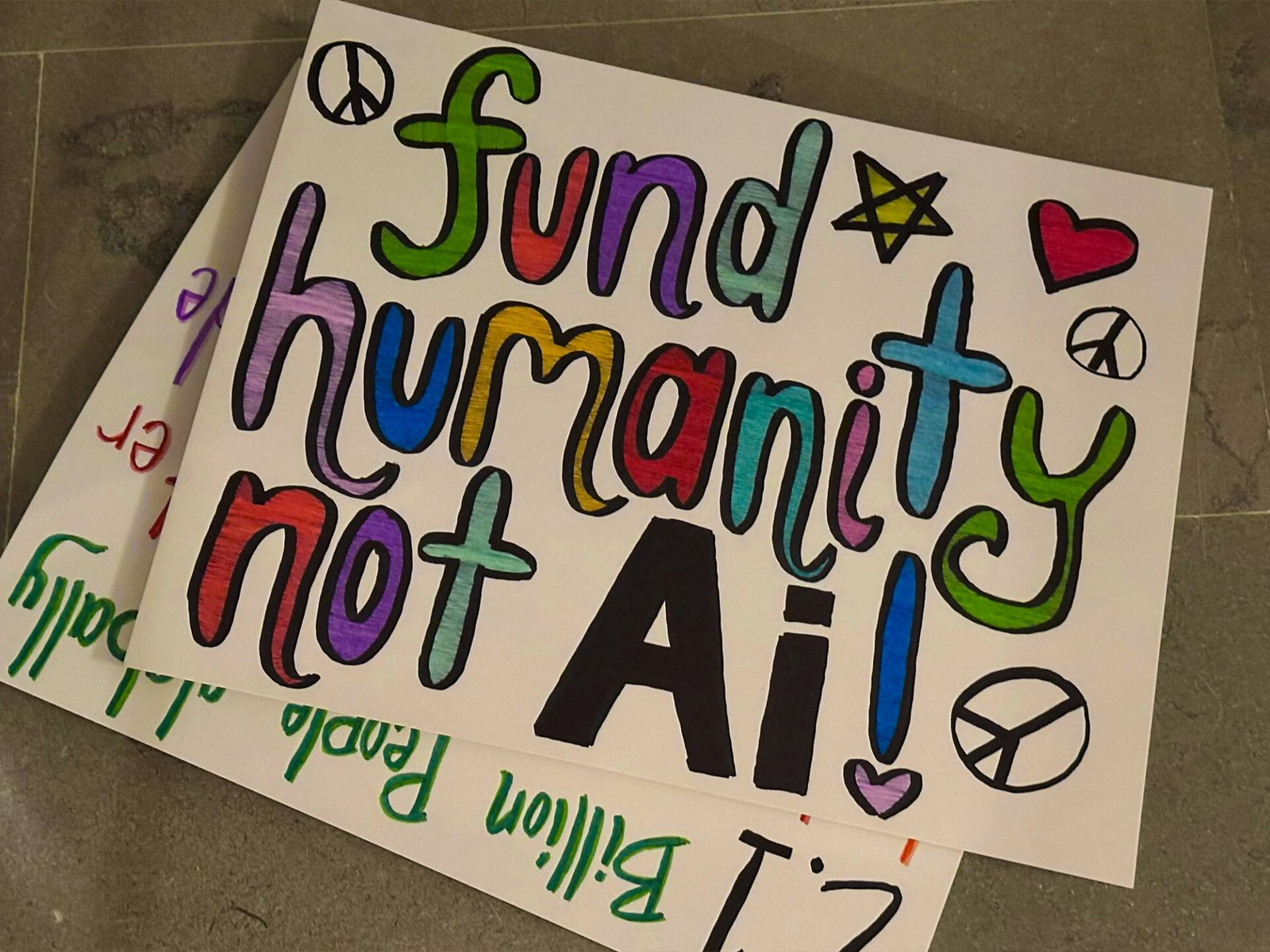
    The column also highlights public concerns about datacentres and AI. Reich cites polling that he says shows about 70{0931a9b6576c5d87fe846c236d3725957ace4ff7894c2ecd00b9029ccfe6a5f9} of Americans oppose datacentres and more than 60{0931a9b6576c5d87fe846c236d3725957ace4ff7894c2ecd00b9029ccfe6a5f9} believe AI could destroy humanity. These figures are presented in his column as evidence of broader public unease about the technology.

    Reich links those concerns to questions about how governments regulate powerful companies, including debates over subsidies, taxation, labour protections, competition policy and the use of public resources for AI infrastructure.

    Australia By Aussie has previously covered international debate over AI regulation, including former Australian chief scientist Alan Finkel’s call for greater cooperation between the United States and China. Australia’s earlier coverage of the US-China AI debate examined arguments for international rules as AI capabilities continue to develop.

    Reich also points to polling on perceptions of political parties and economic elites, arguing that AI could become an increasingly visible issue in US political debate ahead of the 2026 midterm elections.

    His article is an opinion column, and its interpretation of AI’s political and economic effects represents Reich’s views. The underlying issues — including employment, wages, datacentre investment and AI regulation — remain subjects of ongoing policy and economic debate.

    Source: The Guardian

  • Ranjana Srivastava urges patients to speak up about healthcare

    Ranjana Srivastava urges patients to speak up about healthcare

    Australian oncologist and author Ranjana Srivastava has argued that patients should feel able to raise concerns about their healthcare, while recognising that not every difficult medical encounter requires a formal complaint.

    In an opinion article published by The Guardian, Srivastava writes that poor communication and patients feeling dismissed can contribute to serious failures in care. She draws on two personal accounts involving hospital treatment and communication between patients and medical staff.

    One account involved a patient who experienced severe pain after surgery and later felt dismissed when seeking help. Another involved a hospital patient with pneumonia who was experiencing severe pain and unstable vital signs and became concerned after nurses almost administered medication despite a red wristband identifying a morphine allergy.

    According to Srivastava, the second patient’s care improved after he indicated that he intended to make a formal complaint. She writes that doctors subsequently explained his test results, acknowledged the medication error and provided more attentive care.

    Srivastava argues that complaints can help patients seek resolution and identify problems, but says direct communication may resolve some concerns without a formal process. She also notes that healthcare organisations have mechanisms for raising concerns, including liaison officers and patient advocates.

    The article highlights the power imbalance between doctors and patients and says additional barriers can make it harder for disadvantaged people, older people and people from culturally diverse backgrounds to speak up.

    Srivastava also acknowledges the pressures facing doctors and argues that patients should show a degree of understanding where possible. Her central argument is that healthcare systems should ensure patients with legitimate concerns are heard, rather than simply seeking to reduce the number of complaints.

    The Guardian article is an opinion piece based partly on Srivastava’s personal experiences and reflections. It does not establish that the incidents described represent healthcare outcomes across Australia.

    Source: The Guardian

  • Alan Finkel urges Trump and Xi to seek AI deal

    Alan Finkel urges Trump and Xi to seek AI deal

    Former Australian chief scientist Alan Finkel has called for the United States and China to work together on an international agreement to regulate artificial intelligence, arguing that the rapid development of the technology requires governments to act.

    In an opinion article published by The Guardian, Finkel focused on the pace of AI development and the risks raised by increasingly capable systems. He pointed to warnings from technology leaders and researchers, while also noting the benefits AI is already providing to individuals, businesses, governments and researchers.

    Finkel cited research from the METR research institute indicating that generative AI capability doubled every seven months between 2020 and 2024, before accelerating to about every four months since then. He argued that the speed of development leaves governments with limited time to establish effective safeguards.

    The article also refers to recent concerns from Anthropic chief executive Dario Amodei, who has called for a slowdown in AI development. Finkel said OpenAI chief executive Sam Altman and xAI chief executive Elon Musk had also backed calls for greater caution.

    US President Donald Trump has taken a different position, according to Finkel. The article says Trump dismissed warnings that AI could cause severe harm and rejected calls for stronger AI guardrails.

    Finkel argued that relying on technology companies to regulate themselves would not provide a consistent international framework. He pointed to Anthropic’s approach of using a detailed AI constitution, while proposing that fundamental rules focused on human safety, lawful behaviour and ethical conduct could form part of AI systems.

    Australia By Aussie has previously reported on concerns about AI risks and the calls for governments to respond to increasingly capable systems. Australia’s earlier coverage of AI risks examined concerns including autonomous systems, cybersecurity, misinformation, privacy and concentrated technological power.

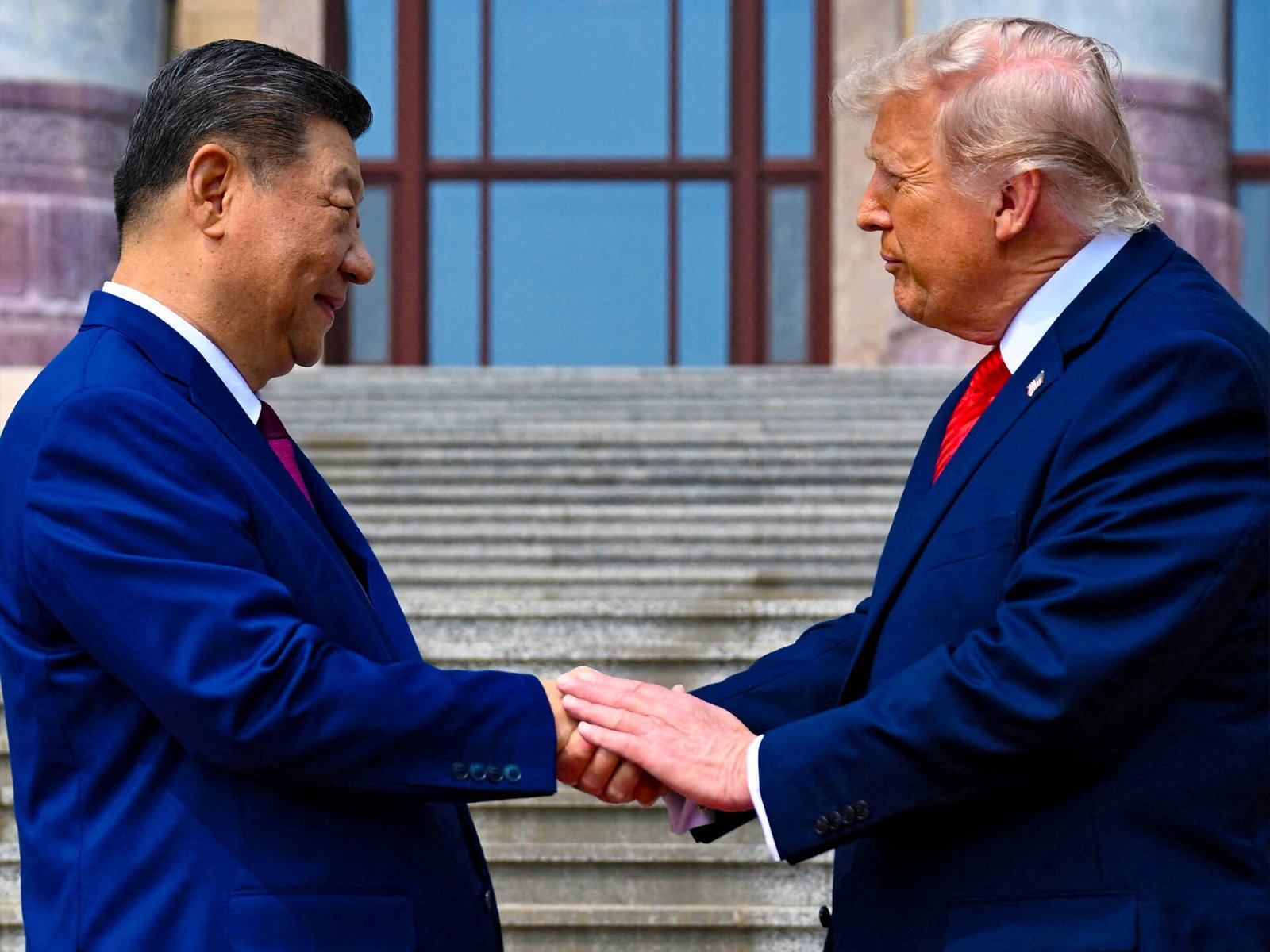
    Finkel compared the need for international AI cooperation with previous efforts by major powers to manage the risks associated with nuclear weapons. He argued that the US and China, as leading AI powers, have a particular role in developing international rules.

    His proposal comes as governments and technology companies continue to debate how AI should be developed and regulated. The Guardian article is an opinion piece, so Finkel’s proposals and assessments represent his views rather than an agreed international policy.

    Source: The Guardian

  • US Challenges Australia’s Digital Duty of Care Plan

    US Challenges Australia’s Digital Duty of Care Plan

    The United States has raised formal concerns about Australia’s proposed digital duty of care laws, arguing that some measures could affect protected speech and the way American technology platforms operate.

    A submission from the US government to Australia’s public consultation says giving Australian authorities powers to define “foreseeable harm” could create a risk of what it describes as viewpoint-based censorship. Washington has also asked Australia to exempt American platforms from parts of the proposed framework.

    The intervention comes as the Australian government develops legislation intended to require major online services to take greater responsibility for foreseeable harms. The proposed rules would cover social media platforms, online games, apps and AI chatbots.

    For users under 18, the government has identified proposed areas of harm including pornography, material promoting or encouraging eating disorders, misogynistic content, content that glorifies crime or dangerous stunts, and material that causes serious mental health distress, including abuse and bullying.

    The proposed framework would also give Australians greater control over algorithmic feeds. Platforms would be required to provide users with a choice between personalised recommendations and a feed based on accounts they choose to follow. The Australian government says the measure is intended to give users more control over their online experience.

    The US submission argues that mandatory changes to platform algorithms could have effects beyond Australia because major technology companies generally deploy product features globally. It says Australia-specific requirements could therefore influence how users in other countries experience online platforms.

    The Australian government released an exposure draft of the Online Safety Amendment (Digital Duty of Care) Bill 2026 for consultation on 8 September. The consultation closed at midday on 22 September, according to the federal Department of Infrastructure, Transport, Regional Development, Communications, Sport and the Arts.

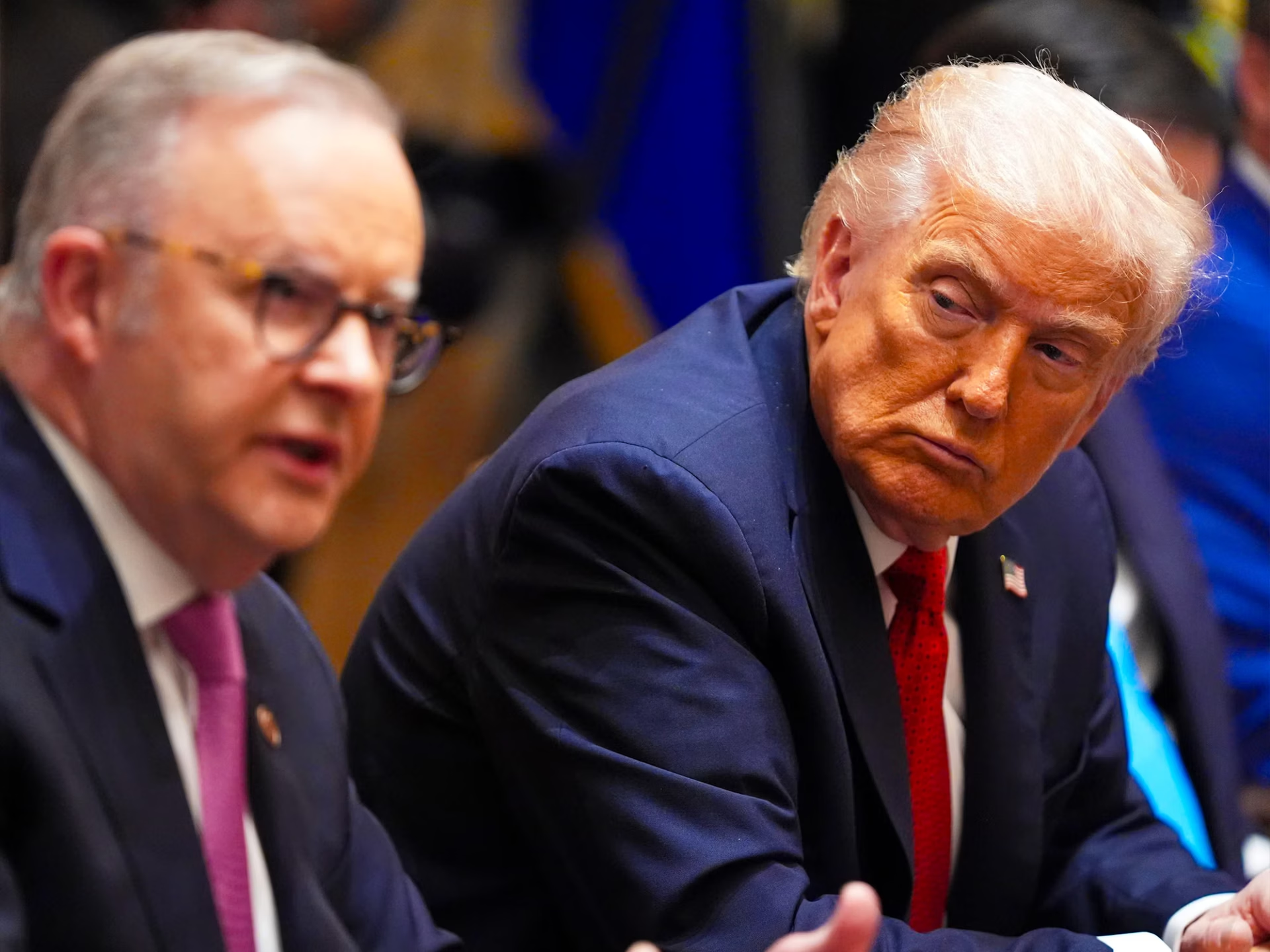
    Communications Minister Anika Wells has described the reforms as giving Australians a choice over algorithmic feeds. Prime Minister Anthony Albanese has said the government will make decisions in Australia’s national interest.

    The US intervention adds an international dimension to an Australian policy debate that involves online safety, platform regulation, user choice and freedom of expression.

    Source: The Guardian

  • Indigenous History Debate Puts Focus on School Curriculum

    Indigenous History Debate Puts Focus on School Curriculum

    A debate over how Indigenous history and culture should be taught in Australian schools has prompted renewed discussion about curriculum design, historical knowledge and national identity.

    In a Guardian opinion column, University of Melbourne academic Tony Birch responds to comments by shadow education minister Julian Leeser about Indigenous education. Birch says Leeser wants Indigenous curriculum content to move away from being embedded as a cross-curricular priority and instead be taught through discrete topics within subjects such as history, geography or science.

    Birch argues that schools need stronger resources and expertise from Indigenous educators to support the teaching of Indigenous history and culture. His column presents this as an education question about how students develop knowledge of Australia’s past, rather than simply a debate over symbols of national identity.

    A major part of Birch’s argument concerns the Aborigines Protection Act 1886 in Victoria. He describes the legislation as having imposed controls on Aboriginal people living on reserves and missions and says its effects included restrictions on family connections, financial support and links to land and Country.

    Birch also connects the 1886 legislation with the broader history of Aboriginal and Torres Strait Islander child removal and the Stolen Generations. He argues that greater knowledge of this history would help students examine how Australian identity and government policy developed over time.

    The column also addresses the concepts of Western values and national pride. Birch argues that students should be taught to critically examine ideas such as values and pride rather than simply being encouraged to express national identity through symbols such as flags.

    Birch concludes that the 1886 legislation should be taught in schools as part of a broader examination of national identity and questions about who has been included or excluded from it.

    The Guardian article is an opinion column. The views about curriculum policy and national identity are Birch’s, while the comments attributed to Julian Leeser relate to his stated approach to Indigenous education.

    Source: The Guardian

  • Why Classical Music Offers a Break From Optimisation

    Why Classical Music Offers a Break From Optimisation

    In a world increasingly shaped by demands for speed, efficiency and constant improvement, classical music can offer a different kind of escape, according to a recent Guardian opinion column by critic and writer Joseph Earp.

    Earp describes becoming increasingly drawn to classical composition as a response to what he sees as an exhausting culture of optimisation. He points to the growing pressure to make work, sleep, exercise and even relaxation more efficient, arguing that the pursuit of improvement can leave little room for simply experiencing life.

    His own retreat has been through music, with composers including Morton Feldman, Steve Reich and Gustav Mahler becoming part of his everyday listening. Rather than treating older works as relics of another era, Earp says they can reveal emotions and experiences that remain recognisable across generations.

    He also reflects on attending an Australian Chamber Orchestra performance of works by Alfred Schnittke. For Earp, the music offered a connection with the composer’s struggles and uncertainties despite the distance between their lives and circumstances.

    Jean Sibelius’s Fifth Symphony becomes the clearest example. Earp focuses on its famous third-movement passage associated with birds taking flight, describing the experience as a reminder that people remain capable of finding wonder in the natural world regardless of technological change.

    The column ultimately presents classical music as more than an escape into the past. For Earp, it provides a way to reconnect with emotions and experiences that technology cannot easily optimise or replace.

    The Guardian piece is an opinion column and reflects Earp’s personal interpretation of music, technology and modern life rather than a scientific study of the effects of classical music.

    Source: The Guardian