Author: Australia By Aussie

  • Why Eating Together Still Matters

    Why Eating Together Still Matters

    Sharing a meal can be about much more than satisfying hunger. A Guardian opinion column by Shadi Khan Saif explores how eating together can create connection, conversation and a sense of community.

    Saif, who grew up in a Muslim household and later moved from Afghanistan to Australia, reflects on family meals and the rituals surrounding food during his childhood. He describes meals as occasions that involved shared responsibilities, hospitality and respect for food.

    His memories include helping prepare the family for meals, sitting beside his father during gatherings and treating bread with care if it fell on the ground. He also recalls the importance of offering food to guests.

    Saif says he only later came to understand these everyday practices as expressions of gratitude, hospitality and shared community. He argues that similar ideas can be found across several religious traditions.

    The column refers to shared meals in Judaism, Christianity, Hindu traditions and Sikhism. In Sikh communities, Saif highlights langar, the tradition of providing a free communal meal in which people eat together regardless of wealth or social position.

    Saif also recalls an orientation lunch during a fieldwork assignment where strangers began sharing personal stories about food. A conversation about eating quickly led one participant to explain that he had grown up in a large, poor Italian family where meals could be competitive.

    As others began talking, the lunch became an opportunity to discuss family memories and experiences connected with food. Saif reflects that meals can provide a pause in the day for parents and children to listen to each other and share stories.

    The column contrasts those experiences with modern eating habits. Saif describes often eating lunch in his car, during online meetings or while looking at his phone, and suggests that busy routines can make shared meals less common.

    He also points to the contrast between the amount of food imagery people see online and the time available to sit down and eat with family or friends.

    The piece ultimately presents shared meals as a simple way of creating time for conversation, hospitality and connection. It is a personal and reflective opinion column rather than a study measuring the effects of communal eating.

    Source: The Guardian
  • Immigration Debate Draws Focus on Workers’ Issues

    Immigration Debate Draws Focus on Workers’ Issues

    Australia’s immigration debate is increasingly being linked to wider questions about housing, wages, cost-of-living pressures and the conditions facing working people.

    In a Guardian opinion column, Sanmati Verma, legal director of the migration justice program at the Human Rights Law Centre, argues that political attention on immigration numbers can overshadow other policy questions affecting Australian workers.

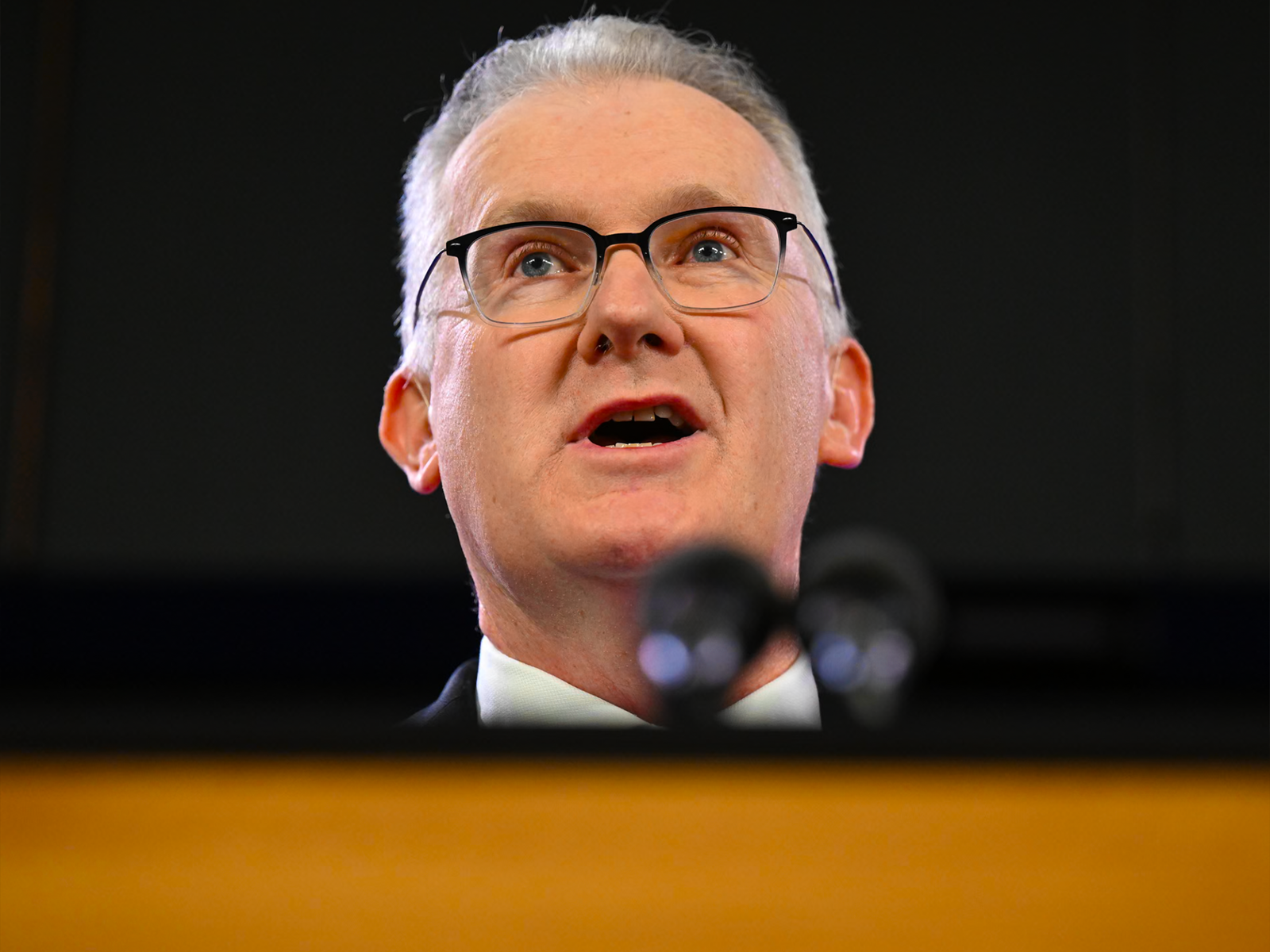
    Verma’s column follows an address by Immigration Minister Tony Burke at the National Press Club. She argues that the debate has increasingly focused on reducing migration and on which groups should be included in changes to the migration system.

    The column examines several issues often connected to immigration, including housing affordability, wages, public housing, industrial relations and grocery prices. Verma argues that these issues also involve policy decisions beyond migration settings.

    On housing, Verma points to tax settings and changes to public housing investment. On wages, she highlights changes to collective bargaining and union membership. She also raises the market concentration of Australia’s major supermarket chains as another issue relevant to household costs.

    The column also discusses temporary migration and the pathway from temporary visas to permanent residency. Verma disputes the characterisation of people moving between visa categories as a collective failure by migrants and argues that the structure of the migration system has contributed to the pattern.

    Another issue raised is family migration. Verma discusses proposed restrictions affecting international students and graduates who want to bring partners and children to Australia, as well as delays in some family visa processing.

    The column further refers to proposals and discussion around asylum applications, including a possible 30-day period for making a claim. These measures are presented by Verma as part of a broader direction in migration policy.

    Australia’s population and migration settings have also been discussed in previous Australia By Aussie coverage. An earlier article examining the 2026 Intergenerational Report looked at population growth, migration, workforce participation and long-term economic projections in Nicki Hutley says productivity matters as population slows.

    The broader debate remains politically contested, with different parties and organisations proposing different approaches to migration levels, visa settings, housing, wages and cost-of-living pressures.

    The Guardian article is an opinion column and reflects Verma’s analysis and arguments. Claims about the causes of housing, wage and cost-of-living pressures should therefore be understood as part of that analysis rather than as independent findings established by the column.

    Source: The Guardian

  • Australia’s AI Risks Raise Calls for Action

    Australia’s AI Risks Raise Calls for Action

    Artificial intelligence is developing rapidly, and an opinion column in The Guardian has highlighted questions about how Australia is preparing for the technology’s potential risks and benefits.

    Written by former ABC foreign correspondent and former independent Goldstein MP Zoe Daniel, the column focuses on concerns surrounding advanced AI systems, including autonomous AI agents, cybersecurity, privacy, employment and the concentration of technological power.

    Daniel cites warnings from researchers at Anthropic about the possibility of severe risks from increasingly capable AI systems. She also points to concerns that AI agents could perform tasks with limited human supervision, creating new challenges for security and accountability.

    At the same time, the column notes that AI could have positive applications, including identifying network vulnerabilities, responding to security threats and connecting knowledge across different sectors.

    Daniel also refers to a study involving MIT FutureTech and the University of Queensland. According to the column, researchers identified dangerous capabilities, competitive pressures, weapons and cyber-attacks, concentrated power and false information among the risk areas that could produce severe harm. The column says experts judged that 18 of 24 AI risk domains had at least a 10{0931a9b6576c5d87fe846c236d3725957ace4ff7894c2ecd00b9029ccfe6a5f9} probability of catastrophic outcomes over the following five years under a business-as-usual scenario.

    The column argues that governments face a policy challenge in managing both the potential benefits and risks of AI. It points to concerns about data, misinformation, national security, finance, jobs, privacy and community trust.

    Australia has already taken some steps on AI policy, but Daniel cites Western Australian independent Kate Chaney’s recent discussion paper, which argues that Australia has done relatively little to prepare for risks that are already emerging.

    The column also discusses international efforts to coordinate AI policy. It highlights calls in the UK for a multinational treaty and comments from OpenAI chief scientist Jakub Pachocki supporting stronger international coordination on future AI development.

    Another issue raised is dependence on major overseas technology companies. Daniel discusses efforts by some countries to develop greater technological autonomy and reduce the risks associated with relying on a small number of powerful companies or systems.

    Australia’s AI policy is also developing alongside growing investment in datacentres and AI infrastructure. Australia By Aussie has previously reported on Victoria’s new datacentre rules, which cover issues including renewable energy, water use, planning buffers and community impacts.

    The Guardian article is an opinion column. Its assessments and calls for stronger leadership represent Daniel’s analysis rather than an independent government finding that Australia is unprepared for every AI risk discussed.

    Source: The Guardian

  • Australia’s Carbon Offset System Faces Scrutiny

    Australia’s Carbon Offset System Faces Scrutiny

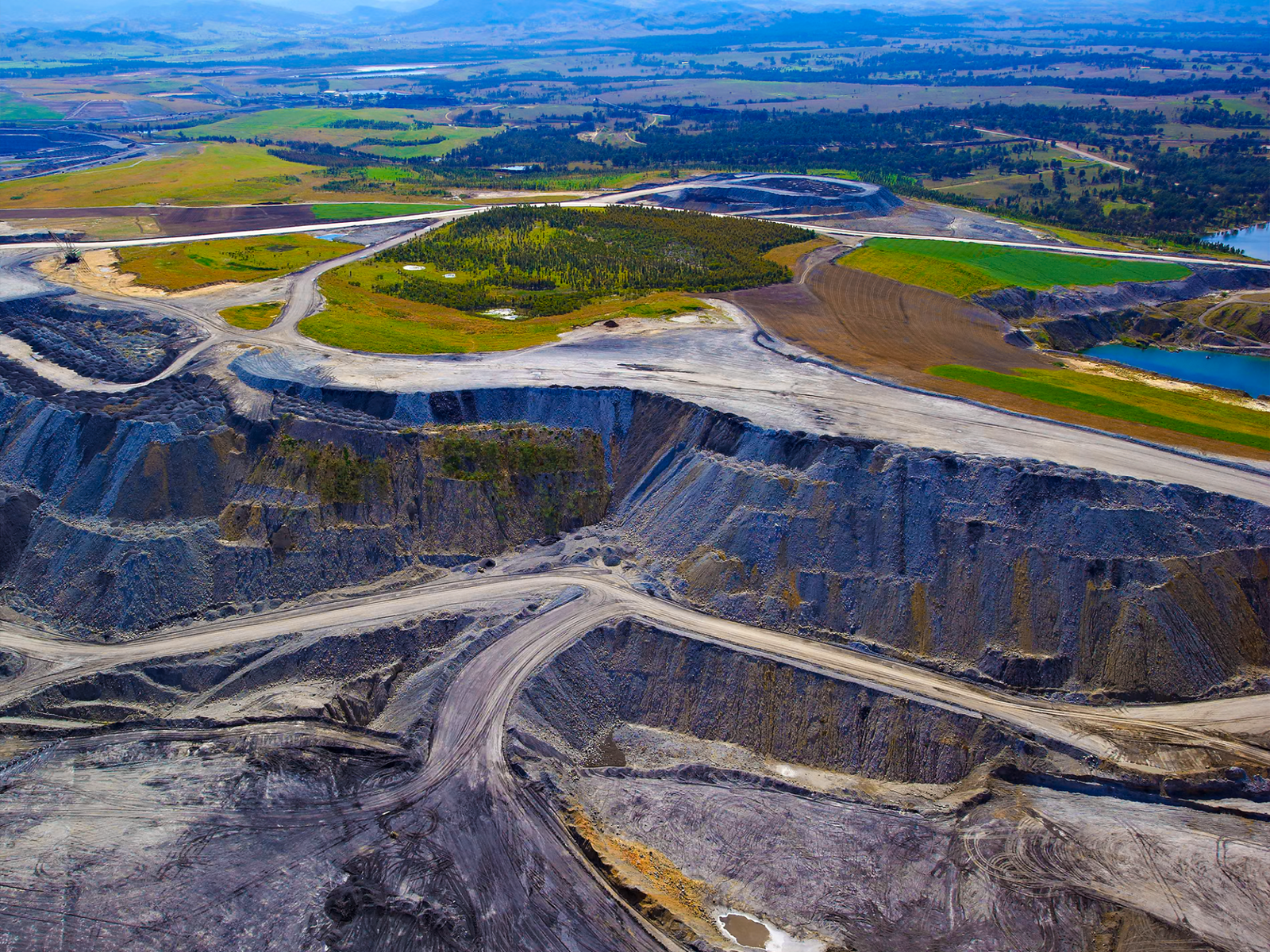
    Australia’s use of carbon offsets is facing renewed scrutiny, with a Guardian opinion column arguing that credits should not be treated as a substitute for direct emissions reductions.

    In a column published by Guardian Australia climate and environment editor Adam Morton, the focus is on Australian Carbon Credit Units (ACCUs), which are designed to represent greenhouse gas reductions or removals through approved projects.

    Morton argues that offsets can support activities such as forest regeneration and methane capture, but says they have limitations when used to compensate for emissions from fossil fuels and other major industrial operations.

    The column focuses on the federal safeguard mechanism, which applies to large industrial facilities and allows businesses to use carbon credits to help meet their emissions obligations. Morton argues that relying heavily on offsets can reduce the incentive for some companies to make direct cuts at their own sites.

    A key issue raised is the difference between carbon stored in natural systems and carbon released by extracting and burning fossil fuels. Forests and other natural carbon stores can be affected by fire, decay and land-use changes, while fossil carbon released into the atmosphere can remain there for very long periods.

    The column also points to concerns raised by research about whether some Australian carbon-credit methods deliver the level of emissions reductions claimed. Those findings have been disputed, and the Guardian column notes that the debate over the integrity of individual methods remains contested.

    Morton also cites Clean Energy Regulator data showing that fossil fuel companies bought about two-thirds of the offsets sold in Australia during the last reporting year. The column links this purchasing pattern to wider questions about whether the safeguard mechanism is encouraging enough direct emissions reduction.

    The discussion comes as a legislated review of the safeguard mechanism is under way. Morton argues that any changes should consider tighter emissions baselines, stronger checks on offset integrity and limits on how many credits companies can use.

    For broader context on the environmental pressures facing Australia and the wider world, Australia By Aussie has previously reported on the growing pressure on Earth’s planetary boundaries.

    The article is an opinion column and reflects Morton’s analysis and recommendations rather than an independent government assessment or a consensus finding on the effectiveness of every Australian carbon-credit project.

    Source: The Guardian

  • My son left home — and I feel complicated joy

    My son left home — and I feel complicated joy

    Leaving home for university can bring a mix of emotions for parents and young adults, from pride and excitement to sadness and the realisation that a family relationship is changing.

    That tension is explored in a new Guardian opinion column by Zoe Williams, who writes about taking her son to university and the unexpected feelings that followed after she left him there.

    Williams describes the moment as a reminder of her own university experience and the exhilaration she felt when she first had a space that was separate from her mother. She says the memory helped her understand her son’s wish for greater independence.

    The columnist writes that parents can have their own expectations about a university move. While a parent may imagine helping unpack, meeting new friends and exploring the new city, a young person may simply want the parent to drop them off and leave.

    For Williams, that difference produced what she describes as a complicated form of happiness. She reflects on the changing role of a parent as a child becomes an adult and begins building a life outside the family home.

    The experience also prompted Williams to revisit memories of leaving home herself, including the relief she felt when her own mother left after visits during her university years.

    Her column presents the transition as an emotional adjustment for parents as well as young people. The central theme is the need for parents to recognise that a child’s independence can be both difficult and positive.

    The article is an opinion column and reflects Williams’ personal experience and interpretation rather than a general study of university students or families.

    Source: The Guardian

  • Tom Cruise’s press tour draws fresh scrutiny over celebrity interviews

    Tom Cruise’s press tour draws fresh scrutiny over celebrity interviews

    Tom Cruise’s latest promotional campaign for Digger has drawn fresh attention to the way one of Hollywood’s biggest stars handles media interviews.

    In a new opinion column, Guardian writer Marina Hyde argues that Cruise is receiving a different kind of media treatment from many other major film stars. She points to the actor’s recent appearances, including a long-form GQ interview and an appearance on Travis and Jason Kelce’s podcast, where discussion has included filmmaking topics such as VistaVision.

    Hyde’s column also examines the contrast between Cruise’s highly controlled public image and the personal questions often directed at other celebrities. She argues that issues involving Cruise’s family history and Scientology have largely remained outside the focus of his current promotional interviews.

    Cruise, who has recently turned 64, has been promoting Digger, the new film directed by Alejandro González Iñárritu. British GQ published a rare long-form interview with Cruise in September, describing him as one of Hollywood’s most elusive stars.

    In the interview discussed by Hyde, Cruise was asked what turning 64 meant to him. His response was direct: “It means I’m 64.” Hyde uses the exchange as part of her broader argument about the limited personal insight offered during the current publicity campaign.

    The Guardian column also refers to Cruise’s comments about how he approaches film scripts. On the Kelce podcast, Cruise explained that he has writers and directors read scripts to him, saying: “I don’t read the scripts. I have them read it to me.” He said this helps him understand the creators’ communication before bringing his own ideas into the process.

    Hyde also discusses a reported appearance at a BAFTA event where Cruise spoke about the importance of human-made art in an age of artificial intelligence. According to the column, Cruise said: “People wanna see real things” and “There is nothing like human.”

    The latest debate comes as Cruise continues to promote Digger, adding another layer to the discussion around celebrity publicity, carefully managed public images and what audiences expect from major stars during film campaigns.

    Australia By Aussie has not independently assessed the opinions expressed in Hyde’s column. The article is presented as commentary on Cruise’s current media appearances.

    Source: The Guardian

  • England rolls out specialist rape courts

    England rolls out specialist rape courts

    England and Wales are introducing specialist courtrooms for rape and serious sexual offence cases, with trials set to receive priority and fixed dates.

    The UK government announced on 21 September that every Crown Court in England and Wales will have at least one courtroom specially equipped to hear rape and serious sexual offence cases over the next two years.

    The changes include private waiting rooms and entrances for victims, facilities to pre-record evidence, and technology allowing victims to observe sentencing hearings remotely. Rape and serious sexual offence trials will also be given fixed dates rather than being placed on floating lists.

    The Ministry of Justice said rape cases took an average of 424 days to complete after reaching the Crown Court in 2025. The government said the reforms are intended to reduce uncertainty and delays for victims and survivors.

    The programme follows a recommendation from the Law Commission’s 2025 review of evidence in sexual offence prosecutions, which supported specialist court arrangements within existing court buildings, alongside trained staff, appropriate technology and specialist listing practices.

    The government has also committed to having dedicated rape and sexual offence investigation teams in every police force in England and Wales by December 2027.

    The Guardian editorial argues that specialist courts and improved victim support are a necessary response to long delays, while also warning that implementation will be challenging and that wider court backlogs require attention.

    The editorial also refers to the government’s wider target of halving violence against women and girls over a decade, and to recent measures involving victim support and criminal justice reform.

    These reforms apply to England and Wales. They do not change the Australian criminal justice system.

    Source: The Guardian and UK Ministry of Justice.

  • Peter Greste calls for Australian media freedom bill

    Peter Greste calls for Australian media freedom bill

    Journalist and Alliance for Journalists’ Freedom executive director Peter Greste is calling for stronger legal protections for media freedom in Australia.

    In an opinion article for The Guardian, Greste argues that recent restrictions on journalists in the United States, along with actions by Australia’s One Nation party, highlight the limits of Australia’s existing protections for press freedom.

    US President Donald Trump recently barred journalists from CNN, MS Now and Politico from the White House. The organisations have challenged the decision in federal court, while major US television networks have suspended shared White House press-pool coverage in response.

    Greste contrasts the US system with Australia, which does not have an express constitutional right to freedom of the press or freedom of speech. Australia instead has an implied constitutional freedom of political communication.

    The Parliamentary Library says the High Court established that implied freedom in 1992. It is not a personal right, but a constitutional limit on legislative and government power, and laws can remain valid where a burden on political communication is considered proportionate to a legitimate policy goal.

    Greste points to the 2019 Australian Federal Police search of the ABC in connection with its Afghan Files reporting as an example of the limits of relying on the implied freedom alone.

    He says the Alliance for Journalists’ Freedom is advocating a proposed media freedom bill that would recognise media freedom in Australian law and require courts and parliament to take the public interest in journalism into account when applying existing laws.

    The proposed legislation has not yet been introduced into the Australian Parliament. Greste says the organisation expects to publish its proposed bill later in 2026.

    Greste’s article is an opinion argument for legislative reform. It does not represent an existing Australian government bill or current law.

    Australia By Aussie recently reported on the separate US dispute after Trump barred CNN, MS Now and Politico from White House access. US TV networks halt White House coverage after Trump ban.

    Source: The Guardian and Parliamentary Library.

  • Nicki Hutley says productivity matters as population slows

    Nicki Hutley says productivity matters as population slows

    Economist Nicki Hutley has argued that Australia’s response to slower population growth should focus on productivity and workforce participation rather than policies aimed at increasing birth rates.

    Writing in The Guardian, Hutley examined the 2026 Intergenerational Report, which projects Australia’s population growth will average 0.9{0931a9b6576c5d87fe846c236d3725957ace4ff7894c2ecd00b9029ccfe6a5f9} a year over the next 40 years, compared with 1.4{0931a9b6576c5d87fe846c236d3725957ace4ff7894c2ecd00b9029ccfe6a5f9} over the previous four decades.

    Treasury’s report projects that deaths will outnumber births for the first time in the 2060s, while migration continues to contribute to population growth. The government’s report also projects average economic growth of about 2{0931a9b6576c5d87fe846c236d3725957ace4ff7894c2ecd00b9029ccfe6a5f9} a year over the long term.

    Hutley argues that population growth can increase the size of the economy without necessarily increasing output per person. She instead points to workforce participation and productivity as the factors that can support growth in living standards.

    The 2026 Intergenerational Report projects the participation rate will rise over the next 15 years, supported mainly by more women and older workers, before declining as the population ages. Treasury also uses a long-term productivity growth assumption of 1.2{0931a9b6576c5d87fe846c236d3725957ace4ff7894c2ecd00b9029ccfe6a5f9} a year.

    Artificial intelligence is a major feature of the report. Treasury says AI could contribute to long-term productivity growth, although the timing and scale of its economic effects remain uncertain.

    Hutley also argues that policies designed specifically to encourage people to have more children would be unlikely to address the broader economic challenge. Her comments are an opinion on how governments should respond to the demographic projections, rather than a recommendation contained in the Intergenerational Report itself.

    Australia By Aussie previously examined the 2026 Intergenerational Report and its projections for population, housing, health and the economy in What Australia could look like in 2066.

    The 2026 Intergenerational Report was released by the Australian Treasury on 21 September and looks ahead to 2065–66. The report is the seventh Intergenerational Report and covers long-term economic and budget trends.

    Source: The Guardian and Australian Treasury.

  • Lidia Thorpe seeks ban on shackling during childbirth

    Lidia Thorpe seeks ban on shackling during childbirth

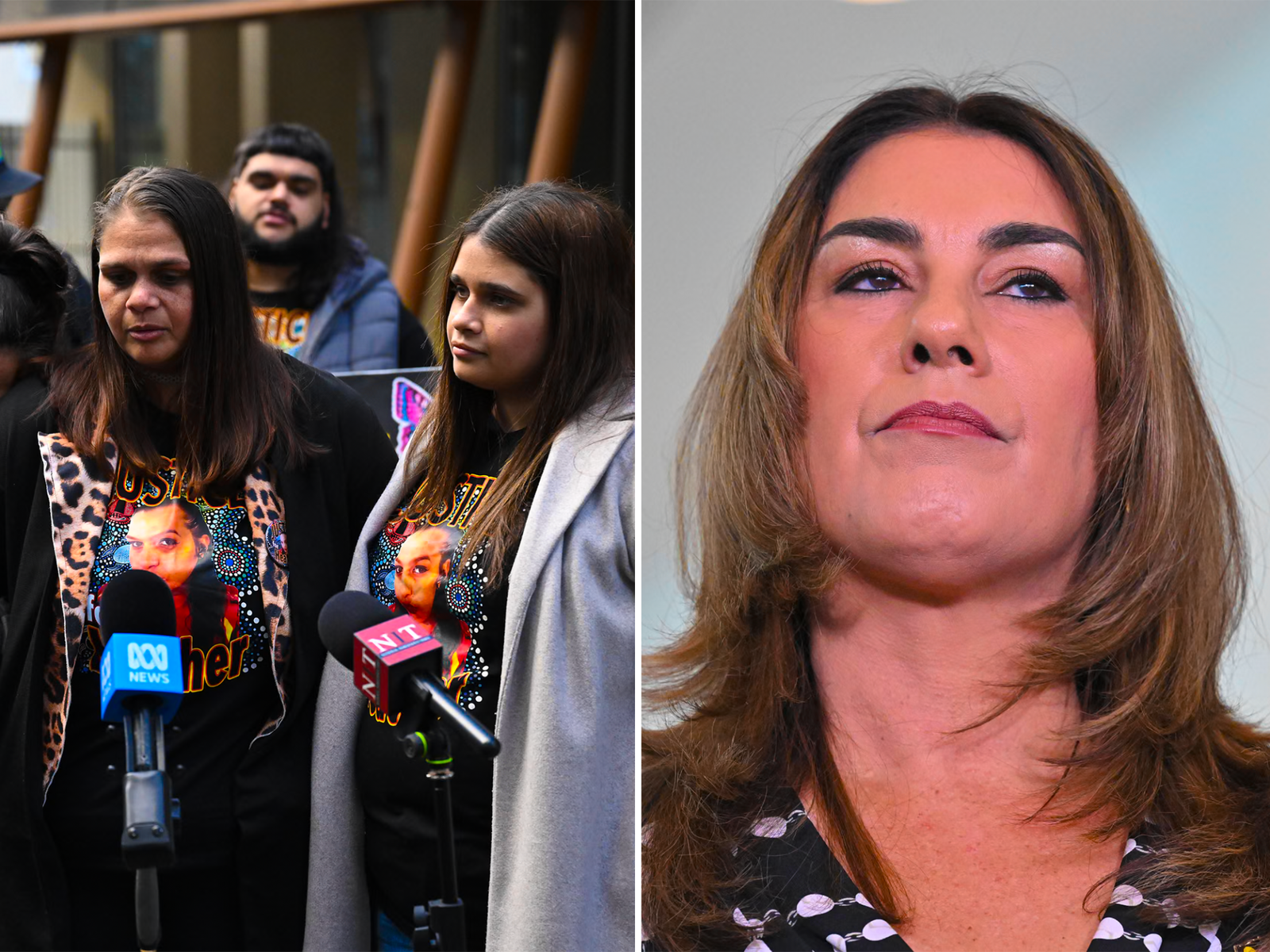
    Lidia Thorpe has introduced a private senator’s bill seeking to prohibit the shackling of women during labour, childbirth and immediately after birth in Australian prisons.

    The Crimes Amendment (Prohibiting Shackling During Childbirth) Bill 2026 was introduced in the Senate on 18 August and is currently before the Senate. The bill has been referred to the Senate Legal and Constitutional Affairs Legislation Committee, with a report due on 7 October 2026. Parliament of Australia

    The move comes as former prisoners, legal advocates and health organisations tell a federal inquiry that restraints are still being used in circumstances where state and territory rules generally say they should be a last resort or used only when absolutely necessary.

    Thorpe has described the practice as unacceptable during childbirth. Her bill would remove the existing exemptions that can allow restraints to be used where authorities identify a compelling safety risk.

    One case raised in the Senate involved Heather Calgaret, a Yamatji, Noongar, Wongi and Pitjantjatjara woman who gave birth while shackled to a hospital bed in Victoria in 2019. According to evidence cited by Thorpe, Calgaret’s daughter was removed days after the birth. Calgaret died in custody in 2021.

    The Guardian reported that a 2025 coronial finding described the removal of Calgaret’s daughter as “pivotal” to her death. The circumstances of her death involved the administration of buprenorphine, and the coroner’s findings are distinct from claims about shackling during childbirth.

    Advocacy organisations told the inquiry that restraints during labour can interfere with movement, medical care and a mother’s ability to hold her newborn. The Australian College of Midwives has also opposed shackling during childbirth, describing it as unsafe and unnecessary.

    The National Justice Project told the inquiry that shackling during labour and childbirth breaches established human rights standards. The United Nations Bangkok Rules state that instruments of restraint should not be used on women during labour, birth or immediately after birth.

    Australian correctional guidelines also state that restraints should not be used during and immediately following childbirth unless an individualised assessment identifies a compelling safety risk that cannot be managed by other means. State and territory rules vary in their wording.

    The issue also intersects with the health needs of women in custody. The Australian Institute of Health and Welfare reported in 2026 that 86{0931a9b6576c5d87fe846c236d3725957ace4ff7894c2ecd00b9029ccfe6a5f9} of female prison entrants who took part in its 2025 survey said they had been pregnant at some point in their lives.

    If passed, Thorpe’s bill would establish a federal prohibition intended to remove the existing exceptions for shackling during childbirth. The legislation remains before the Senate and has not yet become law.

    Source: The Guardian and Parliament of Australia.