


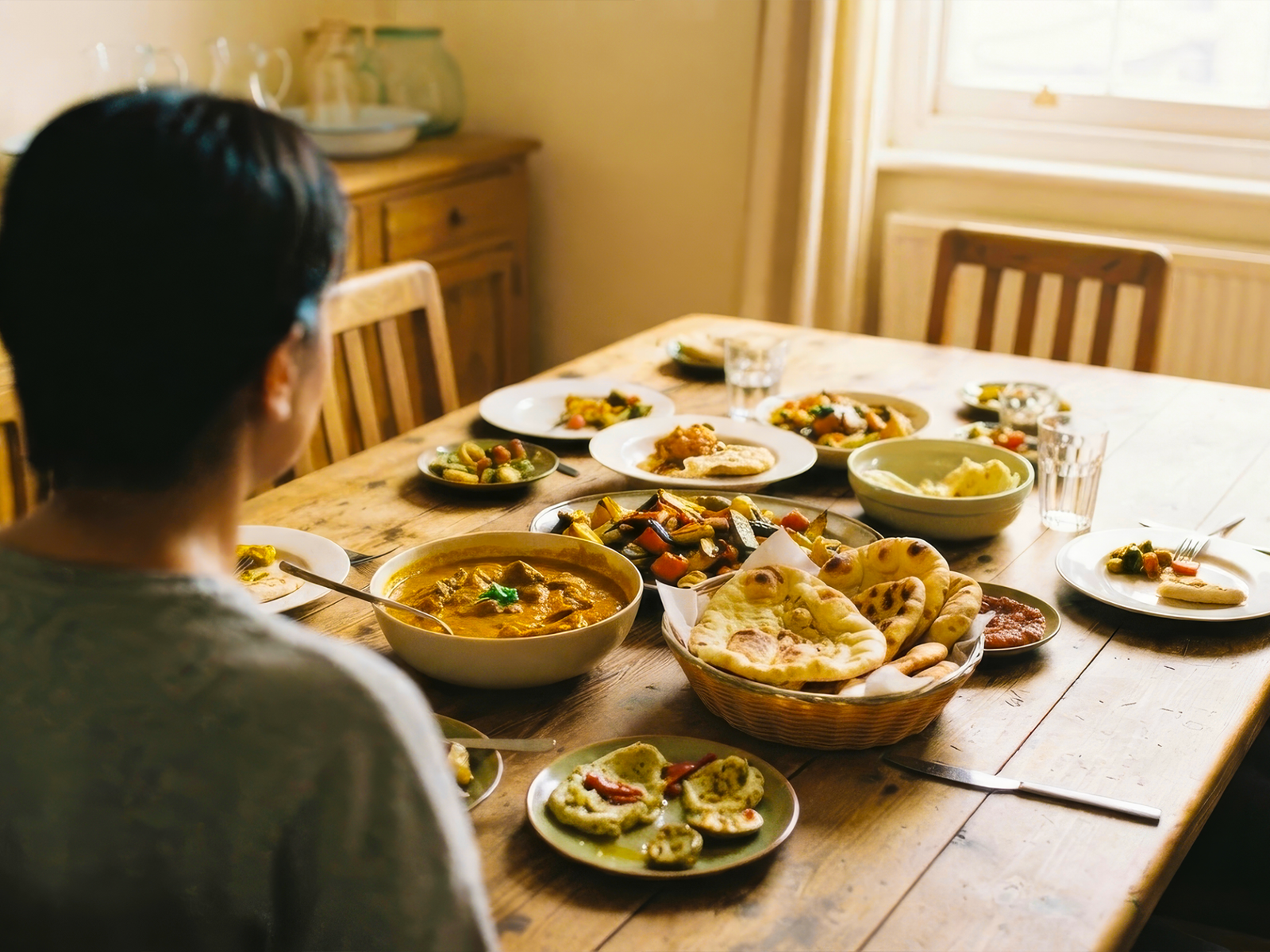
Sharing a meal can be about much more than satisfying hunger. A Guardian opinion column by Shadi Khan Saif explores how eating together can create connection, conversation and a sense of community.
Saif, who grew up in a Muslim household and later moved from Afghanistan to Australia, reflects on family meals and the rituals surrounding food during his childhood. He describes meals as occasions that involved shared responsibilities, hospitality and respect for food.
His memories include helping prepare the family for meals, sitting beside his father during gatherings and treating bread with care if it fell on the ground. He also recalls the importance of offering food to guests.
Saif says he only later came to understand these everyday practices as expressions of gratitude, hospitality and shared community. He argues that similar ideas can be found across several religious traditions.
The column refers to shared meals in Judaism, Christianity, Hindu traditions and Sikhism. In Sikh communities, Saif highlights langar, the tradition of providing a free communal meal in which people eat together regardless of wealth or social position.
Saif also recalls an orientation lunch during a fieldwork assignment where strangers began sharing personal stories about food. A conversation about eating quickly led one participant to explain that he had grown up in a large, poor Italian family where meals could be competitive.
As others began talking, the lunch became an opportunity to discuss family memories and experiences connected with food. Saif reflects that meals can provide a pause in the day for parents and children to listen to each other and share stories.
The column contrasts those experiences with modern eating habits. Saif describes often eating lunch in his car, during online meetings or while looking at his phone, and suggests that busy routines can make shared meals less common.
He also points to the contrast between the amount of food imagery people see online and the time available to sit down and eat with family or friends.
The piece ultimately presents shared meals as a simple way of creating time for conversation, hospitality and connection. It is a personal and reflective opinion column rather than a study measuring the effects of communal eating.
Source: The Guardian
