

Federal Parliament suspended its ordinary business on Monday, 26 October, as MPs from across the political spectrum paid tribute to independent member for Indi Helen Haines, who remains in hospital after being struck by a four-wheel drive outside her electorate office in Wangaratta a week earlier.
An orange cockatoo sign was placed on Haines’s seat in the House of Representatives as a symbol of support from her crossbench colleagues. The bird has become closely associated with Haines and the independent campaigns in the regional Victorian electorate of Indi. She explained in 2024 that the symbol grew from volunteers for her predecessor Cathy McGowan, whose orange shirts made them look like “a flock of cockatoos”. Haines said the symbolism came to represent a community coming together to build a vibrant democracy, with volunteers making cockatoo signs from old yard signs.
Prime Minister Anthony Albanese moved for parliamentary business to be suspended so colleagues could speak about Haines and offer support to her family. He described the shock of the incident as something that sat “like a stone in our hearts” and said colleagues hoped to see Haines return to the chamber. Many MPs wore orange or white in tribute, while the cockatoo sign marked her empty seat.
Albanese also told Parliament that he had spoken with Haines’s husband, Phil, that morning and had been in regular contact with him. He praised Haines’s empathy, kindness and compassion, describing her as a fighter, and said the family would continue to have the support of colleagues and the wider community. He warned that anger and aggression were increasingly affecting public discussion, including abuse directed at workers, emergency services and public officials, while stressing that robust democratic disagreement must remain grounded in respect and humanity.
Independent MP Allegra Spender also told the House about Haines’s first words after she regained consciousness, as relayed to her by Phil Haines. Spender said Haines’s first concerns were for her staff, followed by gratitude to the bystanders, first responders and medical staff who helped her. Spender described the response as reflecting Haines’s character, while also saying the MP should be recognised as a force for change, not only for her empathy and grace. The account was reported during the parliamentary tributes on 26 October.
Haines suffered catastrophic injuries in the incident on 19 October and both her legs were amputated. She remains in hospital in Melbourne in a serious but stable condition. Her husband, Phil Haines, told reporters at the Alfred hospital on 21 October that she was alive and stable and that “both her heart and her mind are in good shape”.
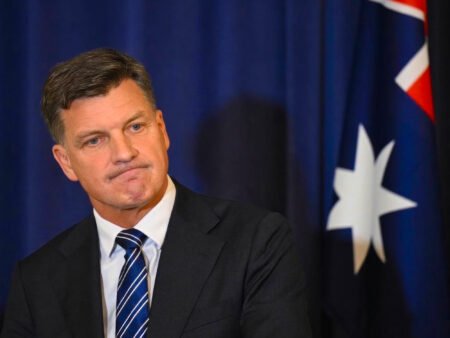
Opposition Leader Angus Taylor also paid tribute to Haines, saying she “epitomises civility” and that the alleged attack seemed unfathomable given her commitment to respectful disagreement. He thanked members of the public who helped in the immediate aftermath. Taylor rejected suggestions that robust parliamentary debate causes political violence, arguing that the Westminster system is designed to settle differences through vigorous debate, not violence. He said intimidation and violence cross a line that must never be crossed, and described violence as a rejection of debate and an unwillingness to accommodate difference. Taylor argued that the response should be to cherish and strengthen robust democratic debate, rather than weaken it, and called on politicians to reflect on Australia’s democracy.
Taylor also urged the government to confront all forms of extremism, saying every source of intolerance, intimidation and political violence should be identified and challenged. He said the government was right to condemn far-right extremism but argued that all extremism must be called out, and pointed to additional funding for intelligence and law enforcement. He also urged judges to impose tougher penalties on people convicted of intimidation or violence. In a further appeal, Taylor called on Australians to celebrate their country, arguing that shame about Australia and its history could fuel hostility towards democratic institutions. He cited graffiti on war memorials and damage to statues as examples of what he described as animosity towards the nation.
Independent MP Zali Steggall, a close colleague of Haines, became emotional as she addressed Helen and her husband, Phil, during the parliamentary tributes. Recalling that they first met in person in 2019, Steggall described the support Haines had given the community of Indi and fellow MPs through difficult periods including the Black Summer bushfires and the COVID-19 pandemic. She called Haines the “matriarch of the crossbench” and praised her commitment to respectful political debate. Steggall said Haines’s message of “kindness over hate” should prompt politicians to consider how their words are received beyond Parliament, adding that they had a responsibility to bring Australia together.
Independent MP Monique Ryan, wearing orange and a white blazer in honour of Haines, paid tribute to the personal qualities her colleague brought beyond Parliament. Ryan described Helen Mary Haines as “the very best of us”, praising her generosity, kindness and measured voice in support of a more accountable and civil parliament. She recalled Haines’s ability to put people at ease, her love of gardening and storytelling, and anecdotes from her childhood in Colac and her PhD studies. Ryan also spoke of Haines’s affection for her husband, Phil, saying the country had seen the depth of that bond during the week. Her tribute highlighted the personal relationships behind Parliament’s formal proceedings and renewed calls for respectful political debate.
Ryan went on to criticise the return to partisan conflict in the days after the alleged attack, saying politicians had set a “poor example” to their communities. She called for robust debate grounded in honesty, respect and compassion, and urged MPs to work together on issues including inequality, digital protections against anonymous abuse and “rage farming”, and truth in political advertising. Ryan also argued that greater integrity in government could help restore public trust, while saying media organisations and the public shared responsibility for the tone of public debate.
Liberal MP Andrew Hastie also urged politicians to reflect on how their words shape public life. Acknowledging that he had sometimes overreached in his own language during 11 years in Parliament, Hastie said vigorous debate and holding governments to account remained important, but there should be no place for targeted character destruction or relentless personal demonisation. He warned that someone could interpret online attacks as justification for real-world violence, and called on politicians to “play the ball, not the person”, leaving what he described as the “nasty personal politics of MAGA” in the United States. Hastie also praised local community members who helped Haines after the incident, arguing that face-to-face relationships can build trust beyond online networks.
Interest in the voluntary pledge grew on 26 October, with more federal and state politicians adding their names in Haines’s honour. Compassion in Politics Australia’s online list included independent MP Kate Chaney and Greens leader David Shoebridge, while Greens deputy Steph Hodgins-May said on social media that she had signed. Independent MP Allegra Spender also said she would sign. The pledge reads: “In my political life, I pledge to act with honesty, respect, and compassion.” The organisation says it is aimed primarily at elected representatives, while also inviting people working around politics and members of the public who want a more respectful political culture.
As part of the response, MPs were also encouraged to sign a voluntary civility pledge promoted by Compassion in Politics Australia. Haines had signed it before the incident, becoming the first federal MP to do so. Independent MP Kate Chaney said she would add her name, describing the pledge as a symbolic way to honour Haines. It commits signatories to act with honesty, respect and compassion in their political lives.
Independent MP Zali Steggall has also called for greater civility and respect when people disagree, telling the ABC that leadership and words matter. She described social media as a channel through which politicians can receive abuse and threats in direct messages, while electorate offices can also receive calls and offensive material. Steggall said an incident had been reported to the Australian Federal Police and resulted in a person outside her electorate being charged. Her account adds to wider concerns about how online hostility can spill into threats and intimidation in public life.
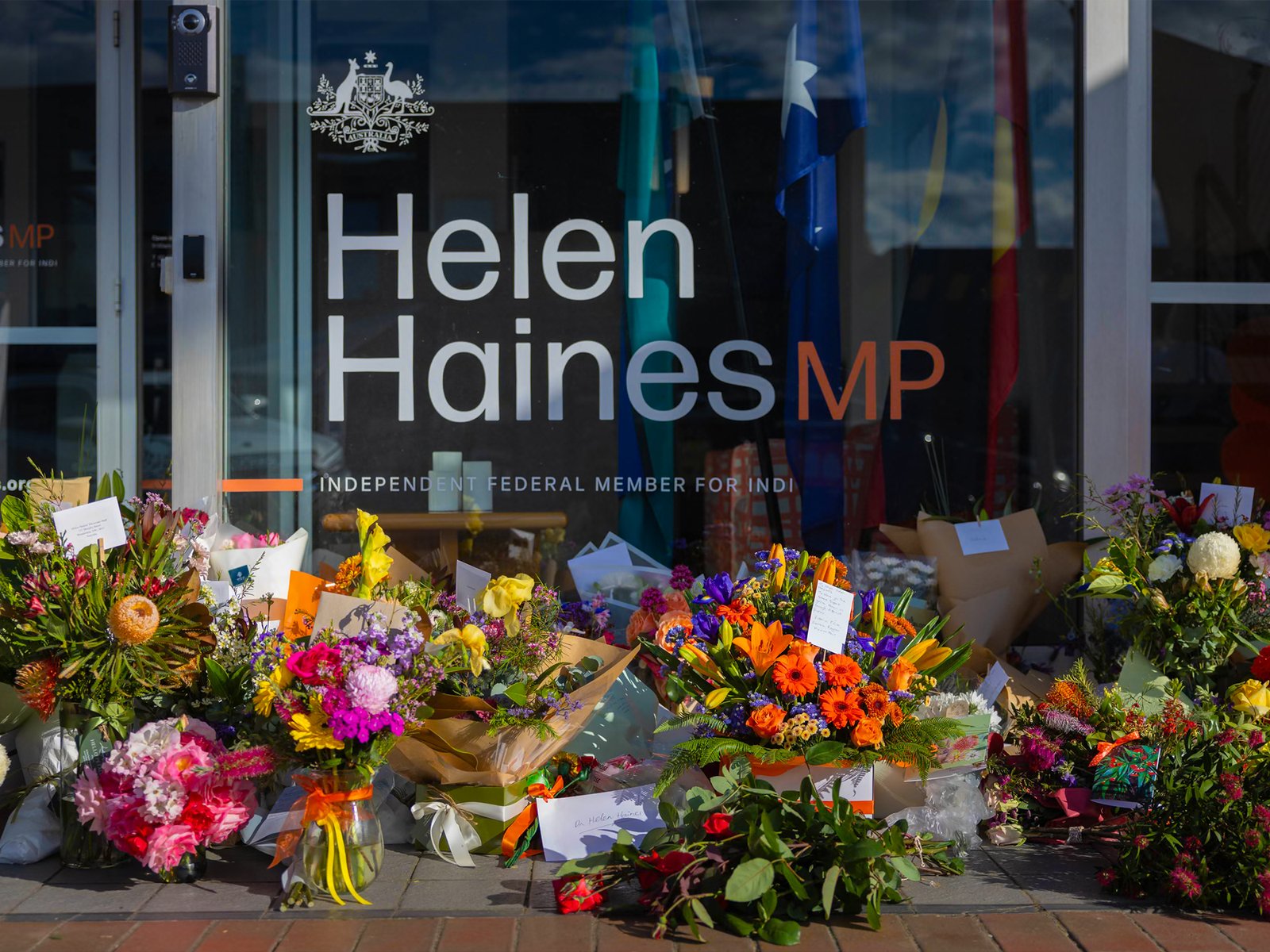
The incident occurred outside Haines’s Wangaratta office on Murphy Street on 19 October. Victoria Police have charged a 43-year-old man with offences including dangerous driving causing serious injury, intentionally causing serious injury and causing harm to a Commonwealth public official. Police have alleged the incident was targeted. The charges have not been proven in court, and investigators have not publicly established a motive.
Support for Haines and her family has also included a fundraiser for Save the Children, organised by her family in lieu of flowers. The parliamentary tributes and the orange cockatoo symbol have become part of a wider public expression of support as her recovery continues.
The debate about political language and safety also connects with wider reporting on Dan Tehan’s comments about anonymous online accounts and the threats and abuse directed at politicians. Haines represents the regional Victorian electorate of Indi. Readers can find the earlier report on her medical condition in Australia By Aussie’s previous update on Helen Haines.