

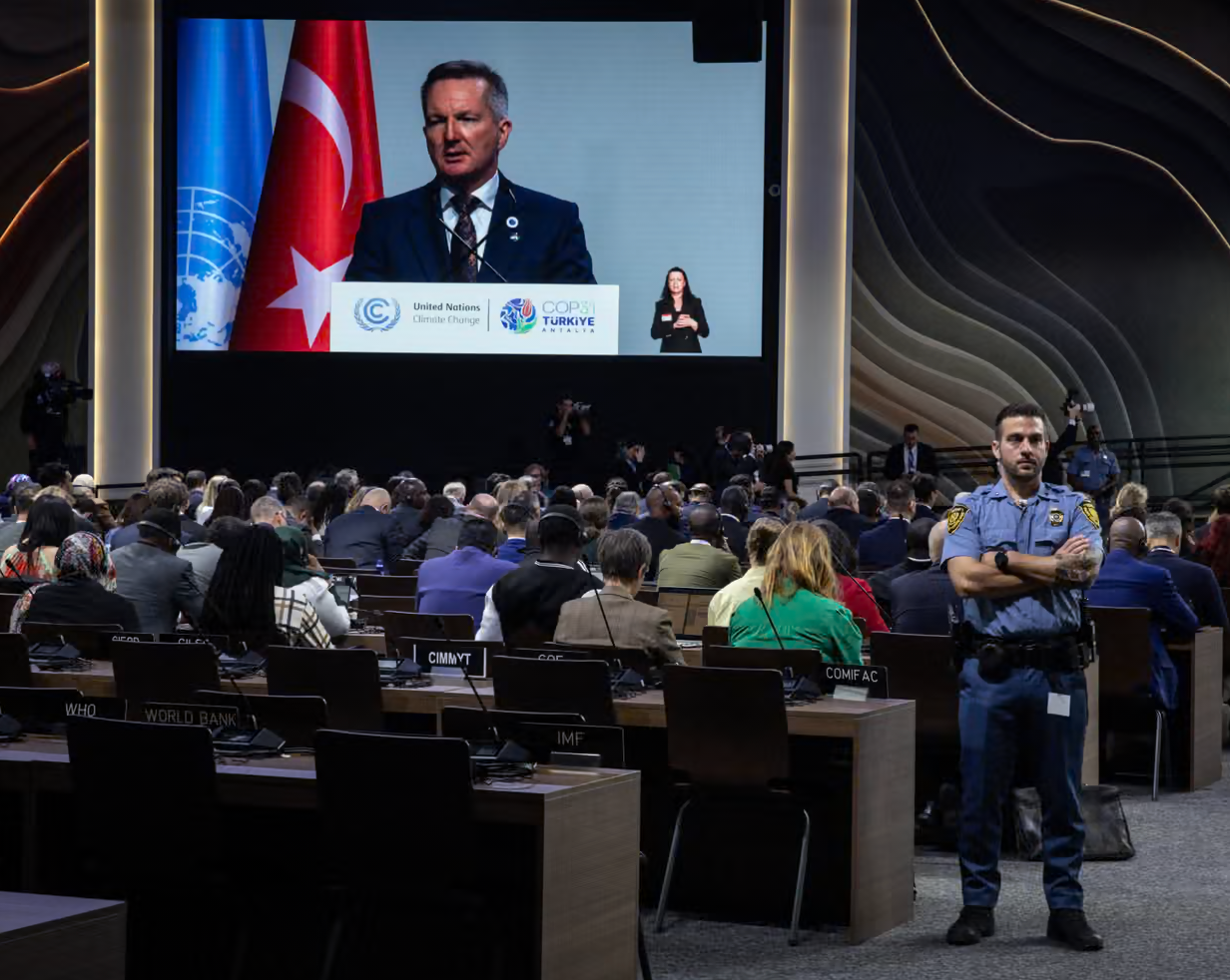
Australian Climate and Energy Minister Chris Bowen faces a major diplomatic challenge at COP31 in Türkiye, where countries are negotiating how to respond to the climate crisis and whether fossil fuels should be explicitly identified as a central cause of global warming.
The United Nations climate conference is taking place in Antalya after Australia’s bid to host the summit in Adelaide was unsuccessful. Guardian Australia reports that an estimated 100,000 people are attending, including ministers and diplomats representing around 200 countries.
Bowen has been appointed president of negotiations in a specially created role, giving him responsibility for helping countries work towards an international consensus on climate action. The United States, under President Donald Trump, is described in the article as an official non-starter in the negotiations.
In an analysis published on 10 November, Guardian Australia executive editor Adam Morton says Bowen is well regarded in UN climate negotiations despite criticism of Australia’s continued reliance on coal and gas exports. Bowen previously worked alongside Pacific leaders on the compromise reached at COP28 in Dubai, where countries agreed on the need to transition away from fossil fuels.
Australia’s climate policy under scrutiny
The Albanese government has maintained policies introduced after its 2022 election, including support for large-scale renewable energy, measures to make electric vehicles more available and affordable, limits on industrial pollution and a household battery subsidy scheme.
However, Morton writes that further action will be needed to meet Australia’s emissions reduction targets. The article says 38 coal and gas developments have received approval since the government was elected, most of them intended for export.
The analysis cites Naru Research estimates that Australia’s annual domestic emissions have fallen by 25% since 2005. But emissions from burning Australian fossil fuels after they are exported overseas have roughly doubled over the same period. Australia is also described as one of the world’s three largest fossil fuel exporters.
This contrast has prompted accusations of hypocrisy, with Australia urging other countries to reduce emissions while continuing to approve new coal and gas projects. The government has defended its position, but the issue remains a significant challenge to its international climate message.
Fossil fuels and the 1.5°C target
A central question at COP31 is whether countries can reach agreement on explicitly identifying fossil fuels as a cause of the climate emergency. The article notes that it took until COP28 in 2023 for the UN climate process to produce a consensus agreement calling for a transition away from fossil fuels.
The negotiations will also consider a possible goal for electricity to account for 35% of the world’s energy by 2035. An analysis prepared for the Australian government suggested that reaching the target could reduce fossil fuel use across industry, transport, heating and cooking, while encouraging investment in clean energy.
Another priority raised by Bowen is increasing climate finance for vulnerable island nations, including countries in the Pacific. Morton’s article says these states currently receive just 0.2% of the climate finance committed globally to help countries respond to the crisis, despite facing some of the greatest risks.
Bowen has also highlighted the need to limit climate overshoot — the amount by which global warming exceeds 1.5°C — and potentially bring temperatures back down by removing carbon dioxide from the atmosphere.
A difficult test for international cooperation
The Paris Agreement set the goal of keeping global heating to well below 2°C and pursuing efforts to limit the increase to 1.5°C above pre-industrial levels. The article says the world has missed the key 1.5°C goal and that progress has been slow and incomplete.
Morton argues that earlier climate agreements nevertheless helped signal a global shift towards renewable energy investment. The challenge at COP31 is to turn national commitments into practical action, including reducing pollution and supporting communities most exposed to climate impacts.
The negotiations are expected to be difficult, with disagreement over fossil fuels and the absence of the United States from the process complicating efforts to reach consensus. Bowen’s role places Australia at the centre of those discussions, even as the country’s own coal and gas approvals remain under scrutiny.
Source: Adam Morton, Guardian Australia, 10 November 2026. This report is based on the supplied article.
