

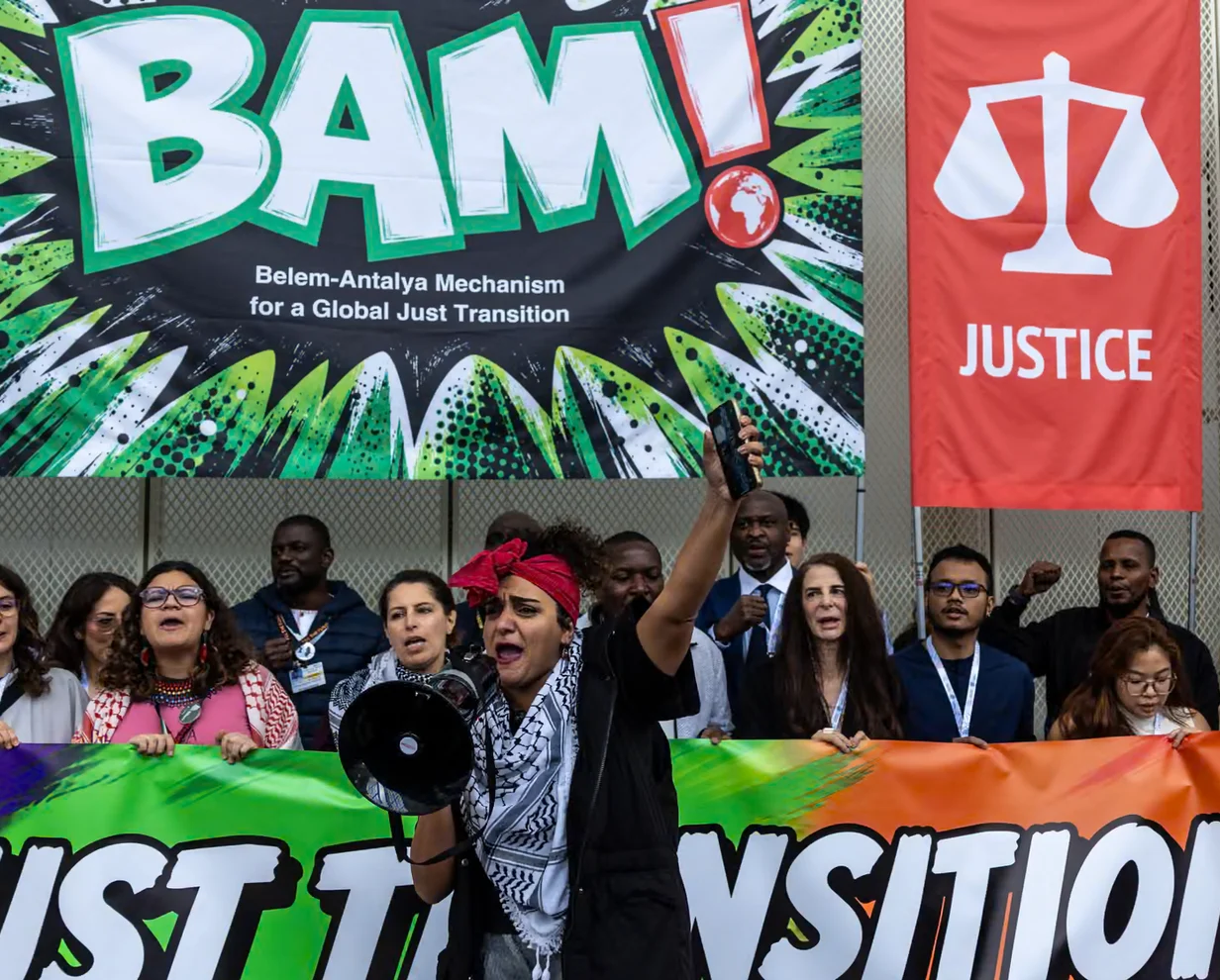
A proposed climate justice mechanism at COP31 is facing resistance from developed countries, with campaigners warning that the plan could be stripped of the funding and practical support it was designed to provide.
The proposal, known as the Belem-Antalya Mechanism (BAM), follows an agreement reached at last year’s COP30 climate summit in Belém, Brazil. Campaigners had expected it to establish a permanent institution helping countries and communities manage the transition away from fossil fuels through finance, technical assistance and capacity building.
But a draft text published on Friday by the chairs of the Just Transition Work Programme has raised concerns that no new institution would be created. Instead, the proposed responsibilities would sit with the existing UN Framework Convention on Climate Change (UNFCCC) secretariat.
“The intention with the Bam proposal was to build something that would scale up and deliver finance and support to advance just transition on the ground,” said Sinéad Magner, the Just Transition lead for the Women and Gender Constituency.
Magner said the draft did not include those commitments, arguing that a mechanism limited to dialogue and reporting would not meet the needs of developing countries.
Devina Shah, advocacy manager at Youth and Environment Europe, said Japan and Norway were among the countries resisting a stronger financing role for the mechanism. She disputed claims that governments were constrained by a lack of available finance.
Shah said a just transition must involve communities affected by the shift to clean energy, rather than simply replacing fossil fuel infrastructure with new projects. She pointed to the planned Fernando Pessoa Solar Park in Portugal, saying local residents had not been properly consulted.
“On the ground there is no just transition. People are being impacted but they’re not being supported, they’re not being engaged from the start, their views are not being taken into account,” Shah said.
The dispute highlights a wider divide at COP31 in Antalya over whether the mechanism will provide practical assistance and reliable funding, or remain primarily a forum for discussion.
