

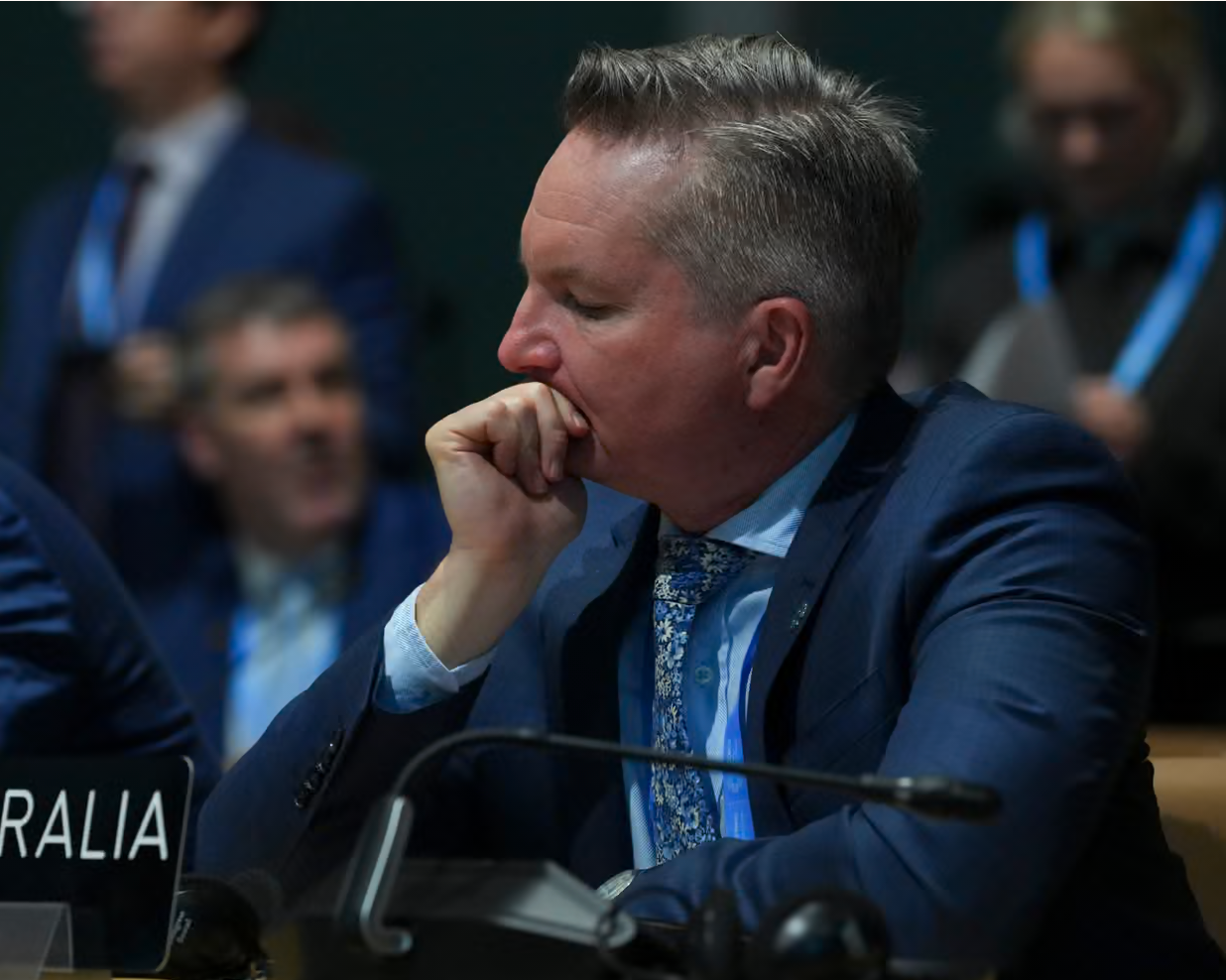
Australia’s climate minister Chris Bowen has warned that countries at COP31 are unlikely to agree on every part of the summit’s draft deal, as negotiations in Antalya enter a critical stage.
Speaking at a press conference on Monday, Bowen said disagreement over parts of the text was “a given”. He said the summit was taking place amid overlapping global pressures, including the rise of artificial intelligence, war and cost-of-living crises, making it more important to demonstrate that international cooperation can deliver results.
“The world wants us to act on climate change. As I’ve said before, this Cop meets at a time of polycrisis,” Bowen said, according to The Guardian’s live coverage of the negotiations.
The 18-page draft cover decision, which brings together proposed outcomes from the summit, includes a call for “accelerated action to phase out fossil fuels”, including an immediate transition away from fossil fuels in energy systems. The proposal is not a final agreement and remains subject to negotiations among participating countries.
Bowen said the focus in the coming days would be on finding areas where countries can reach common ground. The COP31 summit is being held in Antalya, Turkey, with negotiations continuing ahead of its scheduled conclusion on Friday.
Climate groups question whether fossil fuel commitments will survive
Early reactions to the draft have been mixed, with climate experts welcoming its broad coverage while warning that its most ambitious proposals could be weakened during negotiations.
Cosima Cassel, a climate diplomacy expert at the think tank E3G, described the 144-paragraph document as comprehensive and ambitious, but said its length appeared to leave countries to negotiate difficult trade-offs. She said the final decision would need to preserve key elements, including action on temperature overshoot, climate science, clean electrification and adaptation finance.
Campaigners were more sceptical about the draft’s reference to transitioning away from fossil fuels. Tzeporah Berman of the Fossil Fuel Non-Proliferation Treaty Initiative warned that the wording did not amount to a clear commitment to phase out fossil fuels, arguing that the issue had not been formally placed on the summit’s agenda.
Andreas Sieber of the campaigning group 350.org also criticised the Turkish and Australian co-hosts, saying they had made insufficient progress on proposed roadmaps for moving away from fossil fuels. He urged the presidencies to secure a place for the transition in the final cover decision or establish a credible political process building on earlier international efforts.
Draft deal also calls for faster methane cuts
The draft also highlights methane, a powerful greenhouse gas that has a shorter lifespan in the atmosphere than carbon dioxide but contributes significantly to near-term warming. It recognises methane’s role in pushing global temperatures beyond the 1.5C threshold and encourages faster action to reduce emissions, particularly leaks and releases from oil and gas operations.
Those emissions can occur when the industry vents, flares or leaks methane during production and processing. The draft’s proposed measures have been welcomed by climate campaigners.
Jonathan Banks of the Clean Air Task Force said the group welcomed the explicit call for countries to accelerate proven methane-reduction measures, improve emissions measurement and reporting, end routine flaring and venting, and capture methane from waste.
Banks said these steps could deliver significant near-term climate benefits while improving energy security and air quality and reducing wasted resources.
The comments underline the uncertainty surrounding the draft, which remains subject to negotiations. Countries will need to decide whether its references to fossil fuel transition, methane reduction and other climate priorities remain in the final text or are diluted as governments seek agreement.
Campaigners warn against carbon removal and debt-based climate finance
Climate justice campaigners have criticised the COP31 draft cover text for promoting carbon dioxide removal technologies and private climate finance linked to debt. They argue that the proposals risk diverting attention from emissions cuts and placing further pressure on developing countries.
Siphesihle Hopewell Mvundla of the South African environmental justice organisation groundWork said climate action roadmaps would achieve little without adequate climate finance. He said countries in the Global South were spending far more on debt repayments than they received in climate funding from countries that, in his view, owe a climate debt.
The draft welcomes the deployment of carbon capture, utilisation and storage, as well as carbon dioxide removal technologies, as part of efforts to address the overshoot of global heating beyond 1.5C.
Meena Raman of Sahabat Alam Malaysia objected to the inclusion of carbon dioxide removal, saying it could be used to justify overshoot scenarios rather than prioritising immediate emissions reductions. She called for community-based climate solutions to receive greater attention.
Lise Masson of Friends of the Earth International also warned that promoting carbon dioxide removal could put frontline communities at greater risk. She argued that climate policy should bring scientific evidence and equity together.
The criticism adds to wider divisions over the draft, which remains under negotiation. Its references to fossil fuel transition, methane cuts, carbon removal and climate finance will be among the issues countries must resolve before a final decision can be agreed.
Barbados PM urges public action to demand methane cuts
Barbados Prime Minister Mia Mottley has called on people around the world to speak out against political inaction on climate change, warning that what she described as a “cancer of indifference” is pushing the world closer to disaster.
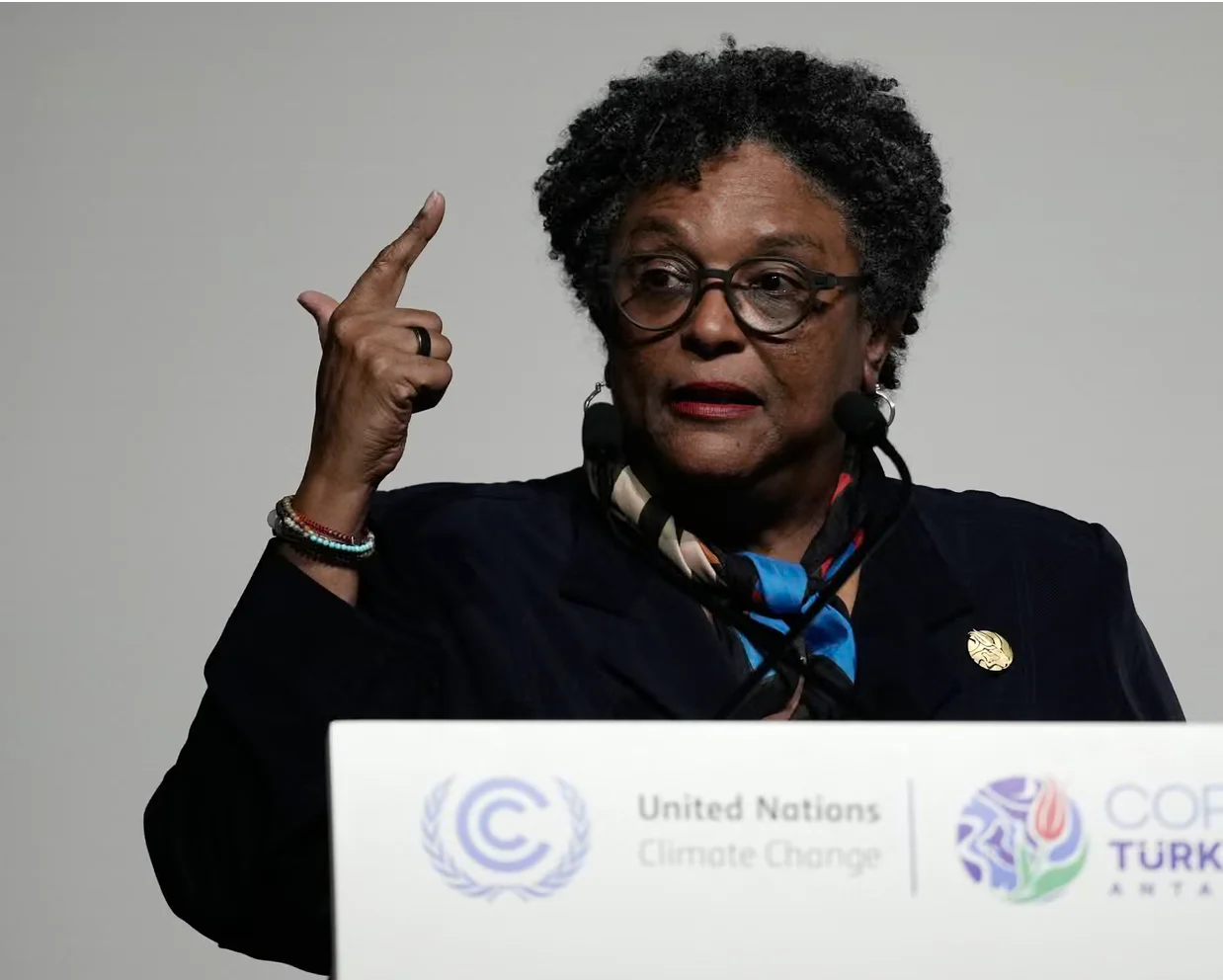
Speaking in an interview at the COP31 summit in Antalya, Mottley said public pressure was needed to confront leaders who were failing to take the action required to address the climate crisis. She urged ordinary people to make their views heard and push governments to prioritise climate action without compromising other areas of development.
Mottley is backing a global petition calling for cuts to methane emissions and hopes it will attract 1.5 billion responses, reflecting the international goal of limiting global warming to 1.5C.
She described methane reductions as an emergency measure that could buy time for the wider transition away from carbon-intensive energy. Mottley said controlling methane could reduce projected temperature rises by between 0.3C and 0.5C, allowing countries more time to decarbonise.
Her comments add public pressure to the COP31 debate over methane, which also features in the summit’s draft cover text. The petition is being promoted through the Voices for 1.5 campaign, as negotiations continue over how countries will strengthen their climate commitments.
Mottley said climate change needed to be explained in clear, accessible language so people understood the consequences of silence, inaction and their own choices.
The call comes as governments face competing demands over fossil fuel transition, methane cuts, climate finance and carbon removal in the draft agreement. The final outcome remains subject to negotiations.
