

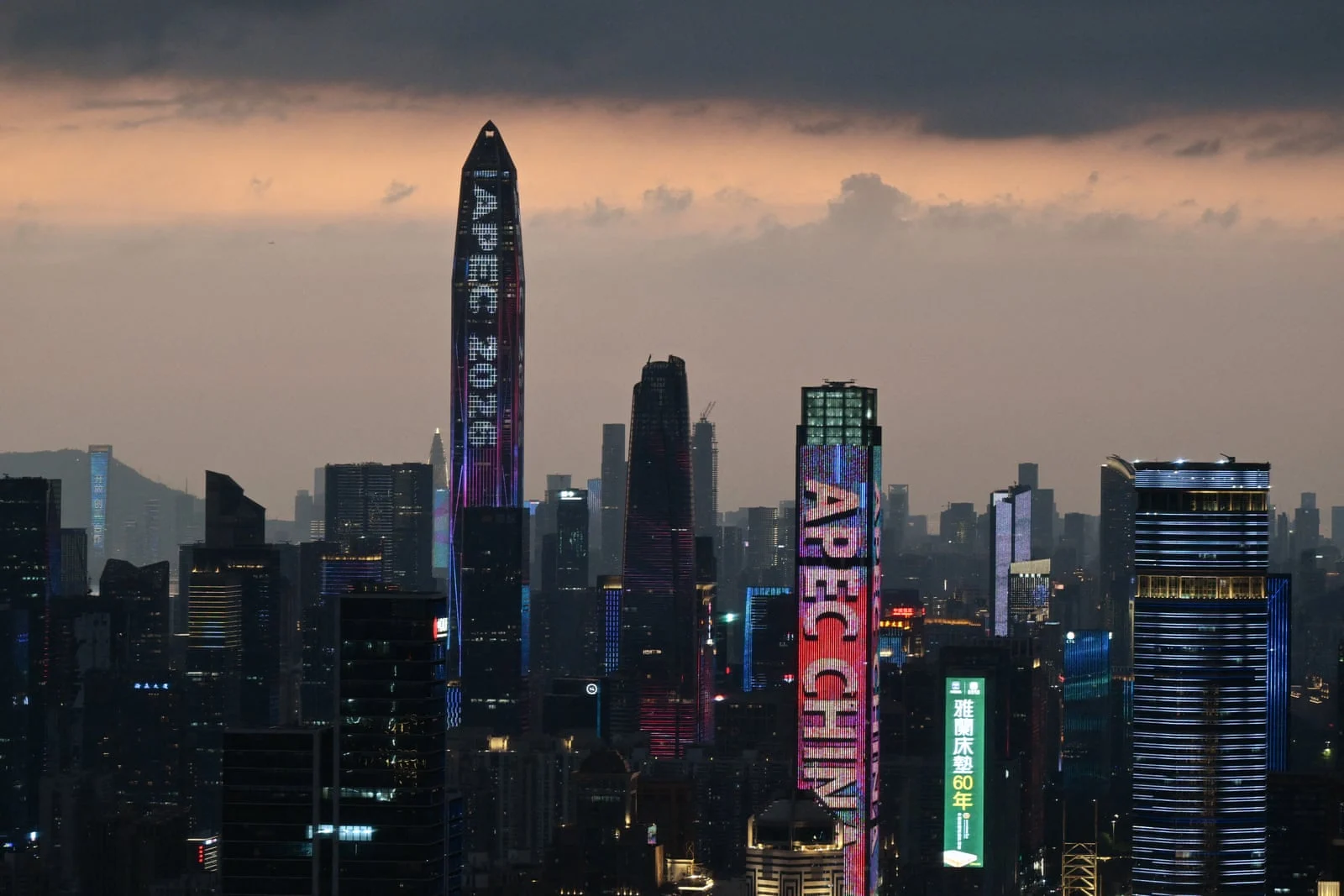
The Asia-Pacific Economic Cooperation (APEC) is a regional economic forum that brings together 21 member economies to promote trade, investment and economic cooperation across the Asia-Pacific region.
Established in 1989, APEC represents one of the world’s most significant economic groupings. Its members are home to around 3 billion people and account for approximately 60 per cent of global GDP, according to the Australian Government’s Department of Foreign Affairs and Trade.
How did APEC begin?
The idea for APEC was first publicly proposed by former Australian Prime Minister Bob Hawke during a speech in Seoul, South Korea, on 31 January 1989.
Later that year, 12 Asia-Pacific economies met in Canberra, Australia, to establish the forum.
The original members were Australia, Brunei Darussalam, Canada, Indonesia, Japan, South Korea, Malaysia, New Zealand, the Philippines, Singapore, Thailand and the United States.
Membership expanded during the 1990s, with China, Hong Kong and Chinese Taipei joining in 1991, followed by Mexico and Papua New Guinea in 1993. Chile joined in 1994, while Peru, Russia and Vietnam became members in 1998.
Which economies are members?
APEC currently has 21 member economies:
Australia, Brunei Darussalam, Canada, Chile, China, Hong Kong, China, Indonesia, Japan, South Korea, Malaysia, Mexico, New Zealand, Papua New Guinea, Peru, the Philippines, Russia, Singapore, Chinese Taipei, Thailand, the United States and Vietnam.
The term “member economies” is used instead of countries because APEC focuses on economic and trade cooperation, and its membership includes Hong Kong and Chinese Taipei.
What does APEC actually do?
APEC provides a platform for governments to discuss ways to improve trade, investment and economic connections across the region.
- Reducing trade and investment barriers.
- Making it easier for businesses to operate across borders.
- Improving customs procedures and regional supply chains.
- Supporting digital innovation and technological cooperation.
- Encouraging sustainable and inclusive economic growth.
Unlike organisations built around legally binding trade agreements, APEC operates through voluntary commitments, open dialogue and consensus. Its decisions are not legally binding on members.
Why is APEC important to Australia?
Australia was one of APEC’s 12 founding members and remains an active participant in regional economic cooperation.
The forum provides Australia with an opportunity to strengthen trade and investment relationships with major economic partners, including China, Japan, Indonesia, South Korea and the United States.
For Australian businesses, closer regional cooperation can help improve market access, supply chains and opportunities to export goods and services.
Why does Indonesia matter?
Indonesia is also a founding member of APEC and plays an important role in regional economic discussions.
As one of Southeast Asia’s largest economies, Indonesia has a significant interest in trade, investment, infrastructure, digital development and regional supply chains.
APEC gives Indonesia a platform to work with major economies on shared economic priorities and opportunities for growth.
Why is the 2026 summit attracting attention?
China is hosting the 2026 APEC meetings in Shenzhen, bringing together leaders and business representatives from across the Asia-Pacific region.
The gathering is attracting particular attention because of ongoing trade and technology tensions between major economies, alongside planned discussions involving US President Donald Trump, Chinese President Xi Jinping and Russian President Vladimir Putin.
Issues including international trade, artificial intelligence, economic cooperation and regional stability are among the major subjects drawing attention.
Ultimately, APEC is not a world government or a military alliance. It is an economic forum designed to encourage dialogue, cooperation and stronger economic connections between the Asia-Pacific’s 21 member economies.
Sources: APEC — About Us; APEC — Frequently Asked Questions; Australian Department of Foreign Affairs and Trade; The Guardian — APEC summit live coverage.