

Three members of the Reserve Bank of Australia’s monetary policy board warned that another interest rate increase could push the economy towards a significantly sharper downturn, according to minutes released on Tuesday.
The minutes from the board’s 2–3 November meeting show that six of the nine members supported raising the cash rate by 25 basis points to 4.85 per cent, while three preferred to leave rates unchanged and allow more time to assess the effects of previous increases.
The dissenting members argued it was prudent to wait and see how higher borrowing costs were affecting households and businesses. They placed less weight on the risk of inflation remaining high and more weight on the possibility of weaker economic growth and rising unemployment.
They warned the economy could be close to entering a “materially sharper downturn”. The Reserve Bank’s published minutes say those members were concerned about the employment costs of further monetary tightening.
The majority took a different view, judging that inflation risks remained significant and that the previous tightening had not provided enough assurance that inflation would return sustainably to target. The RBA’s 3 November decision lifted the cash rate by 25 basis points to 4.85 per cent.
Governor Michele Bullock has continued to emphasise the risk of persistent inflation. Speaking at an Australian Securities and Investments Commission forum in Sydney on Tuesday, she warned that businesses could begin to treat annual price increases of 3 to 3.5 per cent as normal, making it harder to bring inflation back to the bank’s target.
The latest official figures show annual consumer price inflation reached 4.3 per cent in the year to September, up from 4 per cent in August. Westpac economists have forecast that the October figure will rise to 4.8 per cent, although that estimate is not yet an official result. The Australian Bureau of Statistics is scheduled to release October CPI figures on 25 November.
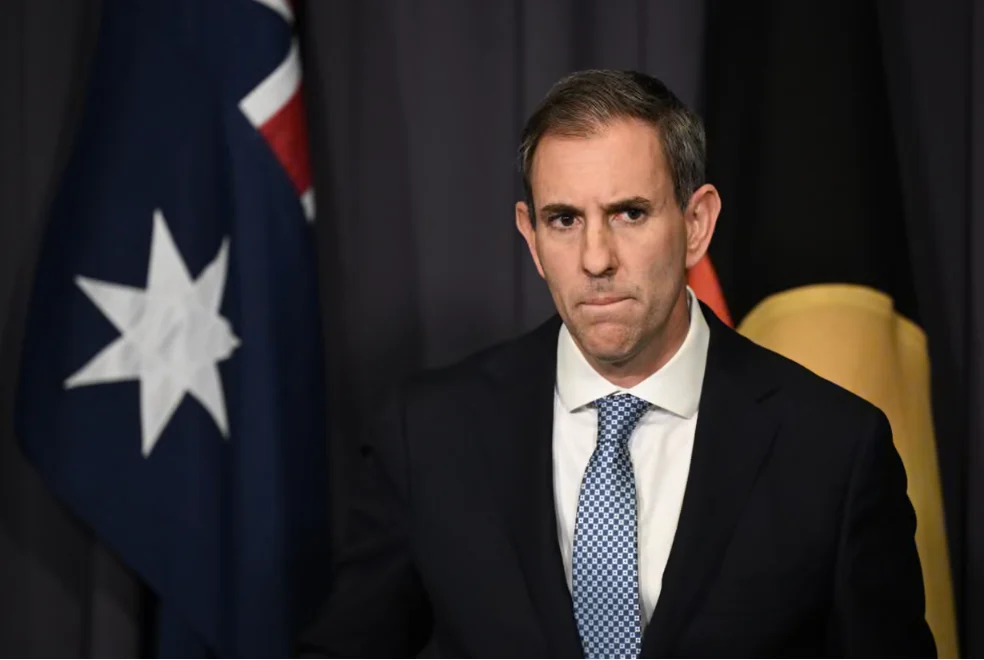
The debate over interest rates comes as Treasurer Jim Chalmers prepares the government’s December mid-year economic and fiscal outlook, known as the MYEFO. Chalmers said the update would include substantial savings, with the main focus on reducing spending pressures while avoiding cuts that could put economic growth at risk.
“It will cut enough, but not too much,” Chalmers said, describing the update as an attempt to balance inflation control with support for households facing cost-of-living pressures.
He said the government wanted to ease immediate capacity pressures, make room for cost-of-living relief and avoid adding to price pressures. The treasurer has faced calls to explain how government spending will be managed as inflation remains above the Reserve Bank’s target range.
Chalmers also announced that the Australian Taxation Office would consult businesses on two possible changes to simplify the tax system. One proposal would pre-fill contractor income information for sole traders, which the government estimates could save about 400,000 hours and $37 million in annual costs.
The second proposal would simplify fringe benefits tax rules by removing complex assessments for minor benefits valued below $300. The measures are proposals for consultation, rather than changes that have already taken effect.
The October inflation figures, due next week, will provide another important measure of price pressures as households, businesses and policymakers assess the impact of higher interest rates and the government’s planned budget savings.
Reporting by Patrick Commins and Luca Ittimani for Guardian Australia. Additional figures and policy details checked against the Reserve Bank of Australia and Australian Bureau of Statistics.
