


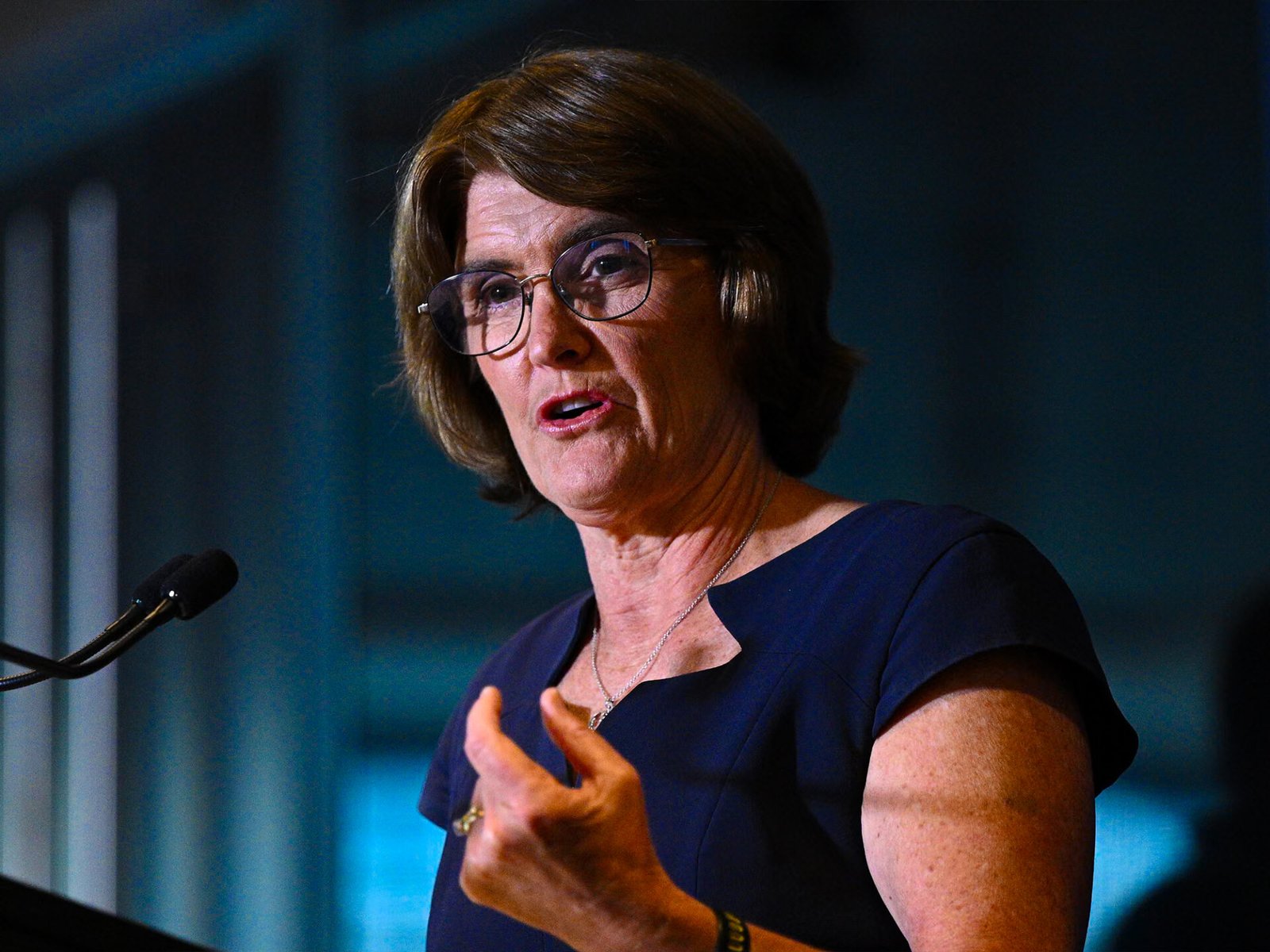
Reserve Bank of Australia governor Michele Bullock has warned that artificial intelligence could prove to be a bubble and said there is not yet clear evidence that its rapid adoption is lifting Australia’s productivity.
Speaking at a Committee for Economic Development of Australia event in Sydney on Tuesday, Bullock said AI and investment in data centres were currently adding to inflationary pressures, while the productivity gains expected from the technology had yet to become apparent.
AI investment has yet to lift productivity
Bullock said central banks were watching the risk that a sharp decline in technology valuations could affect economic activity. She said she did not have a firm view on whether AI was a bubble, but regarded the possibility as a risk.
She said AI was widely viewed as a potential source of stronger productivity, but rapid adoption could initially have the opposite effect while businesses worked out how to use the technology effectively.
Bullock referred to research from South Korea suggesting employees using AI produced similar amounts of output while working fewer hours. She said productivity could initially decline as businesses experimented with new technology before changing their processes more fundamentally.
Australia’s 2026 Intergenerational Report assumes long-term productivity growth of 1.2{0931a9b6576c5d87fe846c236d3725957ace4ff7894c2ecd00b9029ccfe6a5f9} a year and incorporates the potential economic benefits of AI. Australia By Aussie previously examined those longer-term projections, including the possible role of AI in the economy, in What Australia could look like in 2066.
AI and Australia’s economic outlook
The federal government has highlighted AI as a potential driver of future productivity and living standards. The Intergenerational Report projects real economic activity per person could rise substantially by 2066, although the outcome depends on assumptions about productivity growth.
Bullock said businesses may eventually see stronger productivity once they redesign processes around the technology rather than simply adding AI tools to existing ways of working.
Housing also under pressure
Bullock also discussed Australia’s housing market, saying house prices had fallen 3.1{0931a9b6576c5d87fe846c236d3725957ace4ff7894c2ecd00b9029ccfe6a5f9} over the previous three months after a series of interest rate increases and changes to property investor tax arrangements.
She said home loan approvals had fallen, particularly among investors, and described Australian housing as having become increasingly unaffordable before the recent decline.
Bullock also said migration had contributed strongly to economic growth over the past year, while adding that the main inflationary pressure from new arrivals was in housing because supply could not immediately respond to population growth.
Interest rate decision ahead
Bullock declined to say whether she would recommend an interest rate increase at the RBA’s next meeting. The central bank’s Monetary Policy Board is scheduled to meet on 28 and 29 September.
She said the RBA’s role was to maintain low and stable inflation so businesses and households could focus on improving productivity and economic activity.
Source: The Guardian
