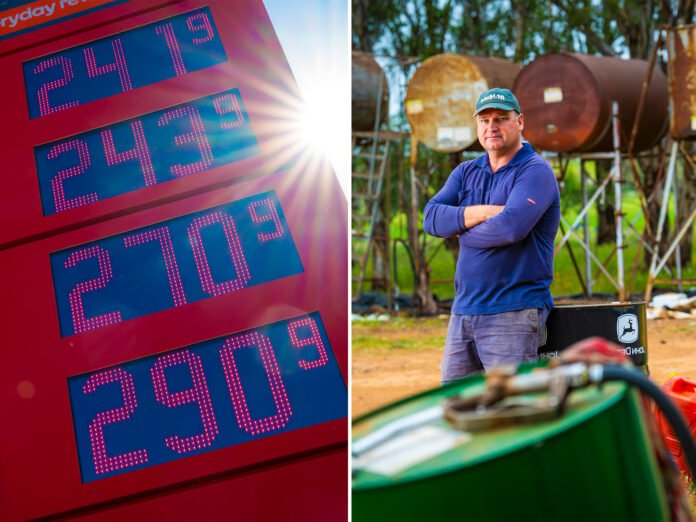
Australian households are facing renewed financial pressure as higher interest rates, rising fuel costs and ongoing housing and food pressures combine to squeeze household budgets.
The Reserve Bank of Australia increased the cash rate by 25 basis points to 4.60 per cent on 29 September, with the new target taking effect on 30 September. The RBA said inflation remained elevated and that higher energy prices and domestic cost pressures were among the factors influencing its decision.
The rate increase has added to concerns for households already dealing with higher everyday expenses. The latest HILDA findings cited in reporting on household financial wellbeing show worsening perceptions of financial security, alongside increases in housing stress and food insecurity.
Food insecurity rose from 13.7 per cent in 2020 to 17.9 per cent in 2024, according to the figures cited from the HILDA research. The data was collected before the latest sequence of interest-rate and fuel-price increases, meaning it does not capture the full effect of those later changes.
Financial pressure is also affecting people in different ways. Renters, mortgage holders, single parents and households with limited financial buffers can face difficult choices when essential costs rise faster than their capacity to absorb them.
Researchers from the University of Melbourne have warned that persistent financial hardship can also have consequences for mental health. Their work examines the relationship between financial hardship and mental health, including how the effects of hardship can become more damaging during periods of wider economic stress.
The impact extends beyond household budgets. Farmers and other businesses that rely heavily on fuel can face higher operating and transport costs, with some of those costs flowing through supply chains to consumers.
The RBA’s October 2026 Financial Stability Review said most Australian households and businesses remained resilient overall, with loan arrears still low, but noted that financial pressures had increased during 2026 as inflation and interest rates rose. The review said some households continued to experience hardship.
The latest figures suggest the cost-of-living pressures facing Australians are not limited to one expense. Housing, food, fuel, borrowing costs and household financial security are increasingly interconnected, leaving some families with fewer buffers when another major bill rises.
For households under financial stress, the National Debt Helpline is available on 1800 007 007. Mental health support is also available through services including Beyond Blue and Lifeline.