
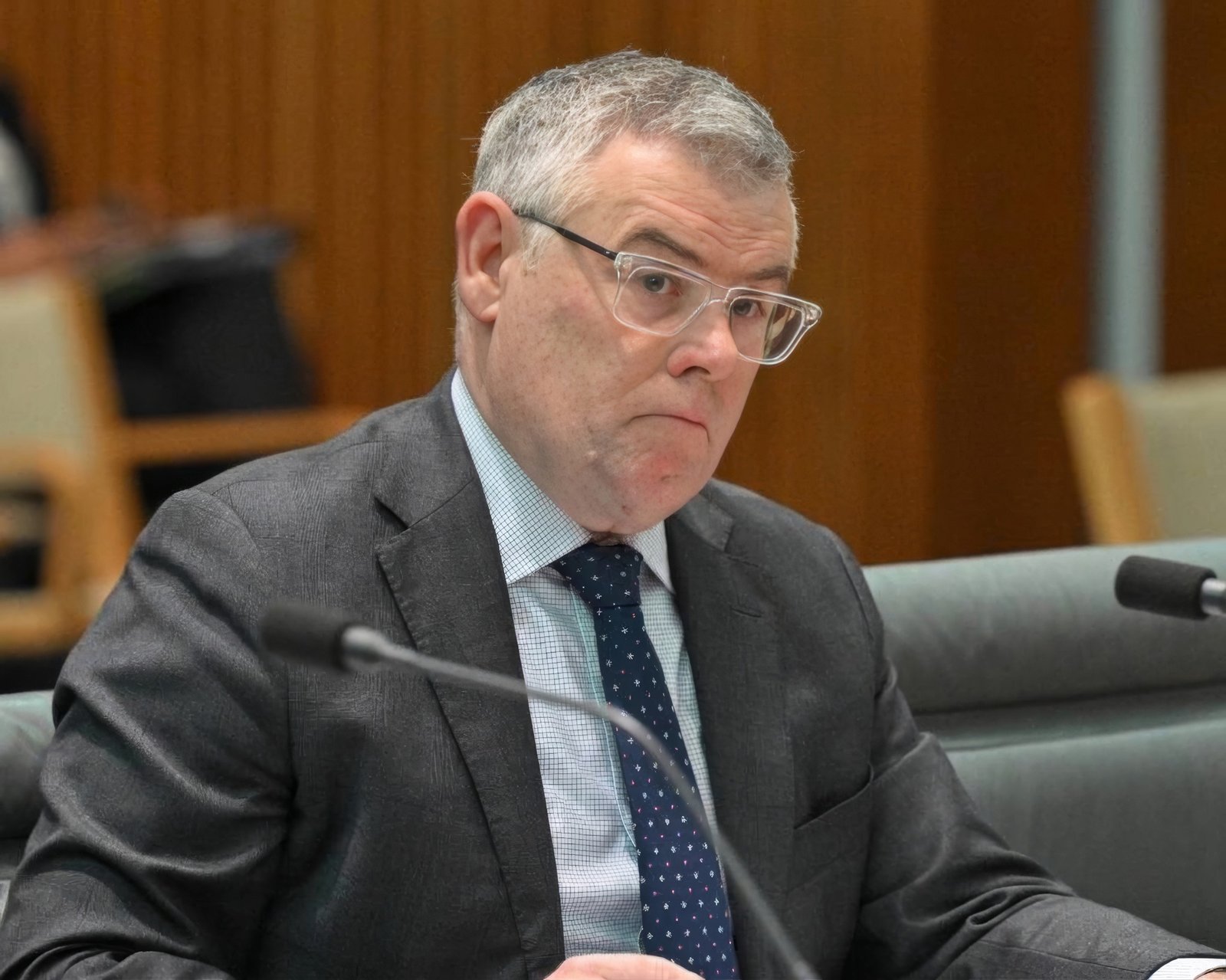
Environment Minister Murray Watt has urged Labor colleagues to stop undermining Treasurer Jim Chalmers, as the government considers spending cuts and faces pressure over its economic management ahead of next month’s midyear budget update.
Watt made the comments after cabinet ministers met on Monday to discuss possible savings for the update, which is expected in the middle of December. The government is seeking to reduce spending as it tries to ease inflationary pressure on the economy.
Asked about speculation of tension between Chalmers and Prime Minister Anthony Albanese, and whether he wanted an end to internal criticism and leaks targeting the treasurer, Watt said he did.
“As a member of the government, I take seriously the responsibility to work together to support government policies and also to get our work to support each other in what are very difficult times,” Watt said.
He described Chalmers as “doing an excellent job” in difficult economic conditions, arguing that many factors affecting the economy were beyond the control of any treasurer. Watt said he strongly supported Chalmers’ efforts, while acknowledging that the treasurer was being undermined by people within Labor.
“It’s pretty obvious that there are all sorts of people making all sorts of comments,” Watt said.
The intervention came as new opinion polls added to Labor’s political difficulties. The Resolve Political Monitor, published in the Age and the Sydney Morning Herald, put Labor’s primary vote at 28%, down from 34.6% at the 2025 election. The Coalition fell one point to 22%, while One Nation remained steady at 25%.
A separate Redbridge poll published in the Australian Financial Review showed Labor’s primary vote falling two points to 26%. The Coalition rose four points to 25%, while One Nation slipped one point to 28%.
Monday’s expenditure review committee meeting followed the Reserve Bank’s latest interest rate increase. RBA governor Michele Bullock said governments needed to manage their budgets independently of the central bank, while noting that public and private spending had contributed to excess demand in the economy.
Watt criticised the Coalition and minor parties for allowing proposed savings measures to remain stalled in parliament. He pointed to changes to the private health insurance rebate for people over 65, saying the opposition was blocking measures that the government claimed would save $10 billion.
Albanese has confirmed that public service spending will be examined as part of the search for savings. Last year, government departments and agencies were asked to identify potential reductions of up to 5% in their annual budgets as part of efforts to cut lower-priority spending.
Among the programs that could be reviewed are Labor’s home battery subsidy, estimated at about $7 billion, and incentives for electric vehicle purchases. The battery program was announced in April 2025 and was initially expected to cost about $2 billion. More than 600,000 systems have since been installed, and the government is considering whether means testing could be added.
Separately, electric vehicle incentives have cost the budget substantially more than originally anticipated. The government has not announced a final decision on changes to either program.
Opposition Leader Angus Taylor announced a proposed opposition “red tape razor gang” on Monday, aimed at reducing the regulatory burden on businesses. The announcement adds to the political contest over spending, economic management and the government’s approach to budget savings.
