

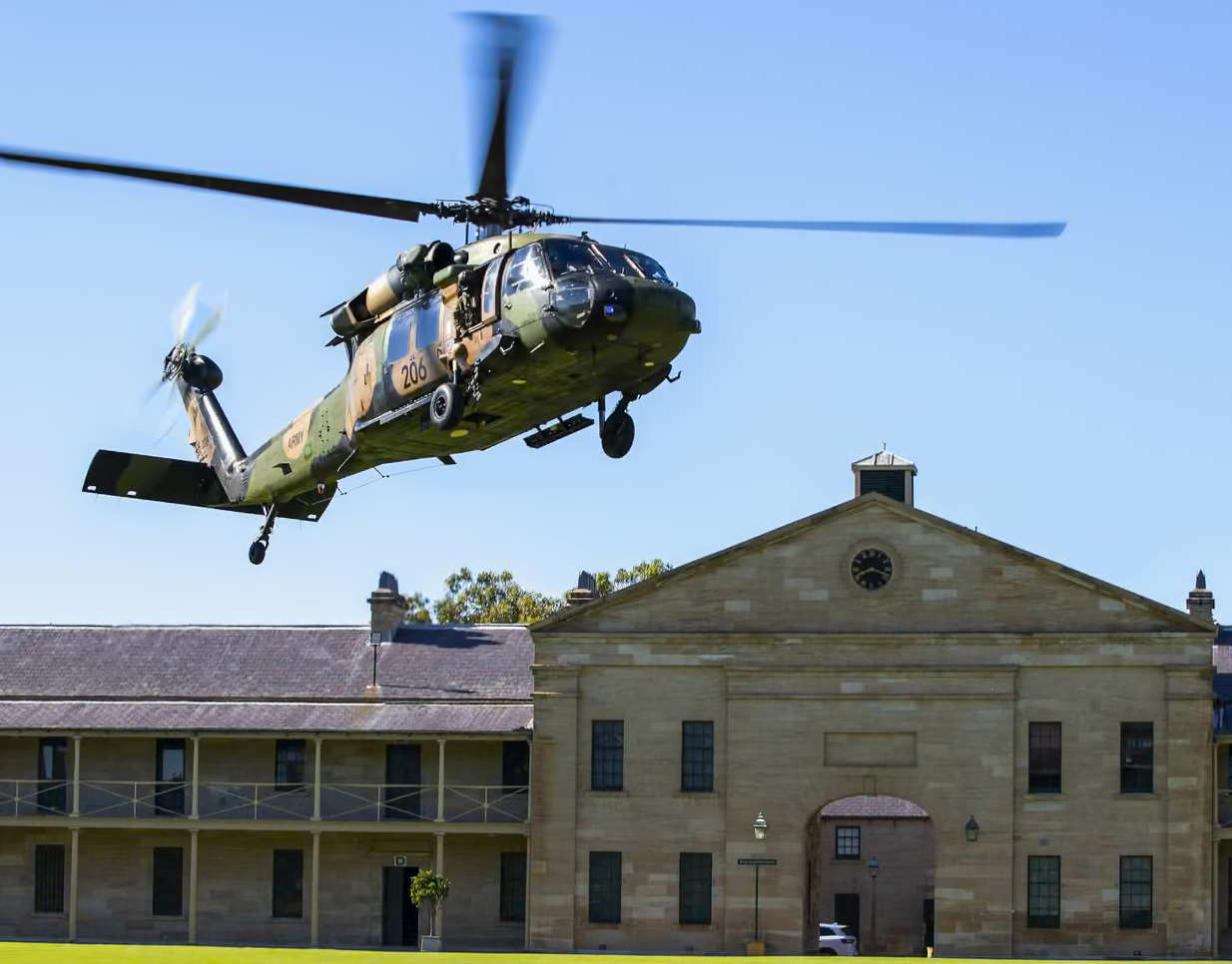
The Australian government has abandoned plans to sell four historic military properties following strong public opposition, including criticism from former prime ministers, veterans and defence representatives.
Prime Minister Anthony Albanese announced on Sunday, 8 November 2026, that Victoria Barracks in Sydney and Melbourne, Fort Queenscliff and RAAF Base Point Cook in Victoria would remain in public hands.
The decision is a partial reversal of the government’s broader plan to sell underused defence properties across Australia to raise billions of dollars and make land available for housing.
The four sites will retain their historic elements and are expected to be opened for community use after defence personnel leave. The government will work with the Australian War Memorial on plans to transform the properties into public spaces explaining Australia’s military history.
Why the government changed its plans
The original sell-off followed an independent defence property audit completed in 2023. The review identified 67 properties considered underused, unsuitable for defence purposes or expensive to maintain. The government argued that continuing to hold these properties was diverting resources from higher-priority defence requirements.
The planned sales were expected to generate billions of dollars while reducing maintenance and security costs. The two Victoria Barracks sites alone were expected to raise approximately $1.3 billion because of their valuable locations in Sydney and Melbourne.
The government also hoped to release land for housing developments, with a long-term target of up to 6,000 new homes.
Defence minister rejects security concerns
Defence Minister Richard Marles rejected suggestions that changing the use of Victoria Barracks near central Sydney would seriously undermine Australia’s national defence.
He argued that the site was largely occupied by office workers and disputed claims that the historic barracks were fundamental to the country’s defence capability.
However, the proposal attracted criticism from people concerned about Australia’s military presence in major cities. Former prime ministers John Howard and Paul Keating were among those who opposed the original sale plans.
The Coalition’s shadow defence minister, James Paterson, welcomed the decision to preserve the four properties but said the government should consider other defence sites that could be important to military capability. He identified HMAS Penguin, Lancer Barracks and Irwin Barracks among the locations the Coalition wants protected.
Veterans welcome the decision
The Returned & Services League of Australia president, Peter Tinley, described the retention of Sydney’s Victoria Barracks as a partial victory.
He said the site was important for more than its historical significance, pointing to its connection with the headquarters of Forces Command and the training of reservists and cadets.
NSW Opposition Leader Kellie Sloane also welcomed the decision, describing the barracks as an irreplaceable part of Australia’s military heritage.
Other defence properties face different outcomes
The government also announced changes to the future of two other properties. HMAS Penguin, on Sydney’s Northern Beaches, will be partially retained by Defence. Its Angophora Forest will instead be transferred to the Sydney Harbour Federation Trust.
In the Northern Territory, the Stokes Hill fuel installation will be returned to the Larrakia people, the Traditional Owners of the land. The southern section is a registered sacred site protected under law.
Despite the decision to retain four historic properties, the wider defence property disposal programme will continue. The government expects defence personnel to leave six sites by the end of 2026, with all planned divestments expected to be completed within two years.
The announcement comes ahead of an important federal cabinet expenditure review meeting, as the government faces pressure over inflation and the rising cost of living.
