

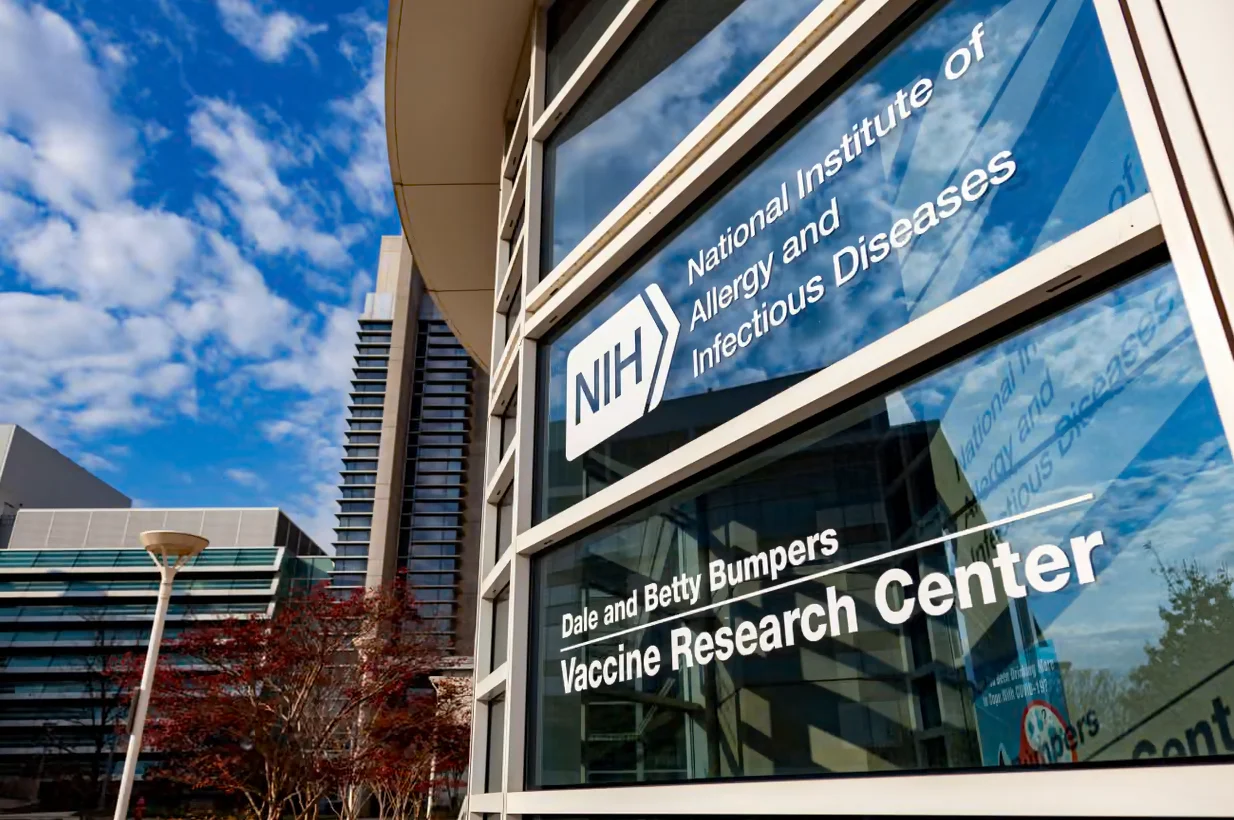
US medical researchers say a Trump administration review of federal health grants is forcing changes to peer-reviewed studies, raising concerns about political interference in scientific research.
The process has affected thousands of grants awarded by the National Institutes of Health (NIH), according to data analysed by Grant Witness and reported by Jessica Glenza in The Guardian.
One case involves Dr Jade Pagkas-Bather, who received her first NIH grant in June 2025. She planned a randomised controlled trial in Chicago to test whether monthly payments of US$500 could help young people living with HIV stay engaged with treatment, particularly when poverty or homelessness made their health a lower priority.
Pagkas-Bather told The Guardian that NIH programme officers asked her to remove references to “gender identities” and a statement that Black and Latinx people experience higher levels of poverty. She made the changes, received funding and enrolled dozens of participants.
In 2026, she said officials asked her to remove the cash payments from the study and references to its potential policy impact. “You can’t use unconditional cash transfer,” she recalled being told.
Grant Witness data shows that changes to the titles, abstracts or public health statements of continuing NIH grants rose from 0.4% in 2023 to 8.6% in 2025. In 2026, 8.5% of continuing grants were changed.
HIV research grants were affected at higher rates. In 2025, 305 of 1,795 continuing HIV-related grants were changed, or 17%. In 2026, 335 of 1,609 were changed, representing 20.8%.
Jeremy Berg, a former director of the National Institute of General Medical Sciences, described the changes as “pretty much unprecedented” and said they amounted to political control over the terms of scientific debate.
The NIH defended the process, saying more than 5,000 new and continuing grants had been renegotiated to ensure funding supports high-quality science, urgent health needs and the biomedical research workforce. An agency spokesperson said changes replace poorly defined or subjective concepts with scientific concepts and measurable variables, adding that all renegotiated grants are assessed by human experts.
The renegotiation process began in 2025 after court battles slowed the administration’s efforts to cancel grants. NIH director Jay Bhattacharya has repeatedly denied that a list of banned words exists. However, researchers say the review process has created uncertainty for programme officers and scientists about which terms or research topics could trigger scrutiny.
Pagkas-Bather is one of 14 named plaintiffs in a lawsuit arguing that grant renegotiations and cancellations amount to viewpoint-based discrimination and violate the First Amendment. She was told to remove the cash payments from her US$1.3 million grant or find another US$1 million in funding.
She ultimately replaced the cash payments with food and transport vouchers. Because the study has changed substantially, participants must be asked to provide consent again. A federal court hearing on whether the lawsuit can proceed as a class action is expected in November.
