

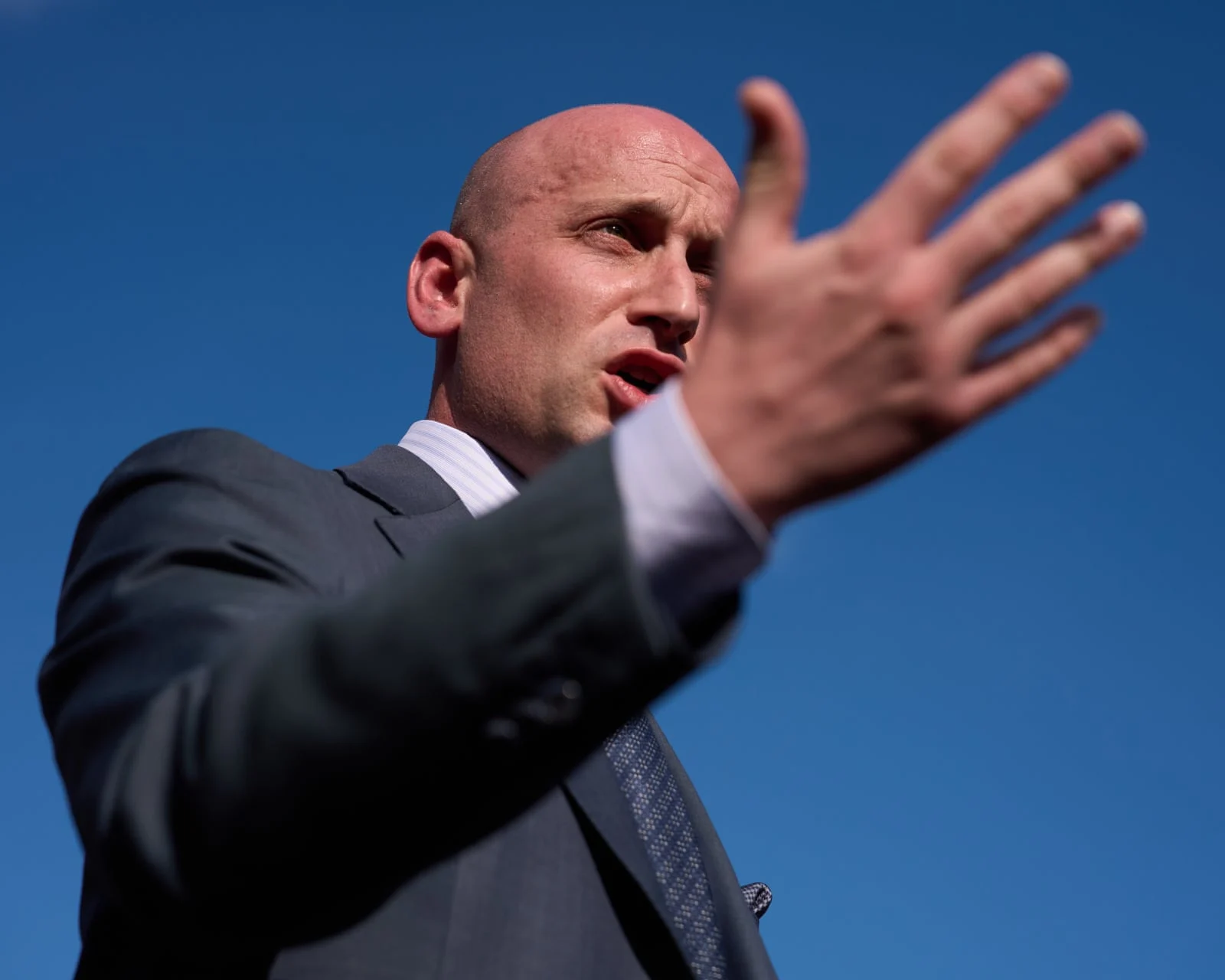
Donald Trump has appointed Stephen Miller as his new White House chief of staff, placing one of the most influential architects of his immigration agenda in a position with even greater authority over the administration.
The appointment replaces outgoing chief of staff Susie Wiles and signals that the president intends to maintain his hardline political direction despite growing criticism following the Republican Party’s poor performance in the midterm elections.
Miller, 41, has long been a central figure in Trump’s political operation. Although he has operated behind the scenes for much of his career, his influence over immigration policy and the administration’s broader agenda has made him one of the president’s most powerful advisers.
His promotion comes after Trump appeared to acknowledge that his deportation policy might have become too aggressive. In remarks to 60 Minutes correspondent Ross Douthat, the president said the approach might be “too tough”, reflecting concerns that have also emerged among some people close to him.
A Wall Street Journal report cited by The Guardian said Trump had privately expressed frustration with Miller’s approach. The report also said first lady Melania Trump had raised concerns after people she knew were affected by deportations.
Despite those reported reservations, Trump has now given Miller a more prominent position inside the White House.
A key architect of Trump’s immigration agenda
Miller previously helped develop the immigration policies associated with Trump’s first administration, including the family separation policy that resulted in thousands of children being separated from their immigrant parents.
He has also been involved in efforts to restrict immigration and challenge diversity, equity and inclusion programmes through America First Legal, a conservative organisation he co-founded after Trump’s 2020 election defeat.
His political influence has extended beyond immigration. Miller has publicly supported the idea that the United States could annex Greenland, arguing that Denmark, which controls the territory, cannot adequately defend it.
He has also faced criticism for comments about people opposing the administration’s policies. Following the killing of intensive care nurse Alex Pretti by federal immigration agents in January, Miller described Pretti as a domestic terrorist, according to The Guardian’s account.
Concerns among Republicans and business groups
Miller’s promotion has attracted attention partly because of the extent of his existing influence. A January Bloomberg profile cited in the opinion article reported that some longtime Trump aides privately referred to him as “the prime minister” because of his unusually broad authority.
His appointment could also create challenges for the administration’s relationship with businesses and corporate lobbyists.
Reuters reported that a senior lobbyist at a firm aligned with Trump was concerned Miller would prioritise political objectives, including immigration and tariffs, rather than the economic consequences of policy decisions.
The lobbyist contrasted Miller’s approach with that of Wiles, who was described as more attentive to the unintended consequences of government decisions.
The appointment has also reportedly caused frustration among some Republicans who blame Miller for the party’s midterm difficulties and question why he has been rewarded with a promotion.
For Democrats, the decision provides another indication of the direction Trump intends to take during the remaining period of his presidency. The Guardian columnist Arwa Mahdawi argues that Miller’s appointment suggests the administration is unlikely to prioritise cooperation with political opponents. She also suggests that his approach could deepen divisions within the Republican Party.
However, the political consequences of the appointment remain uncertain. Miller’s greater authority could strengthen the administration’s existing policies while creating further disagreements with business groups, Republican lawmakers and political opponents.
With Miller now serving as chief of staff, his role in shaping the administration’s priorities is expected to receive even greater attention.
Source: The Guardian, Arwa Mahdawi. Photograph: Evan Vucci/AP.
