

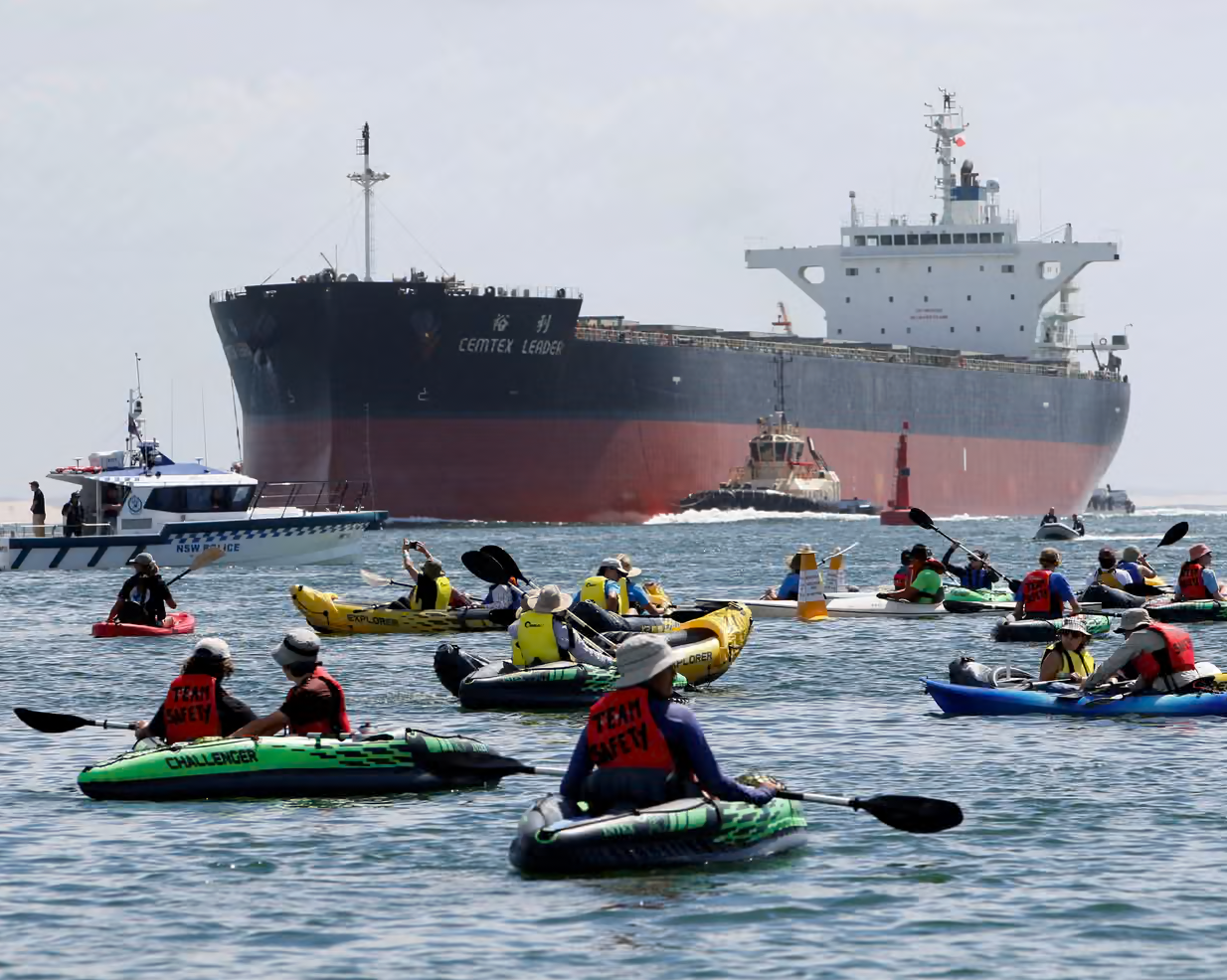
Newcastle City Council has voted to stop licensing events organised by climate protest group Rising Tide on council-owned land, escalating a dispute over demonstrations at the port that handles more coal exports than any other in the world.
The decision was made on Tuesday night, when independent lord mayor Gavin Morris used his casting vote to support a mayoral motion against granting licences for the group’s events. Morris said Rising Tide had damaged the trust of the Newcastle community by disregarding police directions during previous protests.
The move follows correspondence from NSW Premier Chris Minns, who warned the council that approving the events could make it complicit in unlawful conduct. Minns said he supported the right to peaceful protest but argued that demonstrations must not endanger people or interfere with shipping movements through the Port of Newcastle.
Rising Tide stages an annual six-day protest in which thousands of participants have entered the harbour in kayaks and rafts in an effort to stop coal ships. Its programme has also included camping on council land and a music festival featuring Australian performers, including Midnight Oil frontman Peter Garrett.
The group says its campaign is aimed at ending new fossil fuel projects, stopping coal exports from Newcastle by 2030 and imposing a 78% tax on fossil fuel profits to fund community and industry transitions.
The dispute has a history in the courts. In 2024, the NSW government introduced a four-day maritime exclusion zone around the port that made entering the water a criminal offence. Rising Tide challenged the measure, and the Supreme Court ruled it invalid shortly before the protest began, finding the government had acted improperly. A total of 173 protesters were charged during that event, but police withdrew charges against 125 people in August.
Authorities did not try to prevent the 2025 blockade from proceeding. Police arrested and charged 129 people who entered the water, and the protest prevented three coal ships from entering the port. Those cases remain before the courts. In a letter to council, however, Police and Hunter Minister Yasmin Catley referred to 141 arrests during the 2025 event, a figure that differs from the 129 arrests and charges described elsewhere in the report.
Catley backed the council motion and described Rising Tide as “bad faith actors”. She said the group had ignored legal requirements for a protected protest in 2025 as well as the statutory requirements applying to the 2024 event.
Rising Tide spokesperson Zack Schofield rejected the council’s move, saying attempts to restrict the group’s activities showed its campaign had put pressure on the coal industry. He said the group intended to continue exercising its right to protest and that its smaller “Paddle for the Planet” event would go ahead at Horseshoe Beach on Saturday, ahead of the next major protest planned for February.
The group was due before the NSW Supreme Court on Wednesday after police refused its application for a Form 1 permit for Saturday’s event. The court was expected to decide later that day whether to uphold the police decision not to provide protesters with protection from charges under the Summary Offences Act.
The council’s decision concerns the licensing of Rising Tide events on council land. It does not, by itself, resolve the separate legal questions surrounding the group’s planned demonstrations or the right to protest in other locations.
