

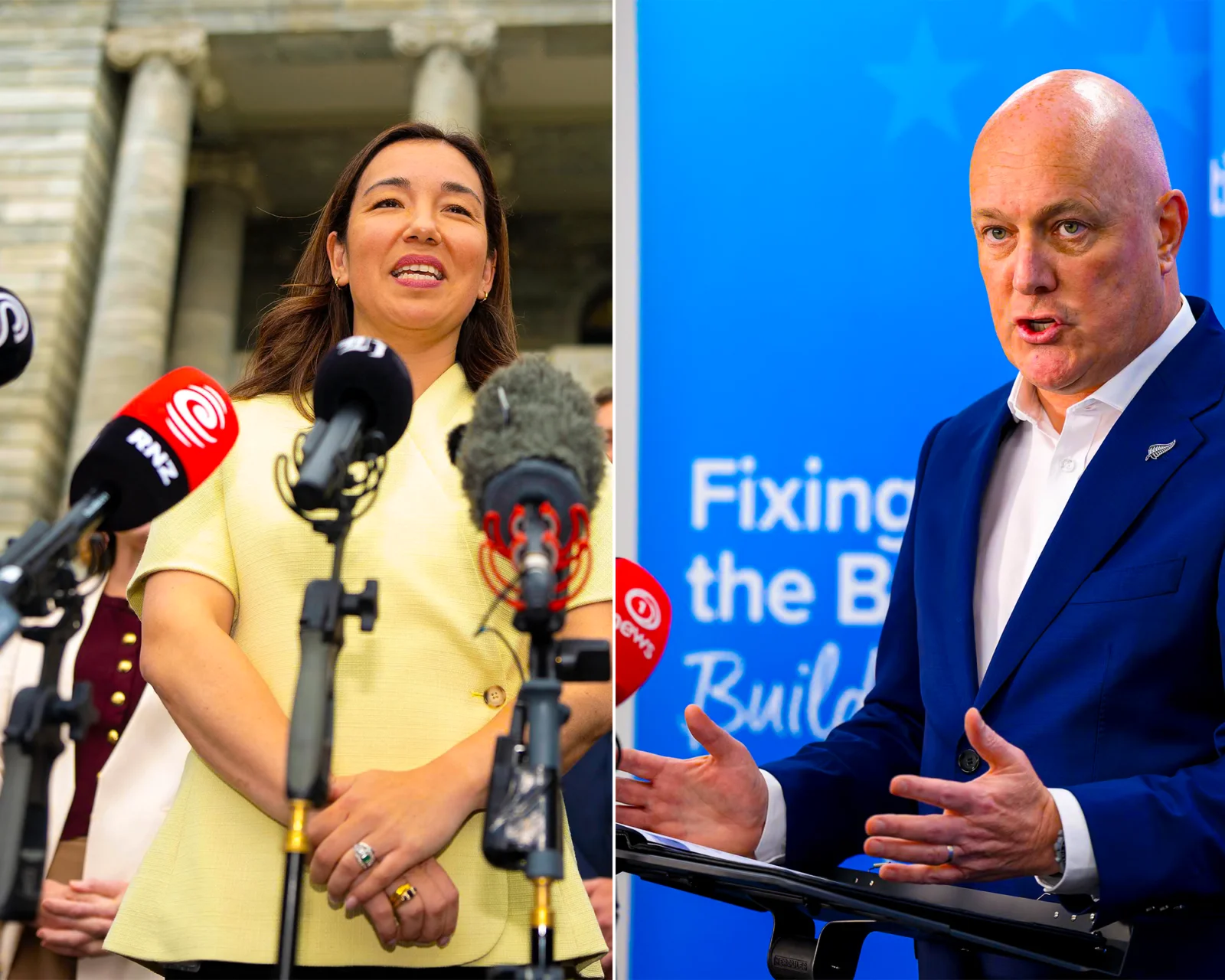
New Zealand’s Opportunity party has secured a place in parliament after the country’s closely contested general election, putting its leader, Qiulae Wong, in a potentially influential position as the major political blocs prepare for coalition negotiations.
The party won 5.9 per cent of the party vote, enough to cross the threshold for parliamentary representation. Its seven newly elected MPs arrived in Wellington on Monday, while the final election result is not expected until 27 November, when about 400,000 special votes are counted.
Opportunity could influence who forms government
Neither the governing right-leaning coalition nor the opposition left bloc secured a clear mandate on election night. With the two sides separated by only a small number of seats, Opportunity could become an important participant in negotiations once the final count is confirmed.
Wong said the party would negotiate first with whichever party wins the largest number of seats. However, she made clear that its decision would depend on whether it could reach agreement on the party’s priorities and its vision for New Zealand.
Speaking outside parliament, Wong criticised populist politics, saying it did not deliver results and lacked substance. She described the support secured by Opportunity as encouragement for a more pragmatic approach to government.
The result is also a milestone for New Zealand politics. Opportunity is the first new party not formed by an existing MP or established political party to enter parliament since the mixed-member proportional representation system was introduced in 1996. Wong also becomes the first leader of a New Zealand political party with Asian ethnicity.
Five priorities will shape coalition talks
Opportunity has identified five bottom-line issues for discussions with the larger parties. They include action on the supermarket duopoly, limits on political donations, a 10-year cross-party plan for health, an end to bottom trawling in the fishing industry and stronger climate commitments.
Wong said the party wanted to find agreement on a shared future vision for New Zealand, including a lower-emissions economy and a more inclusive society.
Luxon signals willingness to work with Wong
National Party leader and Prime Minister Christopher Luxon had previously ruled out working with Opportunity. On Monday, however, he indicated a willingness to speak with Wong and look for areas of common ground.
Luxon told RNZ he intended to build a relationship with the new party leader and discuss cross-party cooperation. His comments came as National and the centre-left Labour Party recorded their weakest combined share of the vote under the MMP system.
Smaller parties made gains amid voter frustration over high living costs and dissatisfaction with incremental policy changes. The Greens and ACT recorded their strongest results, while New Zealand First increased its support compared with the 2023 election. Te Pāti Māori retained five electorate seats, according to the preliminary figures reported by the Guardian.
Election result raises questions about voting system
The close result has also renewed debate about New Zealand’s mixed-member proportional, or MMP, voting system. Under the system, voters cast one vote for a local electorate candidate and another for a political party. The party vote is intended to determine each party’s overall share of seats in parliament.
However, a party can win more electorate seats than its share of the party vote would normally provide. Those additional seats are known as overhang seats. The preliminary result could produce as many as 11 additional seats, with National and Te Pāti Māori among the parties involved.
Political scientist Dr Lara Greaves said the use of campaigns designed to create overhangs could undermine the purpose of proportional representation and contribute to further political polarisation.
New Zealand now faces several weeks of uncertainty while special votes are counted. The final figures, expected on 27 November, will clarify the balance of seats and the negotiating position of Qiulae Wong’s Opportunity party.
