

This article is based on a Guardian opinion column by New Zealand television host Clarke Gayford. It reflects the author’s commentary and should not be read as an independent assessment of every political claim raised during the campaign.
Two Chrises take centre stage
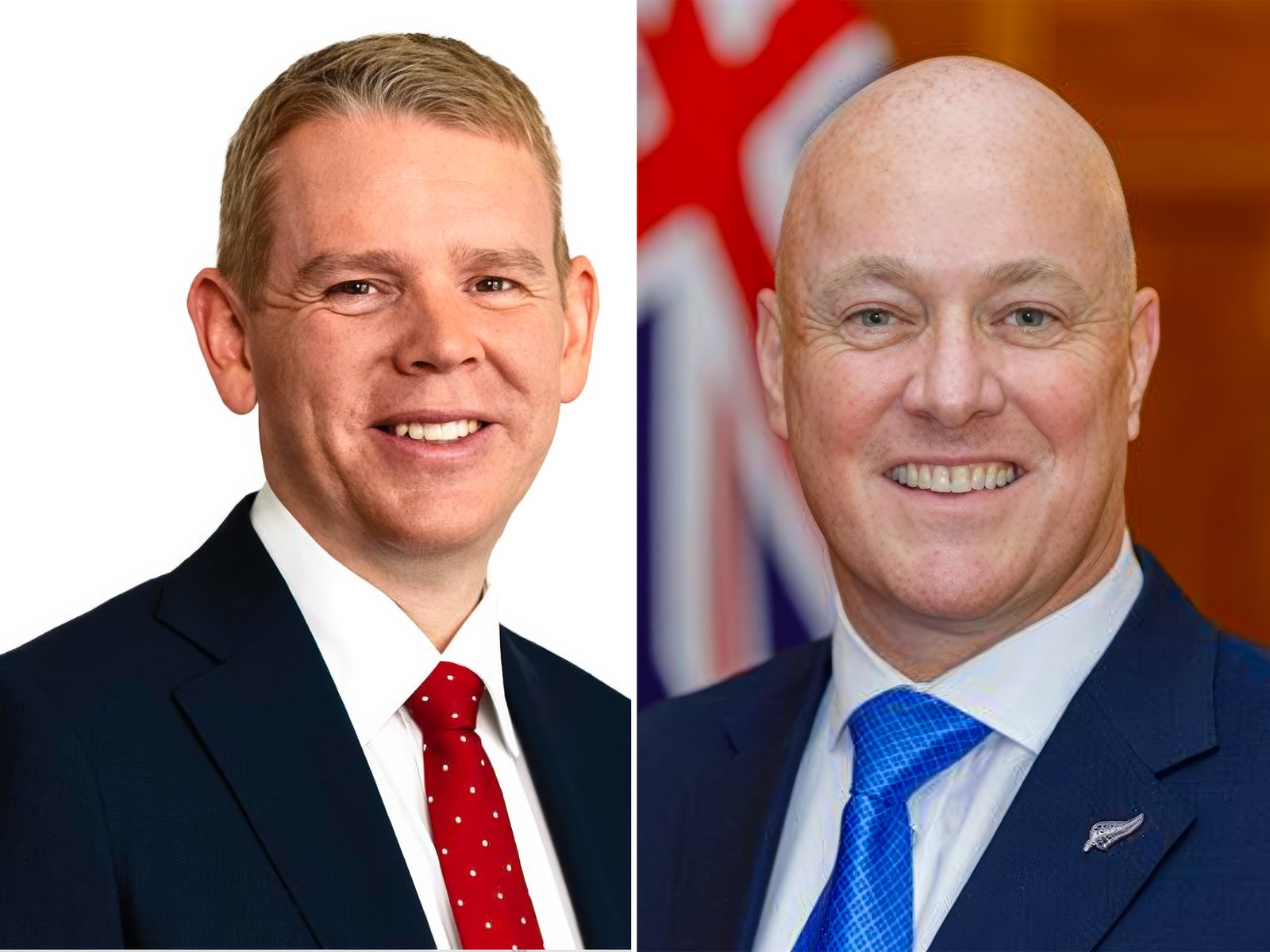
New Zealand heads towards its general election on Saturday, 7 November, with voters choosing between two leaders who share the same first name: Prime Minister Christopher Luxon of the National Party and Labour leader Chris Hipkins.
That unlikely coincidence is the starting point for a sharply humorous election column by Clarke Gayford, who argues that the contest has become a striking contrast to the country’s familiar international image as a relaxed and easy-going place.
Gayford writes that New Zealanders’ carefully maintained “nice guy” reputation is often put aside during election campaigns. This year, he suggests, the political contest has been so absorbing that it has threatened to overshadow even the United States midterm elections for people following events in New Zealand.
From outside the country, he says, much of the attention has centred on Luxon’s campaign missteps and viral moments, while Hipkins has attracted a more understated kind of attention, including the occasional mention of his fondness for a mince pie from a local dairy.
Campaign debate shifts towards gangs
The column argues that a lack of detailed policy debate has allowed side issues and minor parties to dominate parts of the campaign. One of the most prominent themes has been the political argument over gangs.
Gayford describes a cycle of accusations involving photographs of politicians with people alleged to have gang connections. Political opponents have used those images to question each other’s judgement, while a political lobby group added to the dispute with a billboard accusing a party of being too close to gangs.
The author portrays the exchanges as an escalating political sideshow, suggesting that talkback radio may have been one of the few clear beneficiaries.
Voting enrolment rules become a major issue
More seriously, Gayford turns to a change in New Zealand’s electoral rules that he says could prevent some eligible people from voting in Saturday’s election.
According to the column, the government brought forward the deadline for enrolling to vote to 13 days before polling day. Previously, people could enrol up to and including election day.
New Zealand requires eligible citizens to be enrolled, although voting itself is not compulsory. Gayford argues that the earlier deadline, introduced with little public notice or awareness campaign, risks excluding people who have moved house, returned from overseas or been removed from the electoral roll for administrative reasons.
He sharply criticises the change, saying it could leave some people who are entitled to participate unable to vote. His column contrasts the situation with Australia’s compulsory voting system, while noting that New Zealand’s legal requirement is to enrol rather than to cast a ballot.
Election day will decide which Chris leads
Early voting has already begun for people who are enrolled. The final choice between Luxon and Hipkins will be made by voters on Saturday, as the campaign reaches its conclusion.
Gayford’s piece uses humour and exaggeration to examine what he sees as a campaign dominated by political gaffes, arguments over gangs and a consequential debate about access to the electoral roll.
His central concern is that the noise surrounding the campaign could distract from a more fundamental question: whether every eligible New Zealander has a fair opportunity to take part in the country’s democracy.
Source: Clarke Gayford, opinion column published by The Guardian on 6 November 2026.
