
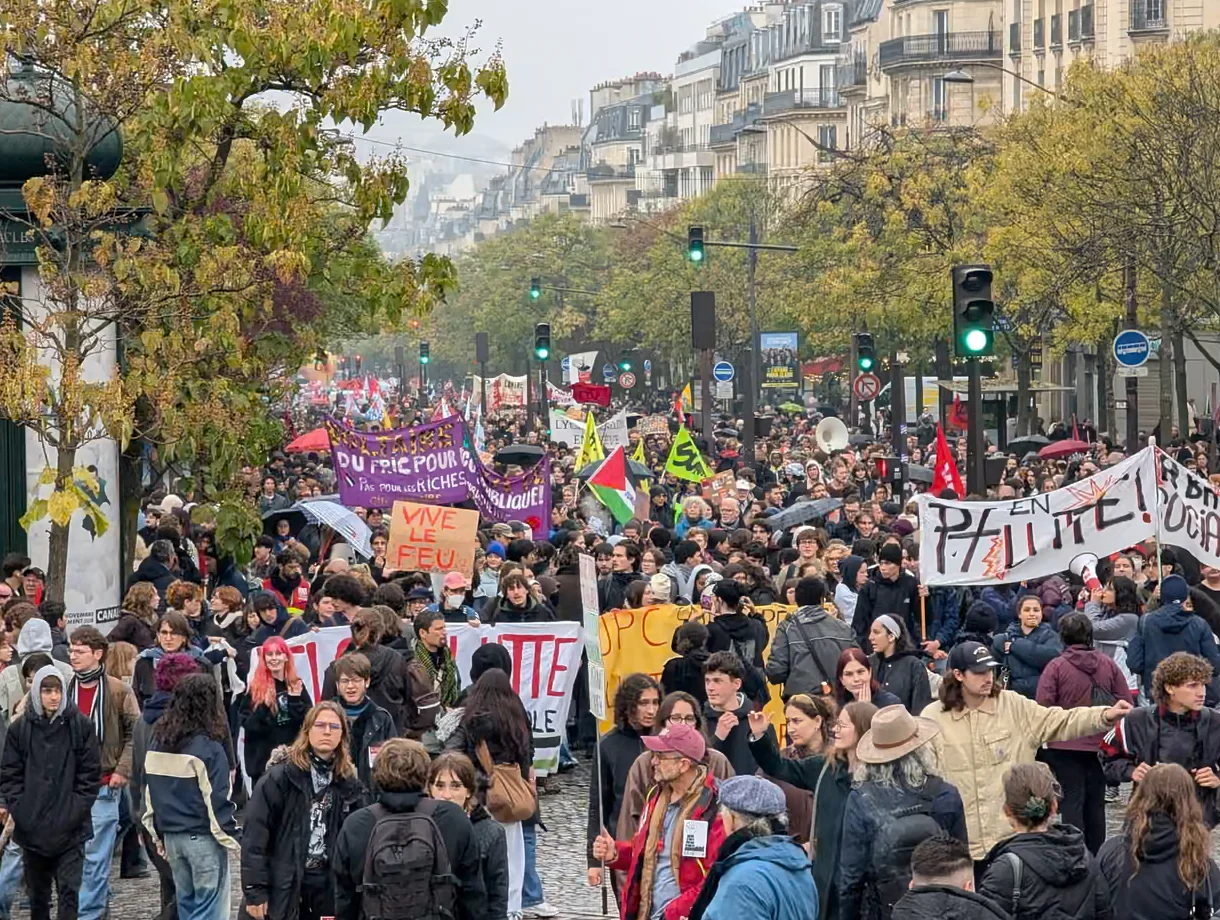
Student protests across France have entered their eighth week, with growing concern from teachers and school leaders over missed lessons, safety and the impact on pupils preparing for major exams.
Since September, students have blockaded hundreds of high schools, calling for repairs to deteriorating school buildings, more substitute teachers, smaller classes and greater equality in university applications. Demonstrations also took place in Paris on 10 November as part of a national day of strikes and mobilisation in education.
The disruption has left thousands of students in key baccalauréat exam years missing as many as 150 hours of teaching. Online lessons have rarely replaced the lost classroom time, while some teenagers have been unable to attend school for four or five weeks.
Teachers and unions have warned that the situation is becoming increasingly difficult to manage. More than 360 students and 245 school staff have reportedly been injured since the protests began, while at least 50 school principals have requested to leave their positions.
The government has proposed reducing some class sizes and reviewing the university application platform, but the measures have not ended the demonstrations. Teachers’ unions have also raised concerns about violence around some schools, including fireworks, fires and attacks. Authorities and unions have stressed that those involved in violence are not necessarily the same students peacefully protesting for education rights.
Educators are increasingly divided between support for students’ demands and concern about the prolonged disruption. Some say the protests reflect long-standing problems in the education system, while others warn that pupils are losing essential learning time and that trust between students, staff and authorities is deteriorating.
With a presidential election due next spring, one teacher interviewed by The Guardian said it was difficult to see the protests ending soon, while expressing concern that the school year could be seriously affected.
Source: The Guardian, 15 November 2026.
