

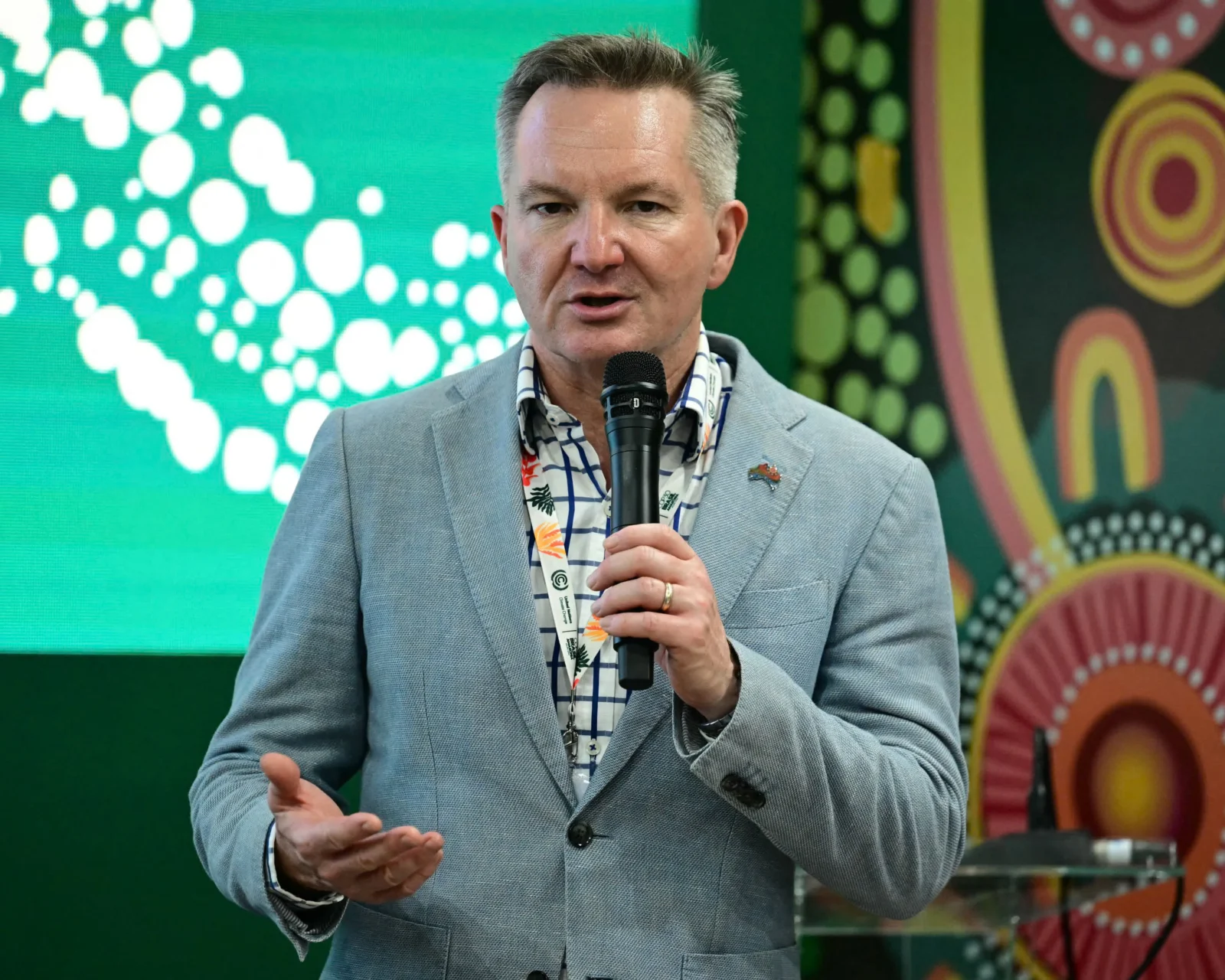
Australia is facing renewed questions over its climate credentials as Climate Change Minister Chris Bowen prepares to lead negotiations between nearly 200 countries at the COP31 United Nations climate summit in Antalya, Turkey.
Australia has been urged to use its role in the talks to help secure a global agreement to move away from coal, gas and oil, despite relying on a major fossil fuel export industry. The government expects the export value of coal, oil and gas to reach $141 billion this financial year.
Australia’s role in the COP31 negotiations
Delegates are gathering in Antalya for two weeks of climate discussions beginning on Monday. Turkey will serve as president of the conference, while Australia has taken responsibility for presiding over the negotiations after the two countries reached a hosting compromise.
Bowen will be tasked with building agreement among countries with sharply different interests, including major fossil fuel producers such as Saudi Arabia and Russia, China, the world’s largest greenhouse gas emitter, and poorer nations that face severe climate risks.
One proposal backed by Australia and Turkey is a new 2035 electrification goal. It aims for electricity to account for 35 per cent of final energy use worldwide, reducing reliance on fossil fuels.
Pressure over coal and gas exports
Australia is the world’s second-largest exporter of coal used in power stations and the largest exporter of coal used in steelmaking. Around one-fifth of global liquefied natural gas exports also come from Australia, according to the report.
Climate advocates have questioned whether Australia can credibly encourage other countries to move away from fossil fuels while continuing to approve and export coal and gas.
Bowen rejected the suggestion that Australia’s position prevents it from helping lead the transition. He said all countries were managing the shift and pointed to Australia’s domestic move away from coal in electricity generation.
However, a detailed plan for countries to transition away from fossil fuels is not included on the official COP31 agenda, despite calls from climate experts for such plans to be central to limiting global heating.
Scientists call for a stronger commitment
More than 500 mostly Australian scientists and academics have written to Prime Minister Anthony Albanese, calling for an end to new coal and gas approvals and a legislated plan to phase out fossil fuel production while protecting workers and communities.
The letter warned that Australia’s international climate leadership could be undermined if the country expands coal and gas production at home while seeking climate finance and stronger global action overseas.
Kathryn McCallum of the Climate Action Network Australia said the Albanese government had approved 38 coal, oil and gas projects since taking office in 2022. The report also highlighted the extension of Woodside’s North West Shelf gas processing facility in Western Australia until 2070.
Can countries agree on a global outcome?
Australia and Turkey want COP31 to conclude with an overarching agreement, known as a cover decision. United Nations climate negotiations operate by consensus, meaning every country must agree before resolutions can be adopted.
Australian National University climate policy expert Professor Frank Jotzo expressed doubt that all participants would agree to include a roadmap away from fossil fuels. He suggested countries opposed to such a move could prevent it from being included in the final agreement.
Bowen has identified limiting the overshoot of the Paris Agreement’s 1.5C temperature goal, improving climate finance access for poorer countries and advancing the 2035 electrification proposal as key priorities. Ocean protection is also expected to feature in discussions.
With Australia’s fossil fuel exports under scrutiny, the negotiations will test whether the country can help build international consensus on climate action while managing the competing pressures of its domestic energy and export industries.
