

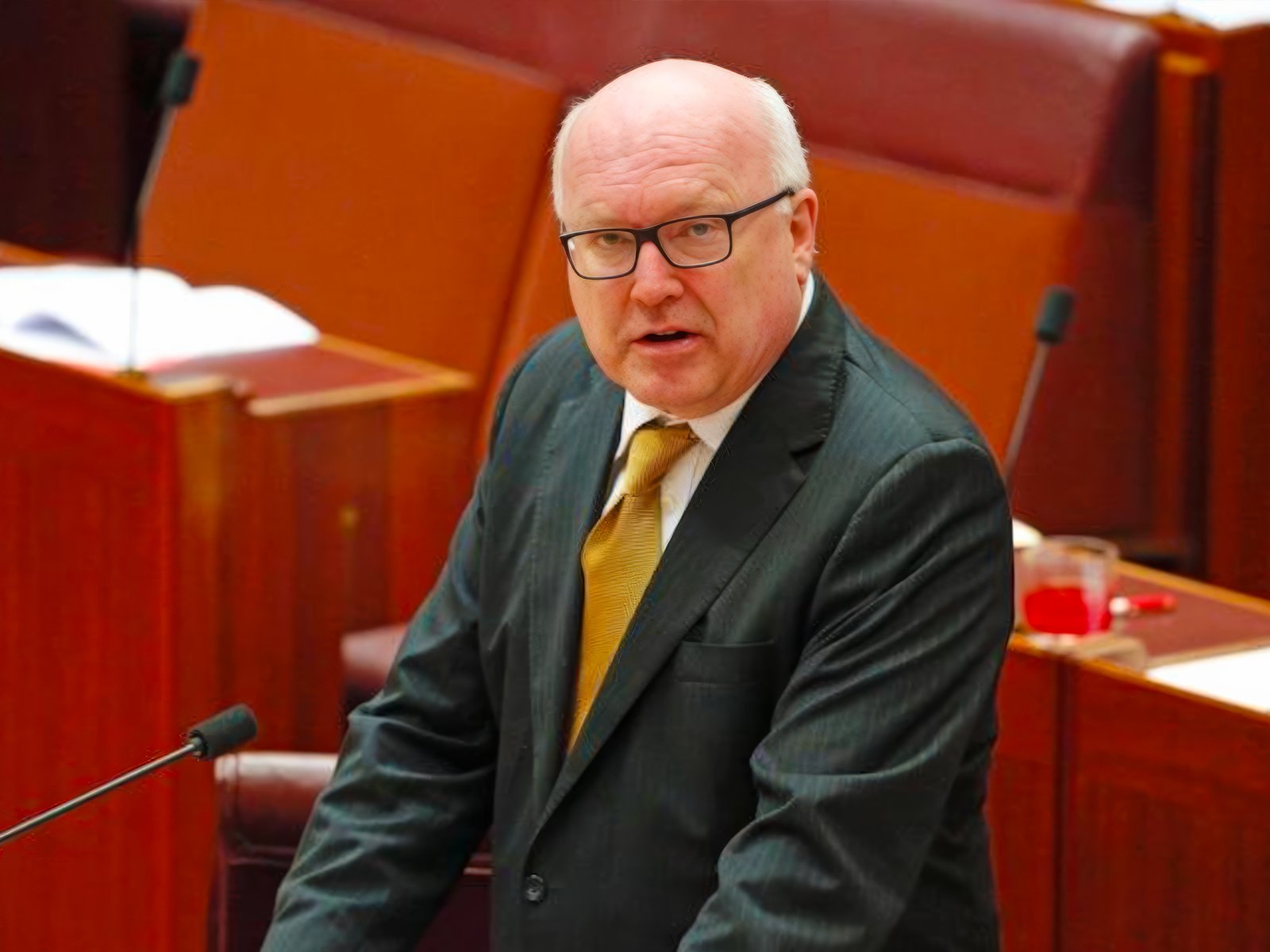
Former Australian attorney-general George Brandis has revisited one of the most memorable moments of his parliamentary career, using it to highlight his views on freedom of speech, prejudice and political hypocrisy.
In an opinion article published on November 6, 2026, Brandis argues that the right to express offensive or prejudiced views must remain protected, even when those views are deeply objectionable.
His argument draws on an incident involving One Nation leader Pauline Hanson in August 2017, when she entered the Senate chamber wearing a burqa during parliamentary proceedings.
Brandis, who was serving as a Liberal senator and federal attorney-general at the time, strongly condemned the stunt.
He said Hanson’s actions were intended to demean Australia’s Muslim citizens by making fun of a cultural and religious practice important to many members of the community.
He described the incident as an unmistakable display of ignorance, prejudice and bigotry.
The Senate incident that remains memorable
Brandis recalls making an impromptu speech in the Senate in response to Hanson wearing the burqa.
He says that during his 18 years in parliament, few things he said received as much public praise as that speech.
More than nine years later, he says strangers still approach him in public places, including streets and airports, to congratulate him on what he said.
Some have even asked to take photographs with him because of the speech.
The continuing public reaction suggests the moment remains significant in discussions about political conduct, religious tolerance and freedom of expression.
Freedom of speech and political hypocrisy
Brandis’s central argument is that defending freedom of speech should not depend on whether the views being expressed are popular or acceptable.
His position distinguishes between protecting someone’s right to express an opinion and agreeing with the opinion itself.
The article’s headline makes his position clear: he is prepared to defend the right to be a bigot, while arguing that political hypocrisy is what annoys him more.
That distinction raises an important question about the limits of free expression in a democratic society.
Can people defend the right to express offensive views while strongly rejecting prejudice and discrimination?
For Brandis, the protection of free speech and criticism of bigotry are not necessarily opposing positions.
His recollection of the Hanson incident provides the personal and political background to that argument.
This article is based on the supplied opening extract of Brandis’s opinion piece. The remainder of his argument was not included in the material provided.
