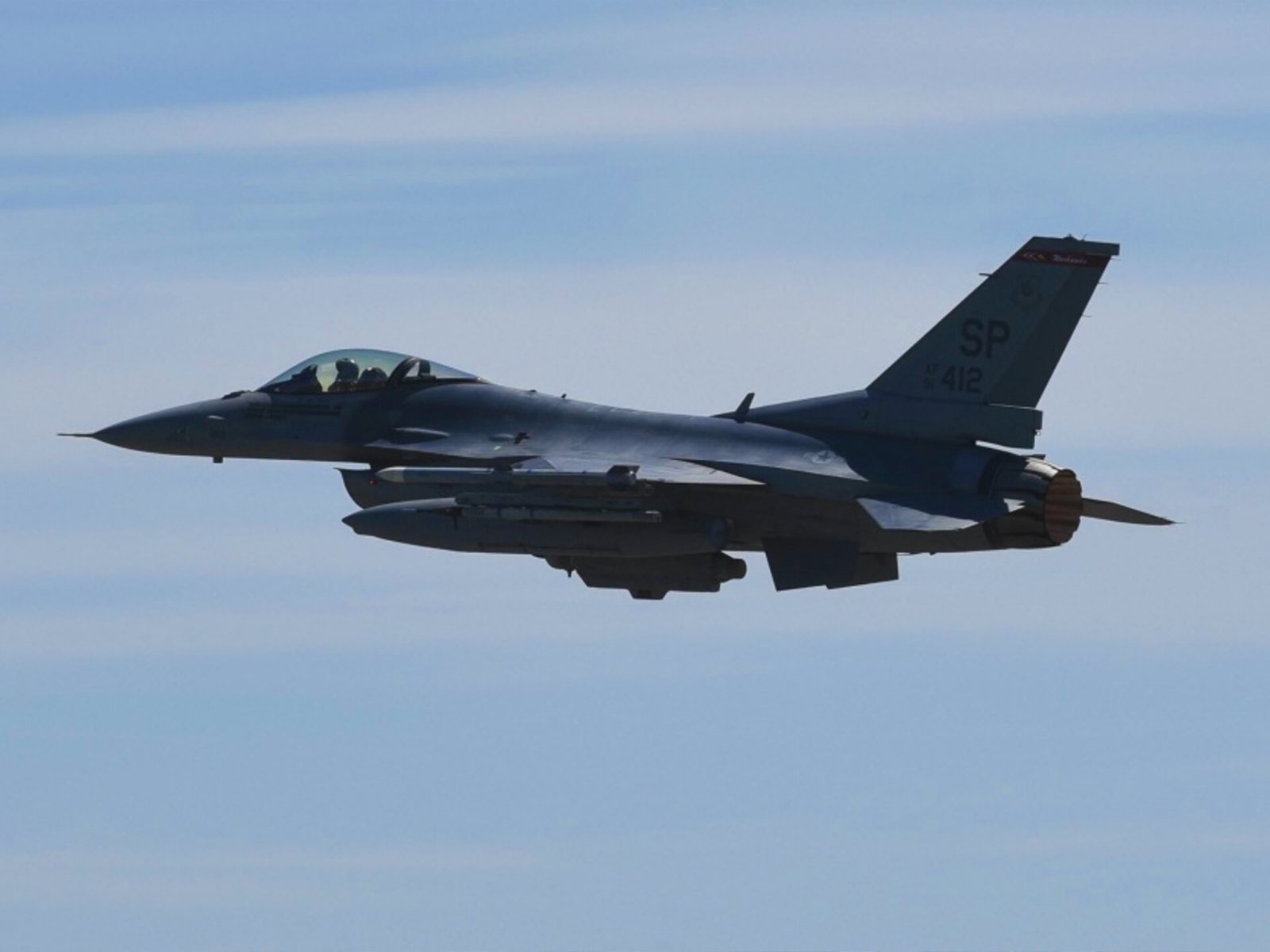
A US Air Force F-16 fighter jet crashed while approaching Spangdahlem Air Base in western Germany on Tuesday, according to the US military.
One pilot safely ejected from the aircraft and was receiving medical treatment, officials said. Emergency response personnel were sent to the crash site.
The cause of the incident remains under investigation.
Four F-16s took part in training
Germany’s air traffic control authority said four F-16s had been involved in a training exercise.
Two aircraft remained in the training area while two others were returning to Spangdahlem. One of those aircraft is believed to have crashed during its approach to the base.
The other F-16s landed at Ramstein Air Base, according to the German authority.
Investigation under way
US military officials have not released further details about what caused the crash. Investigators are expected to examine the circumstances surrounding the aircraft’s approach and the events leading to the incident.
The crash occurred at a US military installation in western Germany, where Spangdahlem is used by the US Air Force.
Source: The Guardian
Leave a Reply