

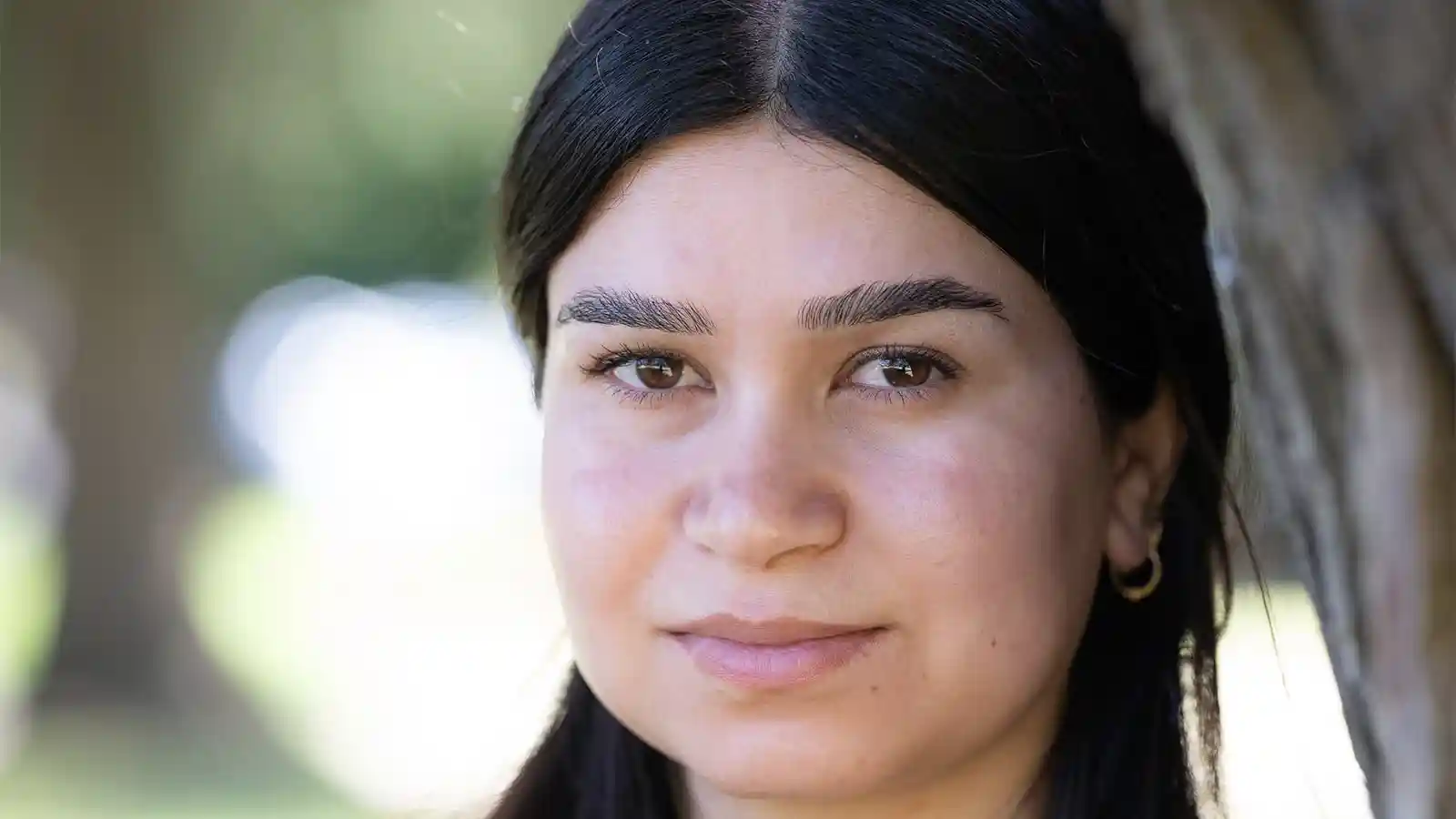
A Yazidi woman who survived captivity under Islamic State militants has published a collection of letters she secretly wrote during her imprisonment, more than a decade after she was separated from her brother during the extremist group’s assault on northern Iraq.
Amera, now 22 and living in the regional New South Wales city of Armidale, wrote the messages while held by Islamic State fighters after the militant group attacked her village in the Sinjar region in August 2014.
The book, titled For Ali, For Us All: Messages From Captivity, brings together the letters she wrote to her brother Ali during eight months of captivity, in the hope that one day he might read them.
Amera was 11 years old when Islamic State fighters arrived at her family home in Solagh village on 4 August 2014, one of the early days of the group’s campaign against the Yazidi religious minority.
She recalls sitting with her older brother beneath a fig tree outside their home shortly before the militants arrived in several vehicles and began ordering residents from their houses.
The militants separated men and boys from women and children, a moment that would be the last time Amera saw her brother.
“He told me, ‘my heart always be with you,’” she said.
Amera was among more than 6,000 Yazidi women and children kidnapped and enslaved during the campaign that international investigators and human rights groups later described as genocide.
She was taken captive alongside her mother and three sisters and transported between several locations controlled by Islamic State fighters.
During part of her captivity, Amera and about 70 other Yazidi women and children were imprisoned in a school in Tal Afar for around a month.
It was there that she found pens and paper inside classroom desks and began secretly writing letters addressed to her brother.
“I wrote because I was scared, but also because I have hope,” she wrote in the book.
She hid the letters in desks, in her socks and sometimes inside her mother’s clothing, fearing they would be discovered by guards.
While later detained at Badush prison — the site of a massacre of Shia Muslim prisoners earlier in the conflict — Amera continued writing despite warnings from her mother about the danger.
At one point, an Islamic State fighter discovered her writing a message and burned the letter in front of her.
Amera was later separated from her family and forced to live for several months in the home of an Islamic State member who had previously lived alongside Yazidi families in the region.
She said the man attempted to abuse her and threatened to sell her to a relative.
In April 2015, on her 12th birthday, Amera and other Yazidis managed to escape after reaching the town of Sinuni in the Sinjar region.
Following their escape, her family spent four years living in refugee camps in Iraq before being resettled in Australia in 2019.
Armidale has since become home to a significant Yazidi refugee community.
Amera is now studying law at university and says the book is part of her effort to raise awareness of Yazidis still missing more than a decade after the Islamic State attacks.
An estimated 2,700 Yazidi people remain unaccounted for.
“We just need to know the truth about our loved ones,” she said.
“Where is Ali, what happened to him?”
Amera says she continues to read the letters she wrote during captivity, often imagining her brother hearing the words she never had the chance to send.
“Each time when I’m trying to read them, I feel Ali is beside me and he’s listening to me.”