

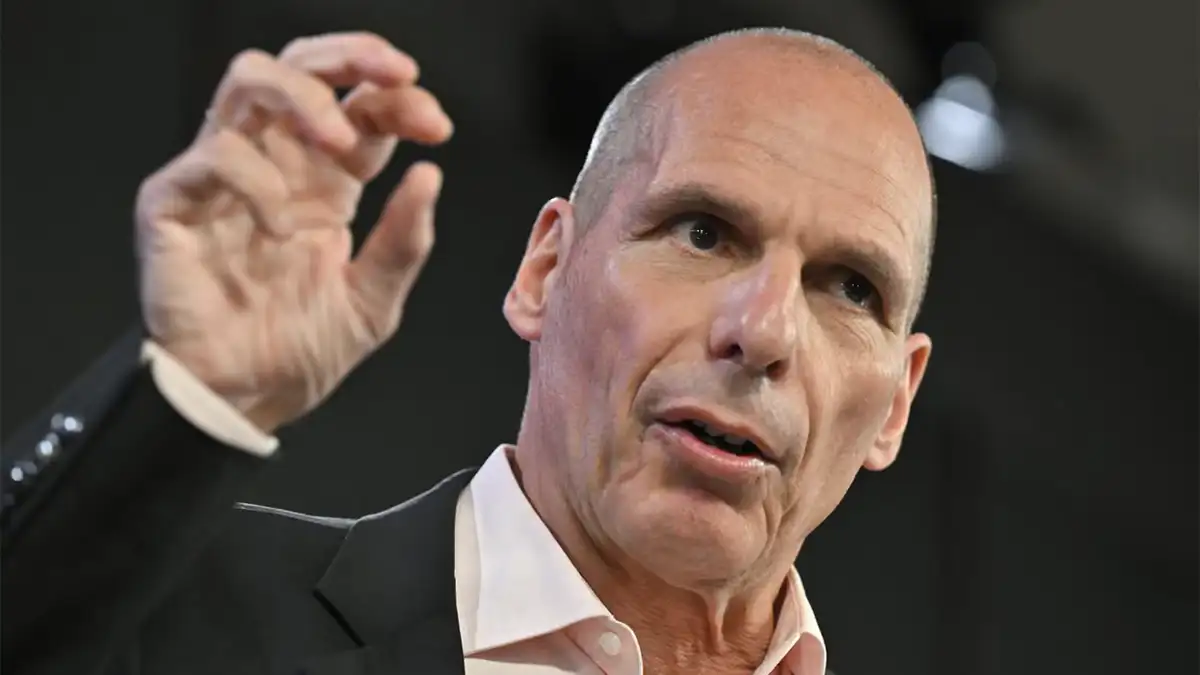
Greek economist and former finance minister Yanis Varoufakis says the global economic system is failing to address the defining challenges of the 21st century, warning that technological disruption, climate pressures and geopolitical tensions are exposing structural weaknesses in the way modern economies operate.
Speaking on Guardian Australia’s Australian Politics podcast ahead of a national speaking tour, Varoufakis said the existing global economic framework is struggling to respond to rapid technological change and growing instability in international politics.
The interview, conducted by Guardian Australia political editor Tom McIlroy, explored a range of issues including the economic consequences of artificial intelligence, Europe’s response to Russia’s invasion of Ukraine and the political implications of climate change policy.
Varoufakis argued that the relationship between individuals and capital has been fundamentally altered by the rapid development of artificial intelligence and digital platforms, which he said are reshaping the balance of power within modern economies.
The former Greek finance minister, who served during the country’s debt crisis negotiations with European creditors in 2015, has long been a critic of the global financial system and the way it distributes wealth and economic power.
During the podcast interview, he suggested that current institutions are not equipped to manage the scale of transformation now facing advanced economies, particularly as new technologies begin to reshape labour markets and global supply chains.
Varoufakis also discussed geopolitical tensions, including Europe’s handling of Russia’s war in Ukraine, which he has previously argued exposed divisions within the European Union and weaknesses in international economic coordination.
The conversation extended to climate policy, where Varoufakis referenced public remarks by former United States president Donald Trump acknowledging aspects of climate science despite long-standing political debate over environmental regulation.
Varoufakis said the intersection of economic policy, climate action and technological change would shape the political landscape of the coming decades.
The economist is speaking from Athens before travelling to Australia for a national tour organised in partnership with the Australia Institute, where he is expected to address economic reform, climate policy and the global impact of artificial intelligence.
He also addressed a recent legal charge in Greece connected to remarks he made about recreational drug use decades earlier. Varoufakis said the prosecution followed public comments in which he admitted taking ecstasy roughly 40 years ago, arguing the case against him was politically motivated.
Varoufakis has remained an influential voice in global economic debates since leaving government, publishing widely on political economy and advocating structural reforms to address inequality, technological disruption and climate change.
