


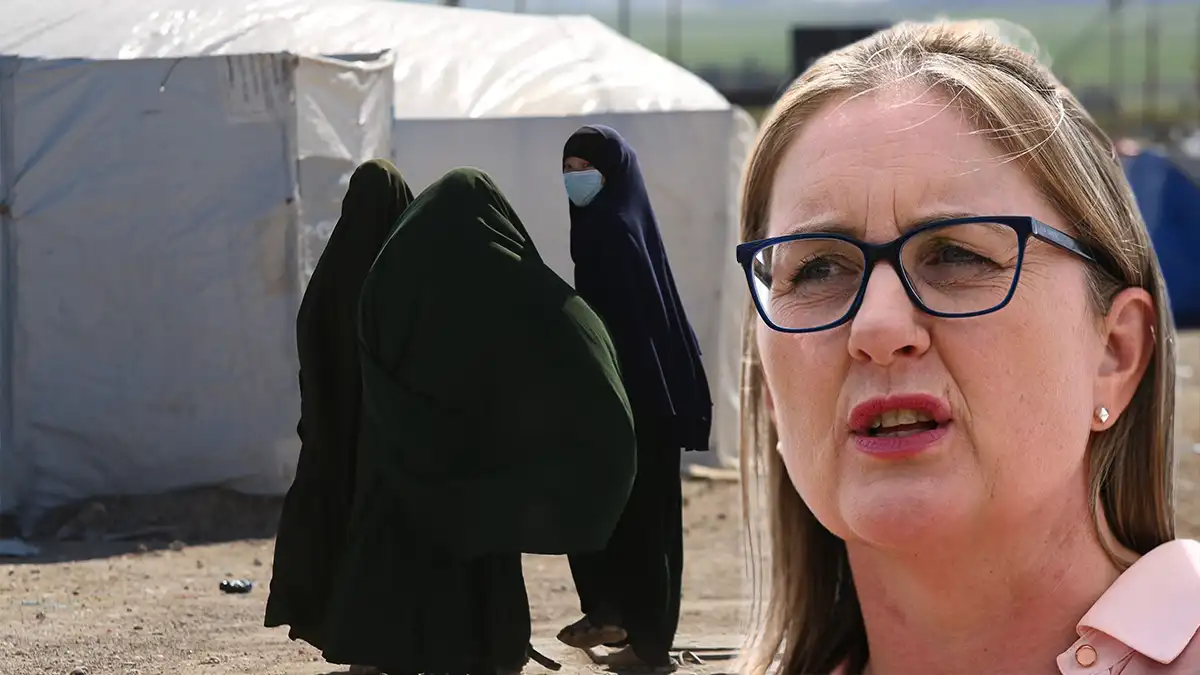
The Victorian parliament has ordered Premier Jacinta Allan to release all government correspondence and briefing documents relating to the potential resettlement of Australian women and children currently held in detention camps in Syria.
The motion, passed in the state’s upper house, requires the government to table documents relating to 11 Australian mothers and their 23 children who remain detained in camps in north-east Syria following the collapse of the territorial control of Islamic State.
The proposal was introduced by Liberal MP Evan Mulholland, the opposition’s spokesperson for multicultural affairs.
Mulholland told parliament the Victorian government had not been transparent about whether any families linked to Islamic State could eventually be resettled in Victoria.
He said the prospect had raised fears among members of communities in his electorate who had suffered persecution at the hands of the militant group.
Mulholland told the chamber that the issue had “sent a shiver down the spine” of Assyrian, Chaldean, Yazidi, Alawite, Shia Muslim and Druze communities.
Many people from those groups fled violence carried out by Islamic State across Iraq and Syria during the height of the conflict in the mid-2010s.
The motion requiring the documents to be tabled passed with the support of opposition members, despite strong criticism from both Labor and Greens MPs.
Labor ministers argued that the motion risked inflaming community tensions and misrepresenting the responsibilities of the state government.
Victoria’s multicultural affairs minister, Ingrid Stitt, said decisions about citizenship, travel and national security were matters for the federal government and its agencies rather than the state.
“Victoria does not issue passports or determine citizenship status,” Stitt told parliament.
She accused the opposition of attempting to exploit sensitive national security issues for political purposes.
“It is measured, thoughtful leadership that keeps communities safe and united, not whipping up fear, not inflaming tensions,” Stitt said.
“It is rejecting extremism, clear and simple, not fuelling it.”
Stitt also criticised several federal political figures, accusing the opposition of failing to condemn what she described as inflammatory public statements.
Greens MP Sarah Mansfield also opposed the motion, arguing the debate risked dehumanising the women and children detained overseas.
Mansfield rejected the use of the phrase “ISIS brides”, describing the label as “dehumanising” and “dog whistling”.
She said Australia had legal obligations under international law to deal with its citizens held in detention overseas, including repatriation, prosecution where appropriate, or reintegration.
However, she stressed those decisions rested with the federal government rather than the Victorian state government.
“Mr Mulholland and the Liberal party know this,” Mansfield said.
“Instead of showing leadership by demonstrating how we can have difficult conversations about difficult issues and helping to bring the community along with us, they bring this motion in here which is nothing more than a deeply cynical move aimed at stoking fear and division.”
The debate reflects ongoing national tensions surrounding the repatriation of Australian citizens who travelled to Syria during the rise of Islamic State.
Successive Australian governments have faced pressure from human rights groups to bring women and children held in camps such as al-Hol back to Australia.
At the same time, security agencies have emphasised the potential risks associated with individuals who may have had links to extremist groups.
The Victorian government has not indicated whether any of the families currently detained in Syria would eventually settle in the state if they were returned to Australia.
The parliamentary order now requires the government to table the requested documents in parliament, potentially revealing internal communications and policy advice relating to the issue.
