

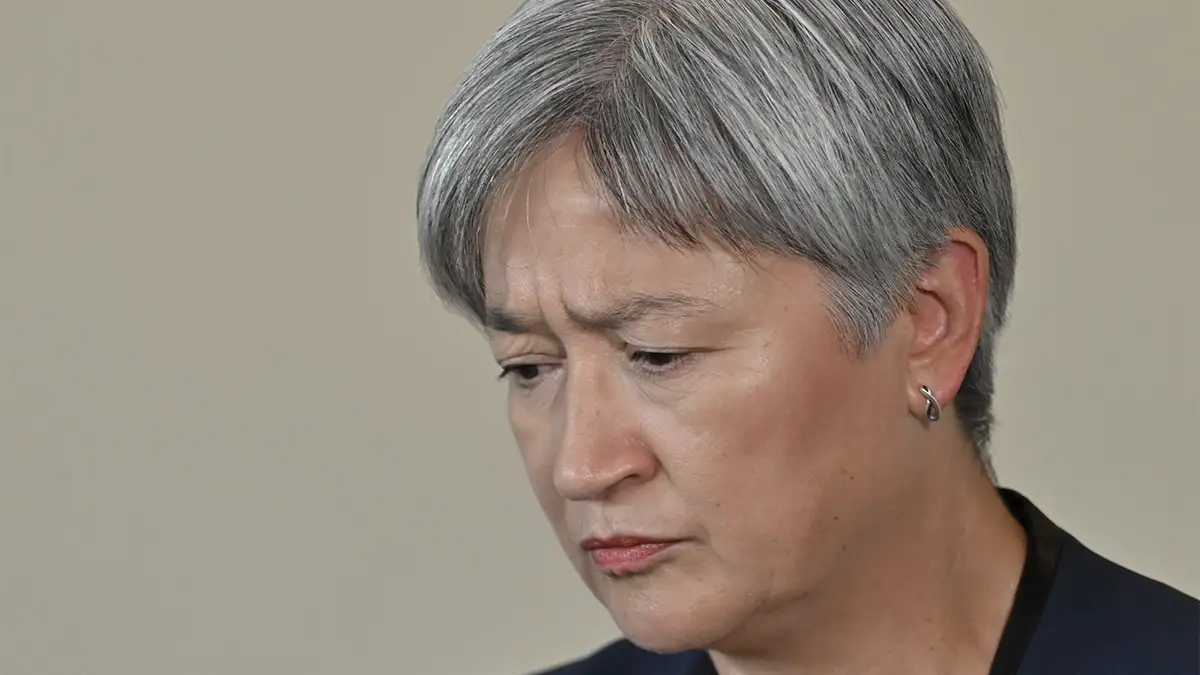
Australia is considering providing defensive military assistance to Gulf countries targeted by Iranian missile and drone attacks but will not deploy ground troops to Iran, Foreign Minister Penny Wong has confirmed.
The Albanese government said any support would remain limited to defensive measures, as tensions escalate across the Middle East following military strikes by the United States and Israel against Iran.
Speaking on ABC’s Insiders program, Wong said several regional partners had sought assistance after coming under attack.
“Many countries which are non-participants have been attacked by Iran through this,” Wong said.
“You would anticipate as a consequence that we have been asked for assistance and we will work through that carefully.”
Wong confirmed the requests included help protecting countries from Iranian missile and drone strikes but reiterated that Australia would not participate in offensive military operations against Tehran.
“Correct. And we will work through that in accordance with the position that I have outlined, which is we are not participating in offensive action against Iran,” she said.
Government rules out Iraq-style deployment
The foreign minister emphasised the government had drawn a clear line against committing Australian forces to a ground conflict.
“This is not Iraq, and we are not the Howard government,” Wong said.
“We are not asking Australians to accept Australian men and women being deployed into a ground war.”
Australia’s position reflects growing concern in Canberra about the widening regional conflict while attempting to maintain support for allies without becoming directly involved in combat operations.
Australians embedded with allies
Wong’s comments come days after Prime Minister Anthony Albanese confirmed that three Australian defence personnel were onboard a United States submarine that sank an Iranian warship in the Indian Ocean near Sri Lanka.
The government has stressed that the Australians were embedded as part of long-standing training arrangements and were not involved in the attack itself.
Wong said the deployment of Australian personnel with allied forces was not unusual and that strict legal frameworks governed their role.
“It is not new for Australian defence personnel to be engaged in this way,” she said.
“When they are deployed … we always have arrangements to ensure that any personnel comply with Australian law, Australian policy and Australian directives.”
Operation Beech evacuation effort
As fighting intensifies across the region, the government has launched a consular operation to assist Australians seeking to leave the Middle East.
The Department of Defence initiated Operation Beech on 5 March, deploying a Royal Australian Air Force C-17A Globemaster transport aircraft and a KC-30A tanker aircraft to support evacuation efforts if required.
Authorities have urged Australians in the region to leave using commercial flights where possible.
The government confirmed that 1,549 Australians had already returned home on nine flights from the United Arab Emirates, with three additional flights scheduled to land in Sydney, Melbourne and Perth.
Evacuations have also been coordinated from Qatar, where restricted airspace has complicated travel.
Officials said 92 Australians were transported by bus from Qatar to Saudi Arabia to access departing flights, while 68 Australians left Doha on flights bound for Europe.
Balancing alliance obligations
Australia’s cautious approach reflects the challenge facing the Albanese government as it navigates alliance commitments with the United States while attempting to avoid deeper involvement in the widening Middle East conflict.
Canberra has maintained that its role will remain focused on defensive assistance and the protection of Australian citizens overseas.
