

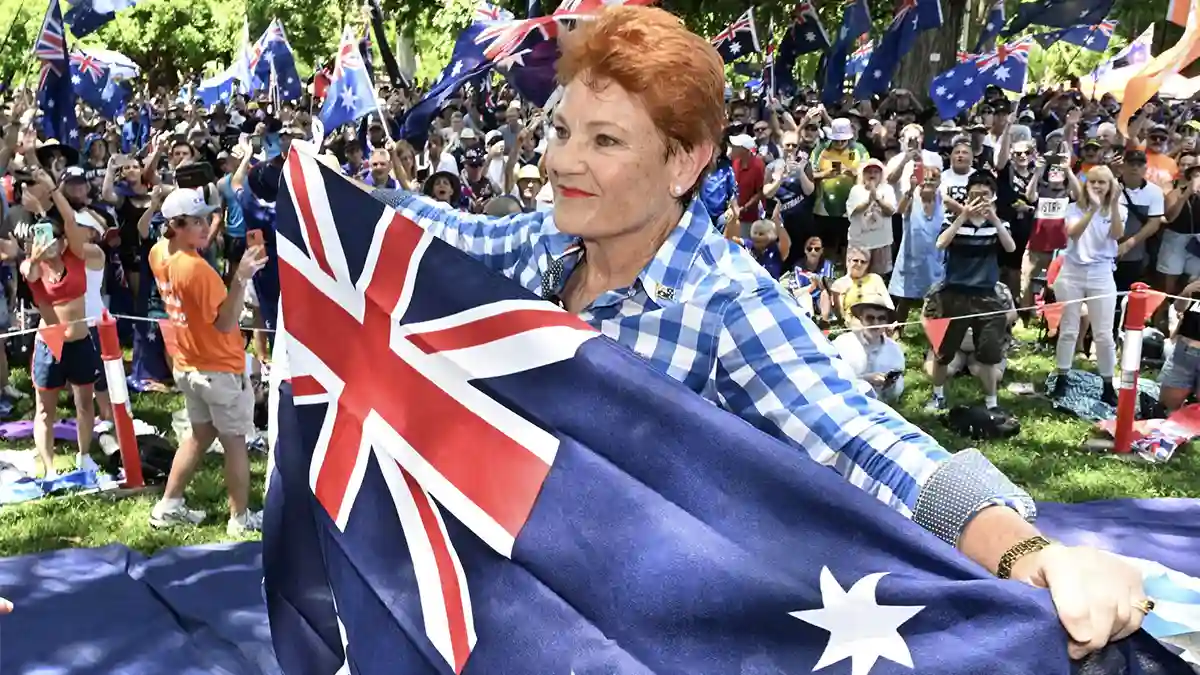
A surge in support for Pauline Hanson’s One Nation party is raising new concerns across Australian politics, with polling suggesting the right-wing populist party may be attracting voters from both the Coalition and Labor.
The latest Guardian Essential poll found that 58% of respondents said they would consider voting for One Nation at a future federal election.
The poll also recorded a primary vote of about 22% for the party, signalling a potential increase in support as political frustration over cost-of-living pressures continues.
While One Nation has traditionally drawn support from conservative voters dissatisfied with the Liberal and National parties, the survey suggests the party could also appeal to a segment of Labor voters.
According to the poll, 12% of Labor voters said they would definitely vote for One Nation at the next election, while another 33% said they were open to doing so.
Among Coalition voters, 17% said they would definitely support One Nation and 51% said they would consider voting for the party.
Political analysts say One Nation’s messaging has long targeted working-class voters who feel disconnected from the major parties.
A source within the party said the polling results were not surprising, noting that One Nation has historically sought to attract blue-collar voters who believe Labor’s political focus has shifted towards urban professionals and younger voters.
Despite the headline figures, pollsters caution that openness to voting for a party does not necessarily translate into actual electoral support.
Opinion surveys often capture public mood rather than firm voting intentions.
Inside the Labor government, ministers say they are aware of the potential political risk but are not yet alarmed.
Labor MP Mike Freelander said the party believed One Nation’s divisive rhetoric and limited policy agenda would limit its ability to attract sustained support.
“Whilst there will be a cohort that will drift to One Nation, because of their divisive nature and their lack of real policies, it’s less likely to affect us,” Freelander said.
Labor leaders have begun sharpening their political attacks on One Nation by highlighting the party’s opposition to several government reforms.
Prime Minister Anthony Albanese has criticised One Nation for opposing industrial relations reforms including the government’s “same job, same pay” legislation aimed at limiting labour-hire loopholes in sectors such as mining.
Labor has also pointed to One Nation’s opposition to increases in penalty rates and wage rises for aged care workers.
The rise of One Nation was evident in the 2025 federal election in the New South Wales seat of Hunter, where the party’s candidate Stuart Bonds reached the final two-candidate preferred count.
Labor MP Dan Repacholi ultimately retained the seat with a 59–41 result, but the contest highlighted the party’s potential appeal in traditionally Labor-held working-class areas.
Some analysts say voter frustration with rising living costs and dissatisfaction with major political parties may be driving interest in populist alternatives.
However, political strategists argue that Labor’s focus on wages, employment conditions and cost-of-living policies is likely to remain central to its strategy to retain working-class voters.
