

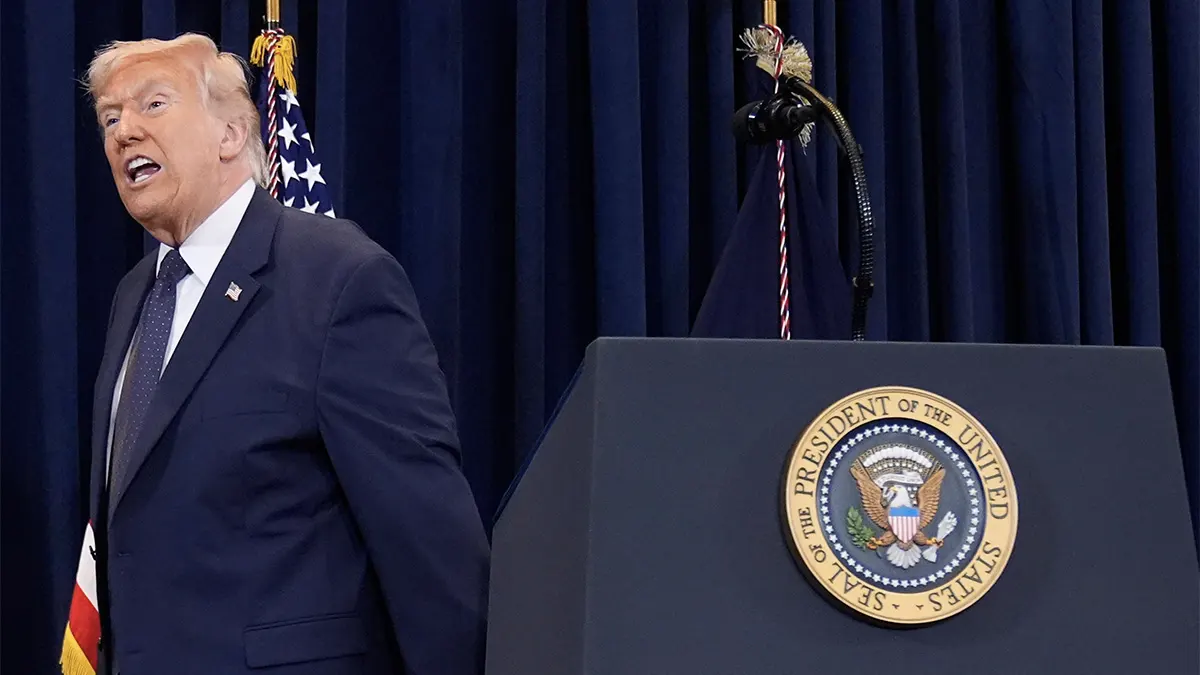
Global oil prices dropped sharply after Donald Trump attempted to calm markets by suggesting the war involving Iran could end soon.
The dramatic fall followed one of the most volatile trading periods in energy markets in years, as fears of a major supply disruption pushed prices to their highest level since 2022.
Benchmark Brent crude surged to $119.50 a barrel during trading on Monday, driven by escalating tensions involving Iran and concerns that vital oil routes in the Middle East could be cut off.
However prices retreated quickly, falling to $91.58 a barrel after Trump described the conflict as “very complete, pretty much” in comments that reassured investors about the potential duration of the war.
Strait of Hormuz fears
Much of the market turmoil has centred on the Strait of Hormuz, one of the world’s most important energy corridors.
Around one fifth of global oil and liquefied gas shipments pass through the narrow waterway connecting the Persian Gulf to international markets.
Shipping traffic has been severely disrupted amid the escalating conflict.
Iranian authorities have warned they could block exports entirely if attacks continue.
Officials linked to the Islamic Revolutionary Guard Corps declared that “not one litre of oil” would leave the region if US and Israeli strikes continue.
Trump threatens retaliation
Despite attempting to reassure markets, Trump also issued a stark warning to Tehran.
“If Iran does anything that stops the flow of oil within the Strait of Hormuz, they will be hit by the United States of America twenty times harder,” he wrote on social media.
Trump also signalled that Washington could temporarily ease certain oil-related sanctions in order to stabilise global supplies.
The proposal emerged shortly after a conversation between Trump and Vladimir Putin, raising questions about potential shifts in global energy flows.
Governments respond to energy shock
Although prices have retreated from Monday’s peak, oil remains significantly higher than levels seen earlier in the year.
The volatility has prompted governments across Europe and Asia to introduce emergency measures aimed at preventing fuel shortages and limiting price spikes.
Countries including Croatia, Hungary, South Korea, and Thailand have imposed caps on retail fuel prices.
Meanwhile Philippines has ordered public agencies to reduce energy use, including limits on air conditioning and official travel.
Authorities in Bangladesh have also implemented emergency electricity conservation measures.
Energy analysts warn that markets could remain volatile as long as uncertainty continues over the conflict and the security of the Strait of Hormuz.
