

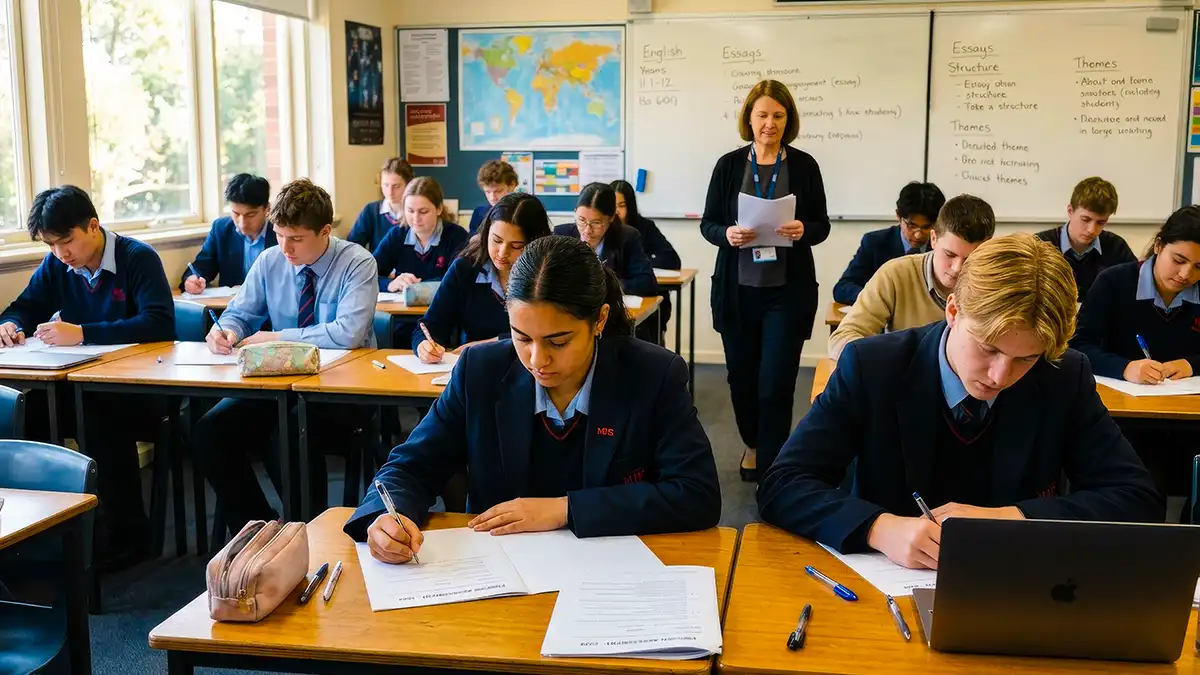
Year 12 students at Mazenod College in Melbourne’s south-east have had marks reduced after the school found evidence that artificial intelligence tools were used during an oral English assessment.
The incident involved the Year 12 oral English exam at the Catholic boys’ school in Mulgrave and has highlighted the growing challenge schools face in managing the use of generative AI in assessments.
Reports suggested as many as 50 students may have used AI during the assessment. However, when contacted by Guardian Australia, the school did not confirm that figure.
Mazenod College principal Paul Shannon said the issue was identified following a review of the examination process.
“Following a review of the Year 12 Oral English exam process, the college identified evidence that suggested artificial intelligence tools were used by several students,” Shannon said.
The school launched an investigation after the concerns were identified and said established procedures were followed throughout the process.
“The matter was thoroughly investigated, and all appropriate processes were followed in submitting results to the VCAA,” Shannon said.
“This included conversations with the students involved, and the appropriate reduction in marks for the affected assessment.”
School Investigation and Penalties
The college has not disclosed how many students were ultimately found to have breached assessment rules, but confirmed that several students were involved.
Shannon said students who were found to have used AI tools received reduced marks for the assessment.
The school submitted results to the Victorian Curriculum and Assessment Authority (VCAA) after completing its review and investigation process.
The case comes as schools across Australia continue to grapple with how to respond to rapidly developing AI technologies that can generate text and assist students with assignments and presentations.
Growing Challenge for Schools
Shannon described artificial intelligence as a growing issue for educators.
He said AI tools are a “growing challenge” within schools and stressed that they have no place in assessments and examinations.
The comments reflect broader concerns across the education sector about maintaining academic integrity as AI technologies become increasingly accessible to students.
The VCAA handbook provides guidance on the use of generative AI in assessments and outlines how schools should respond when breaches are suspected.
According to the authority’s handbook, the use of generative AI in an assessment may constitute a breach of academic integrity requirements.
The handbook states that any suspected use of generative AI that breaches assessment rules must be investigated under a school’s policy for investigating rule breaches.
The incident at Mazenod College is one of the latest examples of schools confronting questions about how emerging technologies should be managed within formal assessment settings.