


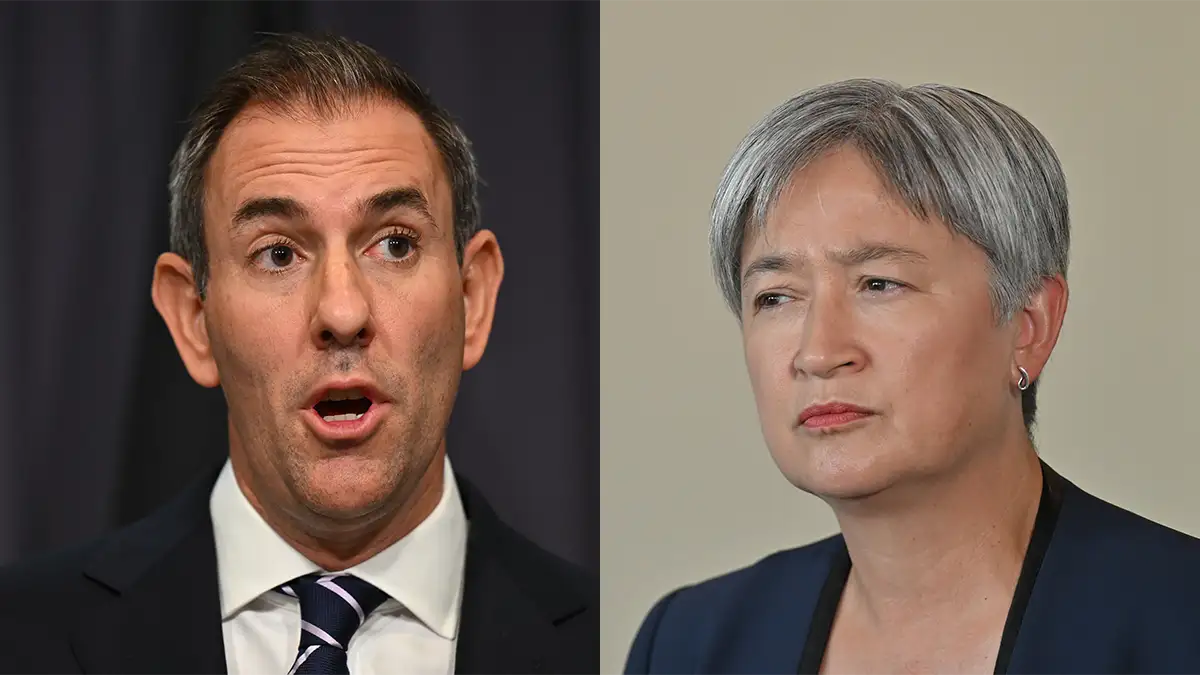
Australia’s treasurer Jim Chalmers has warned that the escalating conflict in the Middle East is likely to place additional strain on the Australian economy as the government prepares its next federal budget.
Speaking during an interview on ABC News Breakfast, Chalmers said global economic uncertainty was already weighing on Australia before the latest escalation in the region.
He said developments in the Middle East would now become a key factor shaping the government’s economic planning ahead of the May budget.
“There are swings and roundabouts when we think about the implications for the budget in May,” Chalmers said.
“When it comes to price pressures and when it comes to global economic uncertainty, what we’re seeing in the Middle East will put additional pressure on the economy, on Australians.”
The federal government is currently preparing what will be its fifth budget, due to be handed down in May.
Chalmers’ comments came after newly released national accounts data showed Australia’s economy accelerated in the final months of 2025, providing a stronger starting point for the government’s fiscal outlook.
However, he said global instability — particularly disruptions to energy markets — could quickly alter economic conditions.
Oil prices often surge during geopolitical crises in the Middle East, raising fuel costs and increasing inflation across supply chains and transport sectors.
Chalmers acknowledged that recent increases in petrol prices may partly reflect the normal fuel price cycle but said authorities were closely monitoring the situation.
“There are legitimate concerns about the potential for some opportunistic pricing,” he said.
He confirmed the Australian Competition and Consumer Commission had been asked to monitor the petrol market for signs of price gouging.
Meanwhile, Australia’s foreign minister Penny Wong warned the conflict in the region appears to be expanding rapidly.
Wong said recent Iranian strikes had extended beyond the immediate conflict zone, including attacks targeting Turkey, a NATO member.
“I don’t think we anticipated that Iran would respond in the way that it has,” Wong said.
She said within the first 72 hours the conflict had already spread to multiple countries, with strikes reported on airport hubs and locations not directly involved in the fighting.
“This conflict has spread very rapidly, and the conflict is much more intense,” Wong said.
“So we are deeply concerned about this conflict spreading.”
Wong also warned Australians planning overseas travel in the coming months to carefully assess the risks.
She described the situation as “unpredictable”, saying the rapidly evolving conflict could continue to affect travel and security conditions across the region.
