

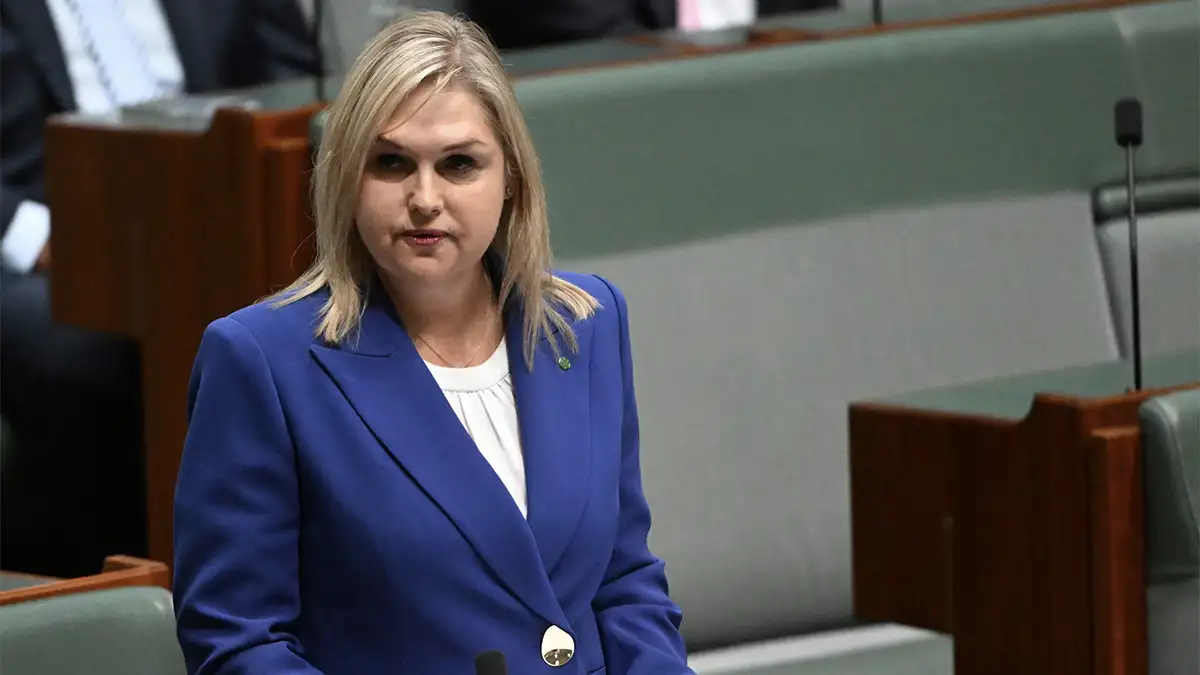
Former Liberal MP Jenny Ware has urged the Liberal Party to introduce gender quotas for federal candidates, warning the opposition cannot return to government unless it selects representatives who better reflect modern Australia.
Ware, who lost the Sydney seat of Hughes at the 2025 federal election, said the party was facing a political “crisis point” and must change its approach to candidate selection if it hopes to regain competitiveness before the next election.
“The Australian people have told us they don’t like what the Liberal party looks like. They don’t like, overall, the candidates that we’re putting up,” Ware said.
“I think it is now time that, federally, that we have quotas. Even if it’s just for the next two elections.”
Her comments come after the Coalition suffered a major defeat in 2025, prompting an internal review of the campaign that was later tabled in parliament by Prime Minister Anthony Albanese.
Ware criticised the party leadership for failing to release the review itself, describing the situation as “deeply embarrassing” and saying the findings made clear that urgent change was required.
She also accused some members of the Liberal party room of spending months undermining former leader Sussan Ley rather than focusing on rebuilding policy after the election loss.
“Already almost one year has been wasted, tearing down the first female federal Liberal leader instead of uniting and using the time to speak with Australians and develop policies for the 2028 election,” Ware said.
Ware was first elected to parliament in 2022, winning Hughes with a 57–43 margin. Her defeat in 2025 came as a surprise, with Labor candidate David Moncrieff securing the seat despite it not being considered a key target for either major party.
The former MP said campaign decisions during the election contributed to the loss of several metropolitan seats, including Menzies, Sturt and Banks, and weakened the Coalition’s chances of reclaiming formerly Liberal-held seats now represented by independents such as Bradfield, Kooyong and Wentworth.
She pointed in particular to the Coalition’s proposal to end work-from-home arrangements for public servants, saying the policy proved unpopular among voters.
“That policy killed me in Hughes,” Ware said.
Ware also argued the federal campaign lacked policies addressing childcare and aged care, issues she said were critical to gaining support from families and working women.
Her push for quotas reflects broader concerns about representation within the Liberal Party’s federal ranks. Following the election and subsequent leadership changes, there are now only five Liberal women among the party’s 28 MPs in the House of Representatives.
By contrast, Labor’s federal caucus is made up of more than half women, reflecting the party’s long-standing gender quota system introduced more than two decades ago.
Ware said the difference between the two sides of parliament was clear when she visited Parliament House in Canberra recently.
“I saw contemporary, representative Australia on the Labor side … diverse in age, multicultural backgrounds, Indigenous Australians,” she said.
“I turned a mirror back on us, on our side, and I saw largely middle-aged Caucasian men … that is not reflective of modern Australia.”
The New South Wales division of the Liberal Party is expected to meet to elect a new executive following the release of the election review. Ware said she hoped the party’s leadership would consider temporary quotas to improve representation.
“The way that we have behaved in the past – without selecting female candidates into seats that are winnable, without selecting diverse candidates – has not worked,” she said.
“The Labor party have had quotas for 20 years. They’ve won two successive elections and increased their majority.”
“It is now time the Liberal Party must do this as well. Otherwise, we cannot get back into government.”
Since leaving parliament, Ware has joined the board of Crohn’s & Colitis Australia and is working on education policy initiatives while preparing to launch a legal firm.
