


A Sydney court has removed bail conditions that prevented a protester from attending demonstrations after he was charged during protests linked to the visit of Isaac Herzog earlier this year.
The decision was made on Wednesday in the Downing Centre Local Court, where a magistrate varied the bail conditions of 67-year-old protester Munro Rowley Saunders.
Saunders had been charged with behaving in an offensive manner following an anti-Herzog rally held on 9 February outside Sydney Town Hall.
The demonstration formed part of a wave of protests held across Australia in response to the Israeli president’s visit. Police later confirmed that at least 14 people were charged in connection with the rally.
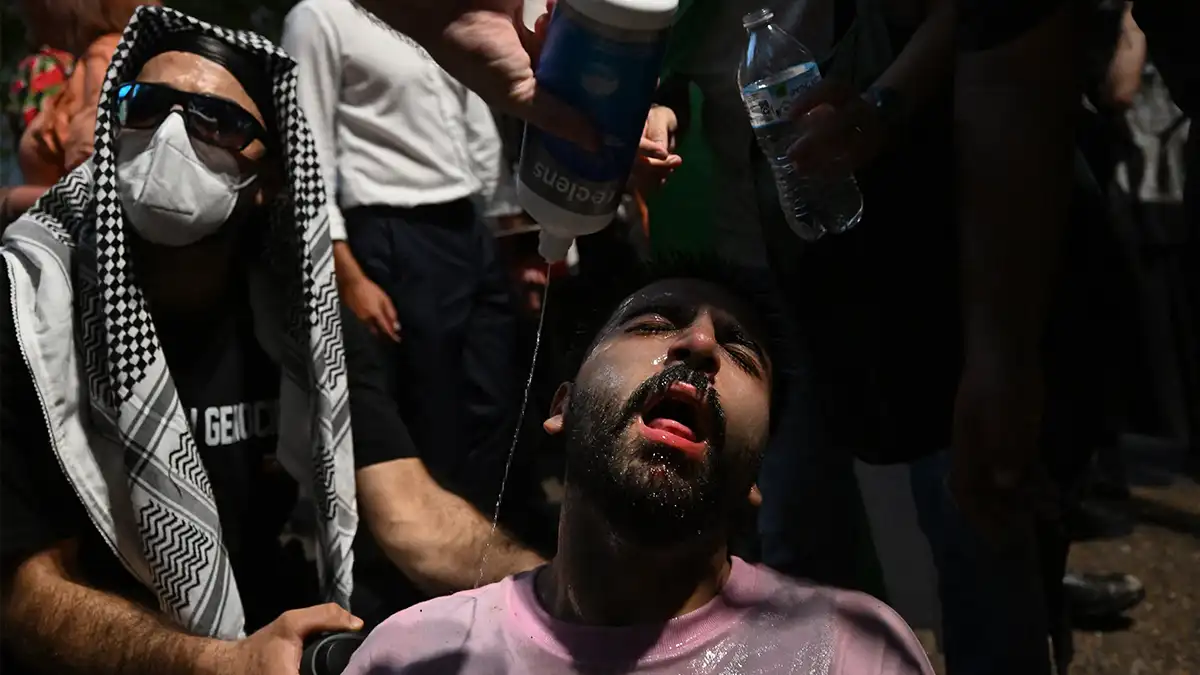
The protest also generated controversy after participants alleged excessive force by police, including claims that officers punched protesters and forcibly removed Muslim men who had been praying during the gathering.
Saunders was granted bail shortly after his arrest, but police imposed a series of conditions restricting his movements and activities.
Among those conditions were a blanket ban on attending any protest while on bail and a restriction preventing him from entering within two kilometres of Sydney Town Hall.
During a hearing on Wednesday, Saunders’ lawyer Majed Kheir challenged those restrictions, arguing the conditions were excessive and unjustified.
Kheir told the court the bail conditions were “unreasonable”, “unnecessary” and “not proportionate”.
He also argued that the restrictions effectively prevented his client from exercising his democratic rights.
“It’s targeted against an individual who has no criminal history,” Kheir told the court.
“He has 67 years of good behaviour to draw from.”
The police prosecutor did not oppose the request to vary Saunders’ bail conditions.
Following the hearing, the court struck out the two contested conditions and replaced them with a standard requirement that Saunders must be of good behaviour while on bail.
The ruling means Saunders will now be permitted to attend protests while his case remains before the court.
Kheir also sought to vary the bail conditions of another client, Diala Salim, who was also charged following the same protest.
Salim faces a more serious charge of assault occasioning bodily harm, which allegedly occurred during the demonstration.
Like Saunders, Salim had been banned from entering within two kilometres of Sydney Town Hall while on bail.
Kheir argued that the condition was no longer necessary because a public assembly restriction declaration, which had been in force during the anti-Herzog rally, had since expired.
However, the magistrate declined to remove the restriction entirely for Salim.
The court noted that Salim had previous protest-related offences on her record.
Instead, the judge modified the condition to allow her to enter the restricted area for work-related purposes only.
Kheir entered not-guilty pleas on behalf of both Saunders and Salim.
The cases are expected to return to court at a later date as proceedings continue.
The ruling highlights ongoing legal debates around bail conditions imposed on protesters, particularly when restrictions affect participation in public demonstrations.
Civil liberties advocates have previously argued that blanket bans on protest participation can raise questions about proportionality and the protection of democratic freedoms, while police and prosecutors often defend such conditions as necessary to maintain public order.
The February rally in Sydney remains under scrutiny as legal proceedings involving multiple participants continue to move through the courts.
