

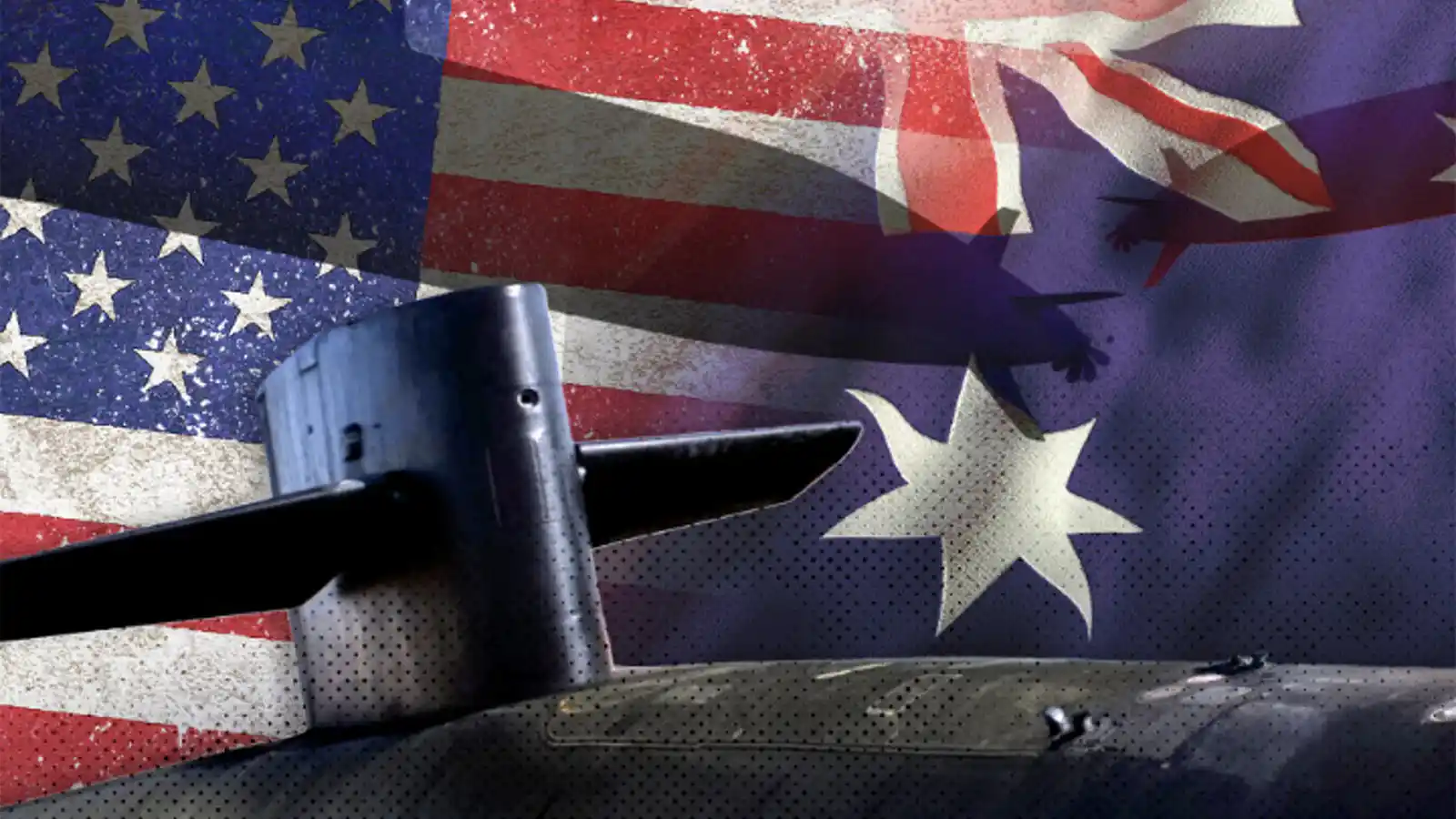
Australia’s deepening military integration with the United States is raising new questions about whether the country can remain outside future conflicts involving its closest strategic ally.
The debate has intensified following the escalation of hostilities between the United States, Israel and Iran, which has spread across several parts of the Middle East and into surrounding waters.
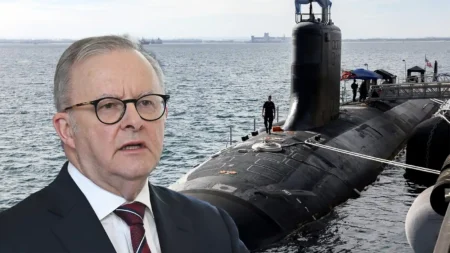
Earlier this week, the Australian government confirmed that three Australian Defence Force personnel were serving aboard a United States submarine that fired a torpedo and sank an Iranian naval vessel in the Indian Ocean near Sri Lanka.
The frigate, identified as the IRIS Dena, was carrying up to 180 crew members when it was struck. Iranian authorities said 87 bodies had been recovered and 32 sailors were rescued from the water.
Prime Minister Anthony Albanese said the Australian personnel were embedded with the US Navy under longstanding defence training arrangements linked to the AUKUS security partnership.
The government stressed that no Australian personnel directly participated in the attack.
But the incident has highlighted the extent to which Australian defence forces are now integrated with the US military.
Under the AUKUS pact, Australia is set to acquire nuclear-powered submarines from the United States and the United Kingdom as part of a long-term program expected to cost about $368 billion.
Supporters argue the arrangement will significantly strengthen Australia’s deterrence capabilities and deepen security cooperation among Western allies.
Critics say the arrangement risks binding Australia too closely to US military strategy and could make it more difficult for Canberra to distance itself from conflicts initiated by Washington.
Foreign policy analyst Lachlan Strahan said many US allies were unsettled by the pace and unpredictability of recent military actions.
“Everyone among the traditional US allies is discomforted by what has happened,” Strahan said.
He said US President Donald Trump had launched the current military campaign without a clearly defined strategy for its long-term outcome.
“Trump has gone into this without a well-defined strategy about where he’s going to end up,” he said.
Australia now faces the challenge of balancing alliance loyalty with strategic independence, particularly as tensions escalate in the Middle East.
Strahan said Australian policymakers were likely trying to signal concern about US actions while avoiding a public confrontation with Washington.
Australia’s alliance with the United States has expanded significantly over recent decades.
The Pine Gap intelligence facility near Alice Springs plays a key role in US global surveillance and missile tracking operations, while the number of US troops rotating through northern Australia has steadily increased.
The federal government has also committed $1.6 billion to upgrade RAAF Base Tindal in the Northern Territory so it can host US nuclear-capable strategic bombers.
Annette Brownlie from the Independent and Peaceful Australia Network said the current conflict demonstrated the risks of deep military integration.
“Attacking Iran is not a path to peace or stability, but a recipe for wider regional conflict,” she said.
Iran’s foreign minister Seyed Abbas Araghchi has condemned the submarine attack as an “atrocity at sea” and warned that the United States would face consequences.
The expanding war has already had global economic repercussions, affecting energy markets, financial markets and international shipping routes.
For middle powers such as Australia, analysts say the challenge lies in maintaining security alliances while preserving the ability to make independent strategic decisions.