


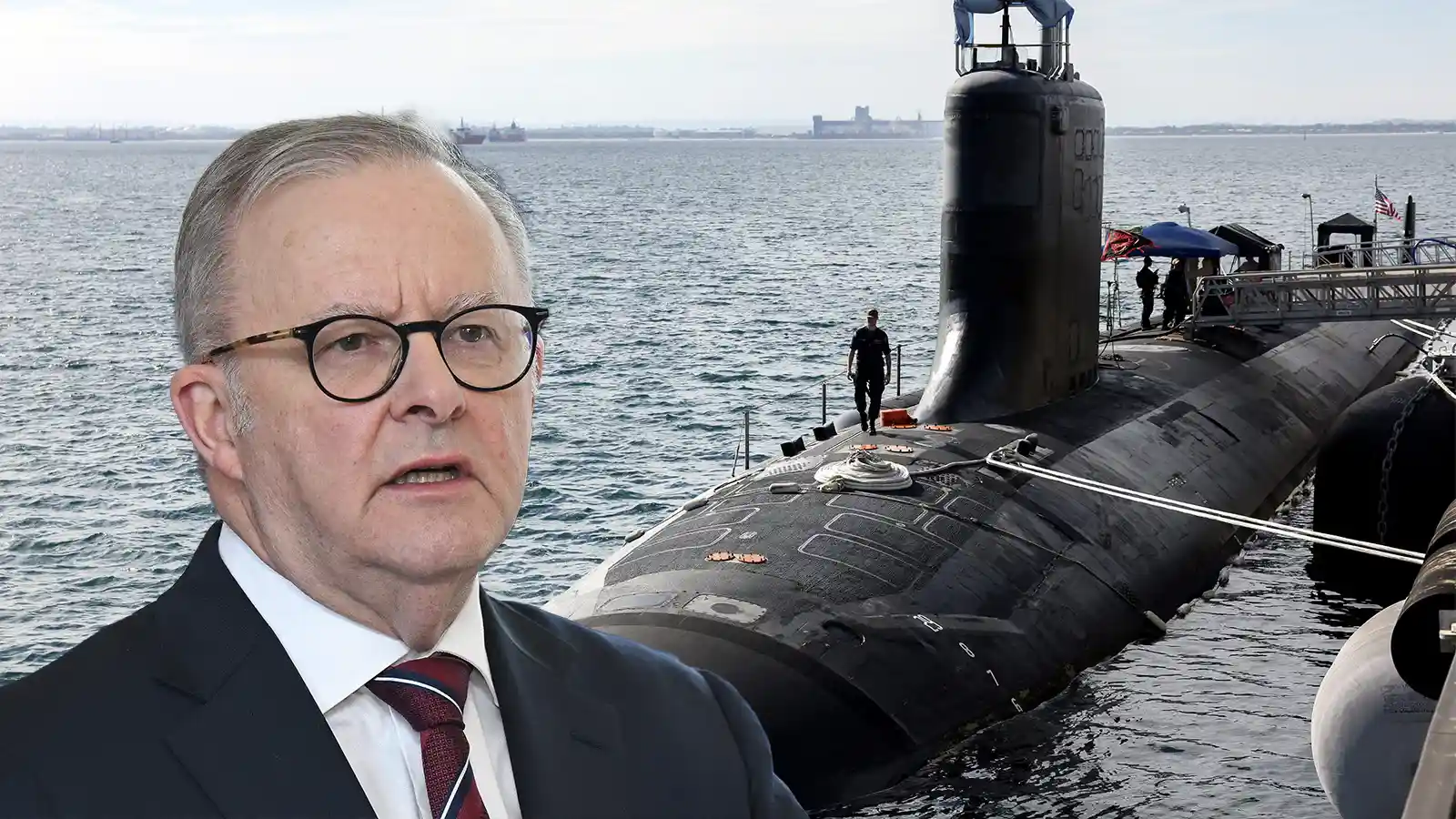
Australian Prime Minister Anthony Albanese has confirmed that three Australian Defence Force personnel were aboard a United States submarine involved in sinking an Iranian naval vessel this week, but insisted that no Australian troops participated in the attack.
The prime minister revealed the presence of the Australians on Friday following mounting questions about reports that a US submarine torpedoed an Iranian warship in the Indian Ocean earlier in the week. Albanese said the personnel were embedded with the US Navy as part of Australia’s training arrangements under the AUKUS security partnership.
“We wouldn’t normally confirm such an issue, but given our national security committee meetings, in the public interest I can confirm that there were three Australian personnel onboard that vessel,” Albanese said.
“I can confirm also that no Australian personnel have participated in any offensive action against Iran.”
The submarine strike sank the Iranian naval vessel IRIS Dena on Wednesday while it was sailing in international waters in the Indian Ocean. Iranian authorities said at least 87 sailors were killed in the attack, while Sri Lankan naval forces later rescued 32 survivors from the water. Up to 180 personnel were believed to have been onboard the vessel.
The Iranian frigate had been returning from a naval exercise organised by India in the Bay of Bengal when it was targeted.
The Pentagon has not publicly confirmed which submarine conducted the strike. However defence trade publications and military analysts reported that the USS Minnesota, a Virginia-class nuclear-powered attack submarine, was responsible. The vessel had previously rotated through HMAS Stirling naval base in Western Australia during allied submarine operations.
US Defence Secretary Pete Hegseth described the attack as a decisive blow against Iran’s naval forces, telling reporters that it marked the first time since the second world war that a US submarine had sunk an enemy vessel using a torpedo.
“An American submarine sank an Iranian warship that thought it was safe in international waters,” Hegseth said.
“It was sunk by a torpedo — a quiet death.”
He added that US forces were achieving overwhelming battlefield success in the conflict.
“America is winning decisively, devastatingly and without mercy,” he said.
The confirmation that Australian personnel were onboard the submarine sparked immediate political debate in Canberra about the extent of Australia’s involvement in the escalating conflict between the United States, Israel and Iran.
Greens senator David Shoebridge accused the government of allowing Australia to become entangled in a war that had not been formally authorised by parliament.
“This makes Australia obviously, clearly, unambiguously part of an illegal war,” Shoebridge said.
He argued that embedding Australian personnel inside US military platforms meant Australians would inevitably be involved in combat operations.
But Albanese defended the longstanding arrangement under which Australian service members train within allied military units, saying it ensured personnel gained experience operating advanced nuclear-powered submarines before Australia begins operating its own fleet under the AUKUS pact.
“These are longstanding third-country arrangements that have been in place for a long period of time,” Albanese said.
According to the Royal Australian Navy, more than 50 Australian sailors and officers are currently embedded with the US Navy’s attack submarine fleet as part of the training pipeline for Australia’s future nuclear-powered submarines.
Iran condemned the strike as an unlawful act of aggression, with foreign minister Seyed Abbas Araghchi warning the United States would ultimately regret the attack.
“Mark my words: the US will come to bitterly regret the precedent it has set,” Araghchi said.
Legal experts said that while the legality of the wider conflict remained contested, the Iranian naval vessel itself would likely be considered a lawful military target once armed hostilities had begun.
Professor Donald Rothwell, an international law specialist at the Australian National University, said that once armed conflict was underway, naval vessels from a belligerent state were legitimate targets.
“Armed conflict has commenced and the members of the Iranian navy are legitimate combatants for those purposes,” he said.
Juliette McIntyre, a senior lecturer in law at the University of Adelaide, said the sinking of the vessel did not appear to violate the laws of armed conflict, although questions remained about the obligations to assist survivors.
“The second Geneva Convention does require aid to be rendered ordinarily,” she said, noting that submarines faced operational limitations when attempting rescue operations.
The incident marks a significant escalation in the widening regional conflict and has intensified scrutiny of Australia’s defence ties with the United States as the AUKUS submarine program deepens military integration between the two allies.
