


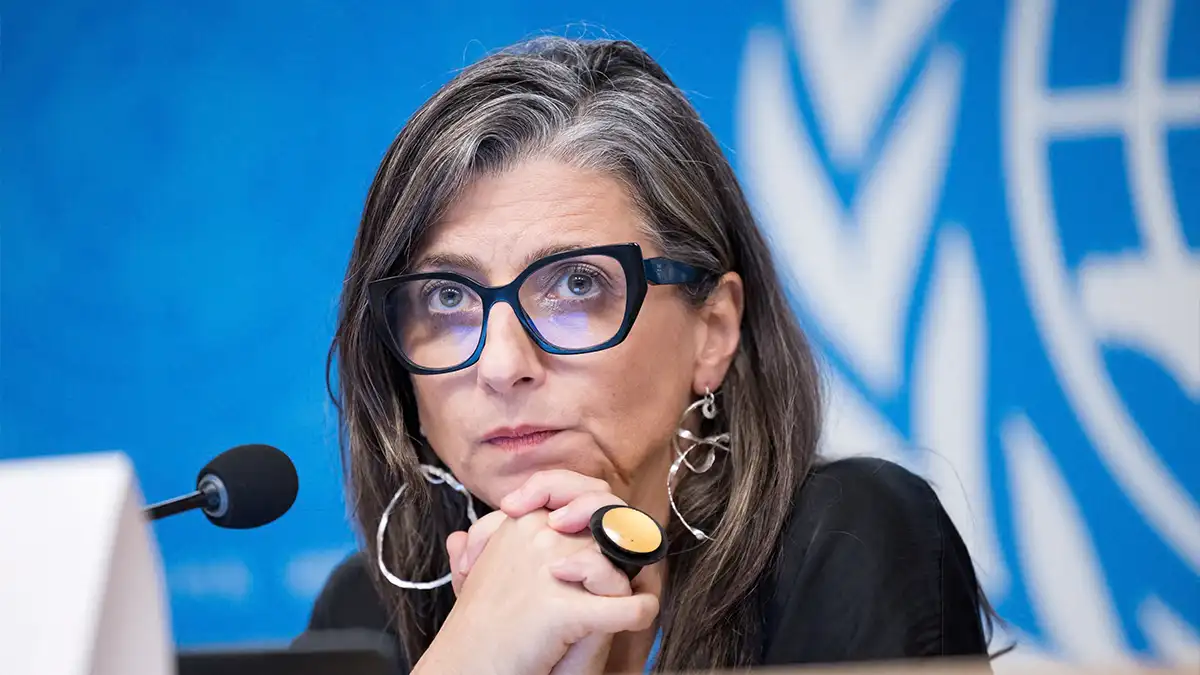
The University of Adelaide has abruptly cancelled a high-profile public event featuring Francesca Albanese, prompting strong criticism from organisers who accuse the institution of yielding to political pressure and restricting debate.
The event had been scheduled for Thursday evening at Elder Hall on the university campus and was expected to attract hundreds of attendees. It formed part of Constellations: Not Writers’ Week, a pop-up literary festival created after the cancellation of the traditional Adelaide Writers’ Week program earlier this year.
Organisers say the university informed them that the booking for Elder Hall had been cancelled because certain venue requirements were not met. However, festival figures have questioned the explanation and argue the decision came after media scrutiny and political controversy surrounding Albanese’s appearance.
A replacement venue has now been secured at Norwood Concert Hall in Adelaide’s eastern suburbs. Organisers say the new venue will accommodate approximately 650 in-person ticket holders and 350 livestream viewers, allowing the discussion to proceed despite the last-minute change.
Albanese, who serves as the United Nations special rapporteur on the human rights situation in the occupied Palestinian territories, was due to appear via video link. She was scheduled to join Australian historian Professor Henry Reynoldsand academic Dr Lana Tatour in a discussion examining international law, human rights and the Middle East conflict.
The cancellation has triggered a sharp reaction from Louise Adler, the former director of Adelaide Writers’ Week and a prominent figure behind the Constellations festival.
“Welcome once again to Moscow on the Torrens,” Adler said in a statement criticising the university’s decision.
“Universities, the arts, and the media were once respected as sites where controversial ideas could be tested. That is no longer a given,” she said.
“We are witnessing relentless campaigning by sectional groups and their influence over politicians … the public square is being seriously impoverished.”
Organisers claim the university’s decision followed reporting in the national newspaper The Australian, which highlighted that Albanese’s appearance came despite sanctions imposed on her by the United States government.
Those sanctions were issued by the administration of former US president Donald Trump in response to Albanese’s public statements and reporting on Israel’s conduct in the Palestinian territories. The move drew criticism from human rights groups and international law experts, who argued that UN officials should be able to carry out their mandates without political pressure.
Albanese has served as the United Nations special rapporteur on the occupied Palestinian territories since 2022. In that role she reports to the United Nations Human Rights Council and investigates alleged violations of international law in the region.
Her work and public commentary have frequently attracted controversy, particularly from governments and organisations that dispute aspects of her findings regarding Israel and the broader conflict.
The debate surrounding her appearance in Adelaide reflects broader tensions in Australia and internationally over academic freedom, free speech and the role universities should play in hosting politically sensitive discussions.
While the University of Adelaide has not publicly detailed the specific booking issues cited in the cancellation, the institution has faced increasing scrutiny over how universities handle contentious events involving international political figures.
Universities across Australia have recently confronted similar debates, with administrators balancing security concerns, reputational risks and academic freedom obligations.
Despite the cancellation of the original venue, organisers say the discussion will proceed as planned at Norwood Concert Hall, arguing the controversy has only heightened interest in the event.
They say the shift in location will allow the conversation about international law, human rights and the Middle East conflict to go ahead before a live audience and a broader online audience.
The dispute is likely to intensify ongoing national discussions about the limits of free expression within academic institutions and the pressure universities face when hosting politically contentious speakers.
