


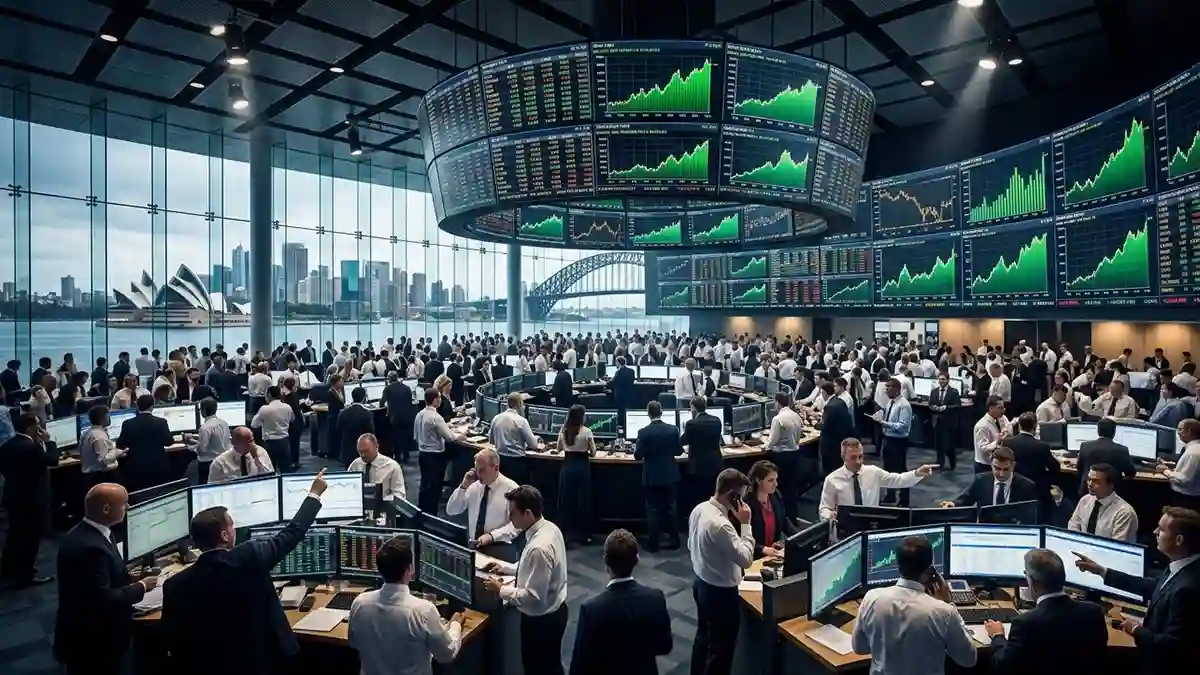
Australian shares are expected to recover some of their recent losses when trading resumes, as global investors reacted to reports suggesting Iranian authorities may be seeking to reopen negotiations with the United States.
Futures pricing indicates the benchmark S&P/ASX 200 could open about one per cent higher, around the 8,950-point level, potentially recouping roughly half of the heavy losses recorded in the previous session.
The anticipated rebound follows an overnight rise on Wall Street, where the S&P 500 gained about 0.88 per cent and the technology-heavy Nasdaq Composite rose 1.45 per cent, reflecting improved risk sentiment among investors.
Financial markets have been under pressure in recent days as geopolitical tensions in the Middle East raised concerns about potential disruptions to global energy supplies. Analysts warn that higher oil prices can intensify inflationary pressures by raising transportation and production costs across the global economy.
Reports circulating in international media suggested Iranian officials were exploring possible back-channel negotiations aimed at easing tensions with Washington. However, the signals were mixed.
Former US president Donald Trump said he had rejected what he described as an approach from Tehran, while Iran’s ambassador to the United Nations denied that any formal outreach had been made.
Despite the conflicting statements, investors appeared encouraged by the possibility that diplomatic engagement could reduce the risk of further escalation in the region.
Economists at National Australia Bank said in a market note that reports of potential diplomatic contact between Iran and the United States helped lift investor confidence and support risk-sensitive assets.
“Markets tend to respond quickly to any signs that geopolitical tensions may ease,” NAB’s research team said.
However, analysts caution that volatility could remain elevated as long as uncertainty surrounds energy markets and geopolitical developments.
Paco Chow, a dealing manager at trading platform Moomoo, said market sentiment could shift quickly if tensions flare again.
“Geopolitical risk can flare up again very quickly,” Chow said.
“Until oil flows return to normal and there is greater clarity around the situation in the Middle East, investors are likely to remain cautious.”
The direction of global oil prices and further diplomatic signals from Washington or Tehran are expected to remain key drivers for financial markets in the coming days.
