

The Albanese government is facing quiet concern from within its own party after Australia quickly backed US and Israeli strikes on Iran.
Several Labor MPs have privately questioned whether the government moved too fast in supporting the attacks, which some legal experts say may breach international law.
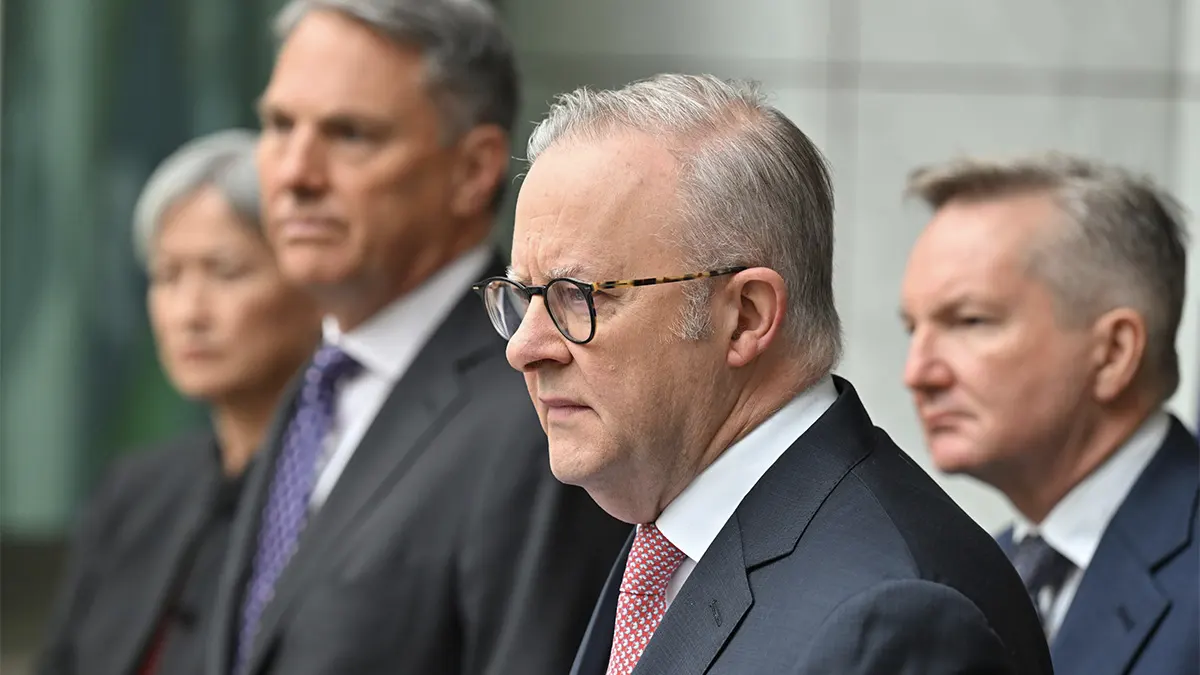
The initial statement came just hours after the strikes in late February. Prime Minister Anthony Albanese joined Foreign Minister Penny Wong and Defence Minister Richard Marles in publicly endorsing the action.
In the statement, Australia said it supported the United States in preventing Iran from obtaining nuclear weapons and threatening international security.
But behind the scenes, some members of the Labor Party were uneasy about how quickly the government offered support.
The issue was raised during a meeting of Labor’s Left faction in early March. Sources say MPs questioned whether Australia should have waited longer before taking a clear position.
Foreign Minister Penny Wong did not attend the meeting. Instead, Defence Industry Minister Pat Conroy answered questions from colleagues about the government’s stance.
Concerns were not limited to one faction. Some MPs from Labor’s Right faction also reportedly wondered whether the government had moved too quickly to back Washington.
At the same time, the conflict in the Middle East continued to escalate.
About ten days after the war began, the government announced Australia would send a surveillance aircraft and air-to-air missiles to help defend the United Arab Emirates from possible Iranian retaliation.
Albanese said Australia would not send troops to the region and would not take part in offensive military operations.
Even so, the decision has sparked debate among legal experts.
Some international law specialists argue the strikes may violate the United Nations charter. One of them is Ben Saul, who has raised concerns about whether the attacks were legally justified.
The issue is now starting to spread inside the Labor Party itself.
A grassroots group called Labor Against War is preparing a motion condemning the conflict as an illegal act of aggression.
Organisers hope the proposal will gain support from local Labor branches in New South Wales and Victoria.
If adopted, the issue could resurface at the party’s national conference in Adelaide scheduled for July.
For now, the government continues to argue that its support is focused on preventing Iran from developing nuclear weapons while avoiding direct Australian military involvement.
But inside Labor, the debate about how Australia responded to the crisis may only be beginning.
